










































[2018 Update] Face to Face Interventions for Informing or Educating Parents about Early Childhood Vaccination
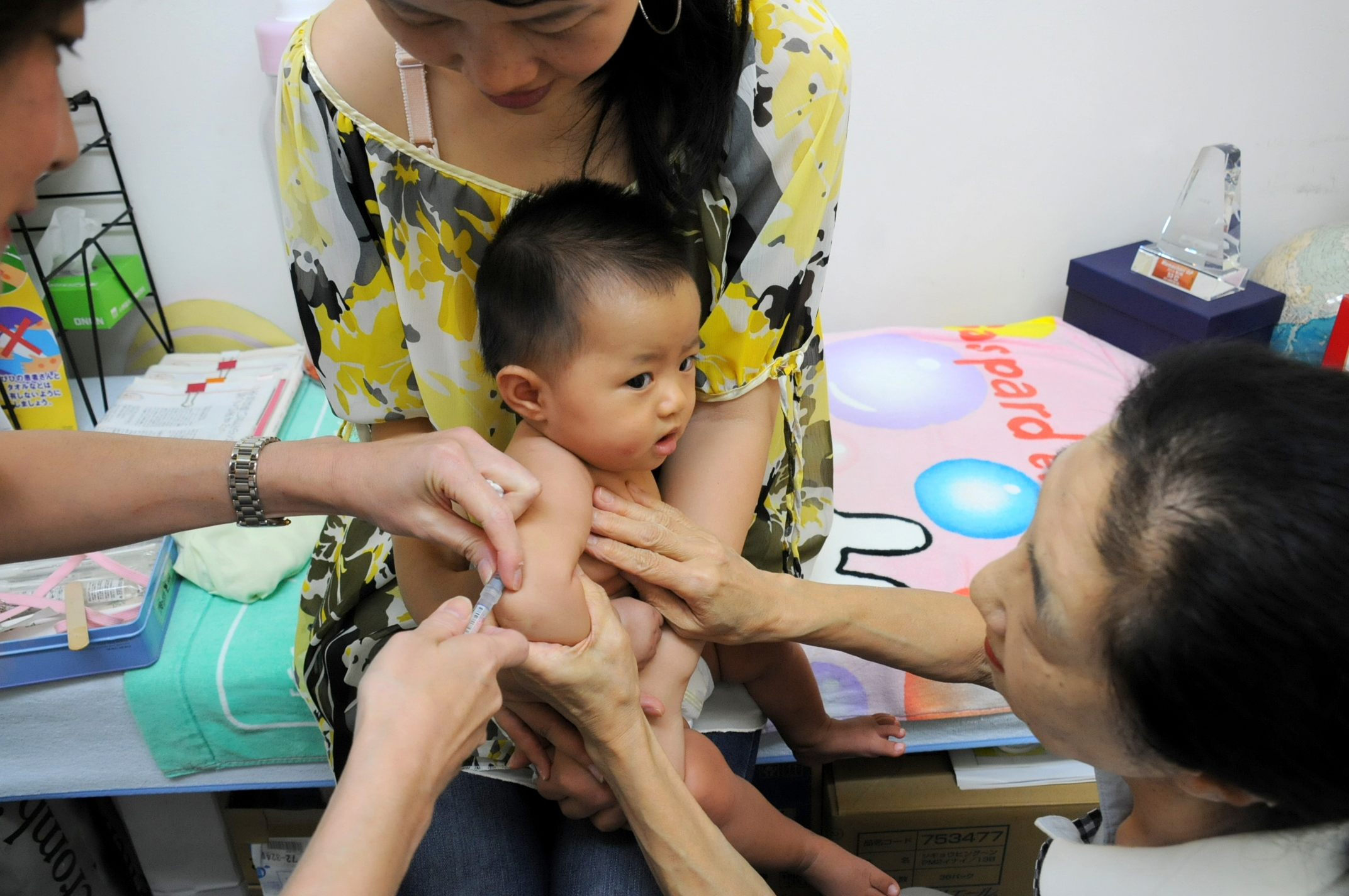
La Trobe University (Kaufman, Ryan, Walsh, Horey, Robinson, Hill); The University of Sydney (Leask)
"There is low- to moderate-certainty evidence suggesting that face-to-face information or education may improve or slightly improve children's vaccination status, parents' knowledge, and parents' intention to vaccinate."
The aim of this Cochrane Review was to find out whether face-to-face information or education delivered to parents or expectant parents improved vaccination status, parental knowledge or understanding of vaccination, attitudes or beliefs about vaccination, or intention to vaccinate. This review originated as a part of the Communicate to Vaccinate (COMMVAC) project (2010-2016), which sought to build evidence for communication interventions related to childhood vaccination. This topic was selected through an international priority setting exercise because face-to-face communication is widely used around the world, can be implemented in a range of settings, and can be adapted or tailored for different populations.
Since 2013, when the review was originally published (see Related Summaries, below), there have been a number of developments in the field of vaccination communication research. For instance, research related to vaccine hesitancy has highlighted the relevance and importance of face-to-face communication in countries of all income levels. In recognition of the progress of the field and the potentially wider audience for this review, the researchers revised the background section to strengthen the explanation of the intervention's theoretical underpinnings and situate this review within the landscape of evidence published since 2013.
Successful vaccination programmes rely on people having appropriate information and sufficient knowledge, awareness, and acceptance of vaccination to make the decision to participate. In addition to one-on-one discussions with providers, face-to-face interventions to inform or educate may include oral presentations, individual or group classes or seminars, information sessions, or home outreach visits. Such interventions may be undertaken on their own or combined with other interventions (e.g., telephone contact). This review focused on face-to-face communication with parents or guardians of preschool-aged children, either individually or in groups.
Information or educational interventions can involve much more than information provision - they can be interactive, tailored, and targeted. Increasingly, interven- tions are designed with a theoretical underpinning, and the review briefly describes behaviour change theories such as the Health Belief Model (HBM), Theory of Reasoned Action (TRA), Theory of Planned Behaviour (TPB), and Integrated Behavior Model (IBM). Such interventions may not necessarily be sufficient to change behaviour in all cases, but this does not negate their importance, research has shown.
In this update to the 2013 review, the researchers found 4 new studies published up to July 2017, for a total of 10 studies with a total of 4,527 participants. Seven studies were from high-income countries, and 3 were from low- or middle-income countries. The interventions were a mix of short (under 10 minutes) and longer sessions (15 minutes to several hours) that were delivered to new or expectant parents.
Overall, elements of the study designs put them at moderate to high risk of bias. The researchers judged the certainty of the evidence to be low for the outcomes of children's vaccination status, parents' attitudes or beliefs, intention to vaccinate, adverse effects (e.g., anxiety), and immunisation cost, and moderate for parents' knowledge or understanding. All studies had limitations in design.
Low-certainty evidence from 7 studies (3,004 participants) suggested that face-to-face interventions to inform or educate parents may improve vaccination status (risk ratio (RR) 1.20, 95% confidence interval (CI) 1.04 to 1.37). Moderate-certainty evidence from 4 studies (657 participants) found that face-to-face interventions probably slightly improved parent knowledge (standardised mean difference (SMD) 0.19, 95% CI 0.00 to 0.38), and low-certainty evidence from 2 studies (179 participants) suggested they may slightly improve intention to vaccinate (SMD 0.55, 95% CI 0.24 to 0.85). Low-certainty evidence found that the interventions may lead to little or no change in parent attitudes or beliefs about vaccination (SMD 0.03, 95% CI -0.20 to 0.27; 3 studies, 292 participants), or in parents' anxiety (mean difference (MD) -1.93, 95% CI -7.27 to 3.41; 1 study, 90 participants). Only 1 study (365 participants) measured the intervention cost of a case management strategy, reporting that the estimated additional cost per fully immunised child for the intervention was approximately 8 times higher than usual care (low-certainty evidence). No included studies reported outcomes associated with parents' experience of the intervention (e.g., satisfaction).
The researchers suggest that face-to-face interventions may be more effective in populations where lack of awareness or understanding of vaccination is identified as a barrier (e.g., where people are unaware of new or optional vaccines). The effect of the intervention in a population where concerns about vaccines or vaccine hesitancy is the primary barrier is less clear. They conclude that reliable and validated scales for measuring more complex outcomes, such as attitudes or beliefs, are necessary in order to improve comparisons of the effects across studies.
Cochrane Database of Systematic Reviews 2018, Issue 5. Art. No.: CD010038. DOI: 10.1002/14651858.CD010038.pub3 Image credit: japantimes.co.jp
- Log in to post comments