










































Adolescents Trust Physicians for Vaccine Information More than Their Parents or Religious Leaders
Schreiber High School (D.S. Griffin); Columbia University Medical Center (Muhlbauer, D.O. Griffin)
"Adolescent-centered education from physicians has the potential to influence vaccination acceptance."
Conducted in the United States (US), this study focused on the attitudes of adolescents with regard to the importance, safety, and effectiveness of vaccination, and on their most trusted source for information about vaccines. In the region studied, the vaccination rate in adolescents exceeds national averages (e.g., 91.1% of teens received the tetanus-diphtheria-acellular pertussis (Tdap), and 89.2% received the meningitis vaccine). However, in the US, increasing rates of exemptions from vaccination are threatening to allow (and are already resulting in) the re-emergence of many vaccine-preventable diseases (VPDs).
Research has shown that improving vaccination rates of adolescents before they enter adulthood is vital, because it is a time of development during which effective preventative care measures, such as timely vaccinations, could establish lifelong healthy behaviours. Interventions, including communication-centred ones, at this age could also influence the vaccination decisions adolescents will make when they move into the role of parents.
The researchers conducted a cross-sectional survey of public high school students (ages 14-18) in Long Island, New York, US. using a paper-based questionnaire. A total of 105 completed questionnaires were returned.
Key findings:
- A majority of the participants had favourable views of vaccinations, with over half of the sample agreeing strongly (58%) with the statement "I think it is important for everyone to get the recommended vaccines for themselves and their children." Of those responding to the statement "If I ever have children, I will want them to get all the recommended vaccinations," 62% strongly agreed.
- A little over half (56%) of participants reported that they felt sufficiently informed about vaccines and their safety.
- A little less than two-thirds of participants disagreed or strongly disagreed with the statement "Rare diseases like measles, diphtheria, and polio are not common where I live, so those vaccines are not necessary." In response to "I would make a different choice about vaccinating my own children than my parents have made for me," the majority disagreed.
- Almost half (47%) of adolescents reported family physicians or other medical professionals as their primary source of vaccine information, followed by their parents/guardians (38%).
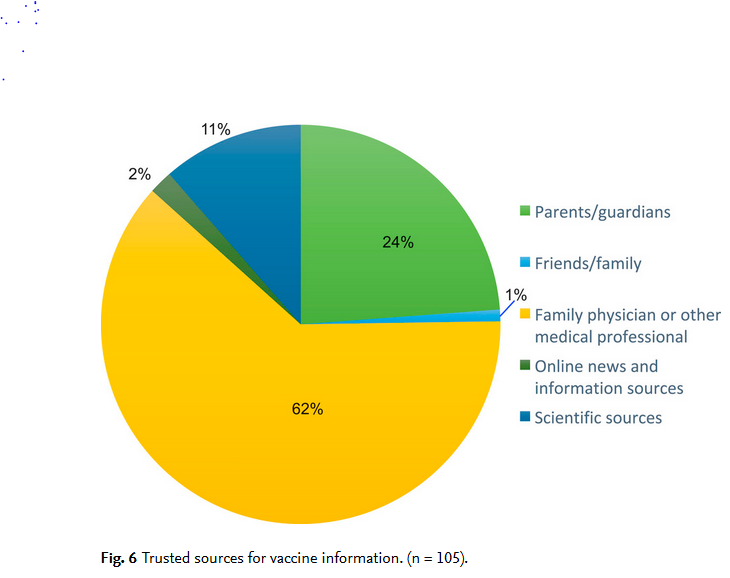
- The most trusted source of information about vaccines was family physician or other medical profession, while the least trusted source was social media.
- Adolescents were divided on the issue of vaccine safety, which may suggest that concern over the possible side effects of vaccines is a potential driver of vaccine hesitancy among this group.
According to the researchers, these results underscore the importance of healthcare provider-based interventions designed to reach adolescents with information and education, as well as the need to develop strategies for addressing vaccine hesitancy, to help raise immunisation rates among adolescents.
More specifically, strategies to that focus on educating teenagers about the relative safety of vaccines might benefit the adolescent population. Additional research could explore how adolescents perceive vaccine safety. The fact that under half of respondents in this study either did not feel adequately informed about vaccine safety, or did not have an opinion, invites the possibility that educational efforts have not focused on the distinct but perhaps critical issue of vaccine safety. Considering that so may adolescents seem willing to embrace vaccination as an approach to prevent diseases despite their being equally divided with regard to safety concerns may suggest that focus on accentuating potential benefits would be more persuasive than attempts to minimise perceptions of risk. Further investigation could clarify these questions.
In conclusion, future studies assessing the impact of increased engagement with adolescents and physician education of adolescents about vaccines may help expand our understanding of barriers to adolescent vaccination.
Heliyon, Volume 4, Issue 12. https://doi.org//10.1016/j.heliyon.2018.e01006
- Log in to post comments