










































AFP Case Detection Along International Border Communities in Oyo State: Challenges, Opportunities and Threats
World Health Organization (WHO), Country Representative Office, Abuja, Nigeria
"...a situation where even the informant[s] lack complete knowledge of the AFP case definition...would [make it...] impossible to interact effectively with members of their communities."
Good-quality acute flaccid paralysis (AFP) surveillance underpins the entire Global Polio Eradication Initiative (GPEI), because it is impossible to prove the interruption of the wild polio virus (WPV) without it. However, the AFP surveillance network is skewed to health facilities in urban and semi-urban areas; special populations (e.g., nomadic and hard-to-reach settlements) are often neglected, resulting in under-reporting of AFP cases. This study investigates the factors that affect AFP case detection in Oyo state, Nigeria, along border settlements - identifying challenges, threats, and opportunities that can be used to improve the surveillance system in general.
The AFP surveillance system in the country is structured in such a way that case detection emanates from the community through well-trained community informants, making this group of people the backbone for AFP surveillance at the community/grass root level. Information about AFP cases passes through these informants to the Disease Surveillance and Notification Officers (DSNOs) in the local government areas (LGAs) and then to World Health Organization (WHO) surveillance officers in the state for prompt action. Because of their importance in the chain of event of AFP surveillance, WHO requires that the community informants are well-known givers of care in their communities such (e.g., patent medicine vendor owners, bone setters, traditional healers). In short, these informants are meant to be the first port of call whenever there is an issue with AFP case detection and surveillance in the communities.
Between December 26-31 2018, the researchers conducted a cross-sectional survey using structured questionnaires uploaded onto Open Data Kit-collect (ODK) mobile software in 4 LGAs in Oyo state. Overall, 427 respondents (community members=420, community informants=7) participated in structured interviews. Unstructured interviews were also conducted with DSNOs in the 4 LGAs.
On the average, 10% and 46% of the community members and informants could identify the various aspects of the AFP case definition (e.g., weakness/paralysis). The majority of the community members weren't aware of AFP surveillance; nor were they aware of their AFP focal person/DSNO or where to report AFP cases. As the researchers stress, poor community awareness defeats the purpose of the community informants because their mandate is not just to report cases but help educate members of their communities on AFP case pointers to look for in their communities. They are also concerned about the poor engagement between the community members and AFP focal person situated at the health facility - whose job is to serve as an AFP contact point in the health facilities (reporting directly to the DSNOs) - as well as to the DSNOs themselves.
Barriers to case reporting include: poor telecommunication networks, irregular movements of commercial vehicles, swampy roads during rainy seasons, rocky roads during dry seasons, and poor modes of transportation.
Based on the findings, the researchers recommend:
- More frequent refresher trainings for informants to improve the chances of AFP case reporting;
- More frequent surveillance visits to these areas by DSNOs to encourage the informants by means of informal refresher training;
- Communication of messages related to case detection to the DSNOs through the heads of facilities, who come to the LGA offices/cold stores to collect vaccines fortnightly;
- Incentives in the form of a special stipend to be allocated to LGAs with border communities to enable them frequently carry out surveillance visits and mount sensitisation campaigns designed to not only improve knowledge of the community members but also to improve AFP case detection and reporting; and
- Improvements to the terrain and/or modes of transportation (e.g., four-wheel-drive vehicles that can access the settlements).
The researchers conclude that, if such steps are taken to improve accessibility in areas along international borders, AFP case detection and reporting in their corresponding communities would also improve.
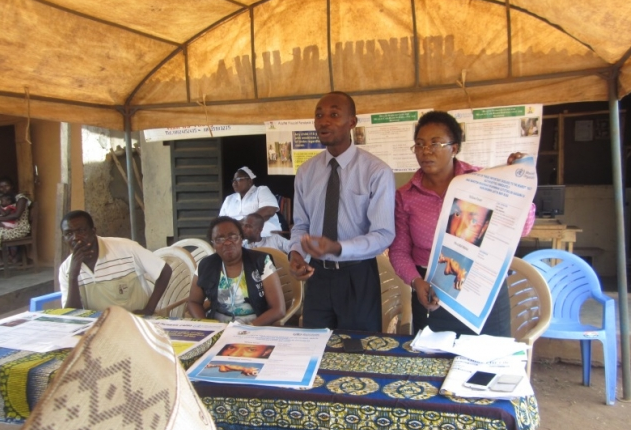
Science Journal of Public Health Volume 9, Issue 3, May 2021, Pages 103-08. Image credit: WHO Nigeria
- Log in to post comments