










































Assessment of Parents' Perceptions of Childhood Immunization: A Cross-Sectional Study from Pakistan
Hamdard University (Hussain, Zahid, Malik); University of Hail (Ansari); Nord University (Vaismoradi); International Islamic University Malaysia (Aslam, Jamshed); University of Veterinary and Animal Sciences (Hayat); University of Szeged (Gajdács); Semmelweis University (Gajdács); Universiti Sultan Zainal Abidin (Jamshed)
"Our understanding of the current statistics of immunized children, and the quality of immunization services in Pakistan is limited."
Parents' knowledge and attitudes have a significant influence on the immunisation rates of their children. Thus, this group may be an important focus of interventions seeking to improve immunisation coverage. This study aimed to assess parents' perceptions with regard to the immunisation of their children aged less than two years of age in two cities of Pakistan.
The researchers conducted a descriptive cross-sectional study in the vicinity of Rawalpindi and Islamabad from March to August 2019. A semi-structured questionnaire was used for data collection among 382 parents of the Muslim faith. Selected findings:
- The majority of respondents (n = 370, 96.85%) believed that child immunisation was important, while n = 348 (91.1%) agreed that immunisation was safe for children.
- 98 (25.65%) of the respondents thought immunisation was prohibited by their religion.
- Around two-thirds of respondents (n = 255, 66.74%) were satisfied with the immunisation services offered by the government. 56% of the respondents were satisfied with the services provided by the mobile immunisation team, and 73.56% were satisfied with the immunisation provided at hospital centres.
- 335 (87.69%) of the parents agreed that an awareness campaign about childhood immunisation was effective and reached the community.
- Principal factors contributing to delay in the immunisation of children in the study included: affordability (57.5%), unavailability of vaccines (53.0%), non-cooperative staff (37.4%), long waiting times (42.0%), lack of awareness regarding immunisation timing (78.0%), and lack of access to immunisation centres (58.6%).
- A detailed description of parents' knowledge regarding immunisation schedules for their children under two years of age is illustrated in Table 5. Some findings: 44.23% of them were aware of the immunisation day, and most of them (69.37%) were aware of the mobile immunisation team.
- Statistically significant differences were found between the parents' knowledge scores about vaccines and their education levels and monthly incomes (p < 0.05). Parents with master's degrees and low monthly incomes had significantly better knowledge (p < 0.05).
- Regarding measures for improving immunisation services in Pakistan, 26.17% of the respondents suggested promoting awareness and training of parents, while 5.75% of respondents emphasised easy availability of vaccines followed by accessibility of immunisation centres, proper vaccine management system/health system (8.90%), improvement of services of the mobile immunisation team and/or availability of mobile immunisation team (6.54%), and improvement of vaccination services (3.92%).
In short, this study found that, although most parents had positive perceptions toward the immunisation of children, their knowledge was insufficient. Despite the availability of immunisation guidelines for parents in the form of immunisation cards, they missed immunisation deadlines, as they were unaware of the schedule. Immunising their children just to follow others, without understanding the importance of immunisation, was common.
Thus, the researchers suggest that there is a dire need to educate Pakistani parents about the importance of immunisation and to enhance their knowledge of diseases against which they must immunise their children. To increase awareness and knowledge about vaccines and vaccine-preventable diseases (VPDs), they say:
- A collaboration effort on the part of the government and healthcare professionals should be forged. Together, they could launch awareness-improving programmes, focusing on people with less or no formal education.
- Another study in Pakistan reported that mobile immunisation team services not only enhanced immunisation coverage but also increased the awareness in people about VPDs. Thus, the researchers recommend strengthening the service of the mobile immunisation team by providing better incentives and providing appropriate training.
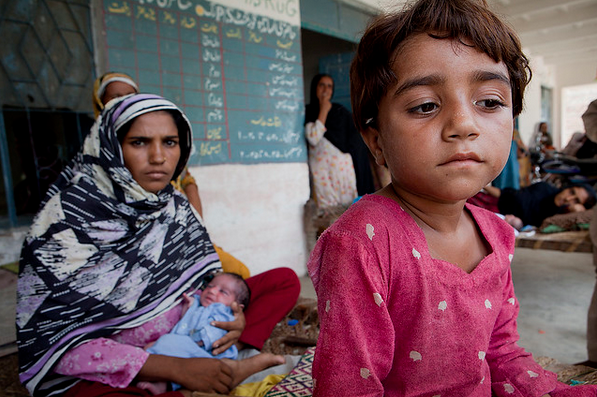
Children 2021, 8, 1007. https://doi.org/10.3390/children8111007. Image credit: Jason Tanner via Flickr (CC BY-NC-ND 2.0)
- Log in to post comments