










































Barriers to Childhood Vaccination in Urban Slums of Pakistan
Affiliation
VITAL Pakistan Trust (Muhammad, Ashraf, Shafiq); Aga Khan University (Ahmad); Expanded Program on Immunization (Yunus); Secretariat of Pakistan Civil Society Organizations Coalition for Health and Immunization (Warsi); Civil Society Human and Institutional Development Program (Hasmat, Khawar); Gavi, The Vaccine Alliance (Jimenez)
Date
Summary
"The results...suggest that demand-side barriers are deep-rooted in communities, especially in slum areas. These barriers affect sociocultural factors, service quality, and religious practice at household and community levels..."
While poor vaccination coverage is rooted in both demand- and supply-side hurdles, urban slums face unique challenges related to the demand aspect of vaccination. Many slums in Pakistan, such as in the largest city Karachi, have vaccination coverage rates of less than 50%. This study investigated the major causes of low vaccination demand in the urban slums of Karachi and recommended appropriate demand-generation interventions.
The study was conducted in 2 phases. During Phase 1, a baseline cross-sectional survey and qualitative in-depth interviews were conducted in 4 slums in Karachi, which were mainly in Bin Qasim Town, Malir District. Phase 2 of the study was conducted from June to July 2018 and consisted of qualitative data collection based on a structured in-depth interview guide that incorporated the Phase 1 findings. The interviews were conducted by the investigators as consultative meetings with policymakers and decision-makers. During the interviews, Phase 1 findings were disseminated to the Expanded Program on Immunization (EPI) and their partners, and a mapping exercise was conducted to gather information on the vaccination-related research and interventions of the partners, leading to a portfolio of demand-generation interventions.
The cross-sectional survey in Phase 1 found that only 412 (49.0%) of the 840 children aged 12-23 months were fully vaccinated, 361 (43.0%) were partially vaccinated or defaulters, and 67 (8.0%) were unvaccinated. Qualitative thematic analysis of demand-side barriers to vaccination revealed 4 broad themes: (i) household barriers to vaccination; (ii) gender-insensitive services; (iii) myths, misconceptions, and fears related to vaccination; and (iv) social and religious influences.
The mapping of activities revealed 47 initiatives that aimed to generate demand for childhood vaccination in the urban slums of Pakistan. In brief:
In conclusion: "Contextual interventions are pertinent and synergy between different partners is important to create scalability and sustainability for implementation of successful interventions. National and perhaps provincial interagency coordination committees can play this pivotal role. National and provincial EPIs can use the strengths of different partner organizations to mobilize resources and to plan, implement and monitor demand-generation activities appropriately and address the demand-side barriers in a more effective way."
While poor vaccination coverage is rooted in both demand- and supply-side hurdles, urban slums face unique challenges related to the demand aspect of vaccination. Many slums in Pakistan, such as in the largest city Karachi, have vaccination coverage rates of less than 50%. This study investigated the major causes of low vaccination demand in the urban slums of Karachi and recommended appropriate demand-generation interventions.
The study was conducted in 2 phases. During Phase 1, a baseline cross-sectional survey and qualitative in-depth interviews were conducted in 4 slums in Karachi, which were mainly in Bin Qasim Town, Malir District. Phase 2 of the study was conducted from June to July 2018 and consisted of qualitative data collection based on a structured in-depth interview guide that incorporated the Phase 1 findings. The interviews were conducted by the investigators as consultative meetings with policymakers and decision-makers. During the interviews, Phase 1 findings were disseminated to the Expanded Program on Immunization (EPI) and their partners, and a mapping exercise was conducted to gather information on the vaccination-related research and interventions of the partners, leading to a portfolio of demand-generation interventions.
The cross-sectional survey in Phase 1 found that only 412 (49.0%) of the 840 children aged 12-23 months were fully vaccinated, 361 (43.0%) were partially vaccinated or defaulters, and 67 (8.0%) were unvaccinated. Qualitative thematic analysis of demand-side barriers to vaccination revealed 4 broad themes: (i) household barriers to vaccination; (ii) gender-insensitive services; (iii) myths, misconceptions, and fears related to vaccination; and (iv) social and religious influences.
The mapping of activities revealed 47 initiatives that aimed to generate demand for childhood vaccination in the urban slums of Pakistan. In brief:
- 9 initiatives were implemented nationwide by the Pakistani Government with the support of the United Nations Children's Fund (UNICEF) and World Health Organization (WHO). These initiatives included partner engagement, campaign initiatives, alignment with Sustainable Development Goals, capacity building for interpersonal communication, use of social and mainstream media for visibility, strengthening of coordination among provinces for demand-generation activities, and a synergistic approach to the Global Polio Eradication Initiative.
- 6 major initiatives led by UNICEF and WHO, with the involvement of the federal EPI, helped to enhance service quality and accountability. The key initiatives in demand generation were: development of EPI social media accounts, a strategic tactical plan, content development, quarterly editorial calendar, engagement of bloggers/influencers, social media monitoring and analysis, and introduction of automated chatbots. Adaptation of information, education, and communication (IEC) materials, public service messages, vaccination fact sheets, and gaining of community trust also played an important role. The joint milestones achieved were the National Communications Strategy and Provincial Communication Action Plans, which were implemented at national level. UNICEF and WHO were engaged in evidence generation through: studies on the theme of knowledge, attitude, and practice; allocation of funding for demand generation; and implementation research to improve social mobilisation. These initiatives were implemented at the national level.
- 14 vaccination-related initiatives led by civil society organisations covered a vast population across Pakistan. They were mainly high-level engagement, technical assistance, social mobilisation, and community engagement, as well as initiatives for demand generation, service provision, and evidence generation. For example, the Civil Society Human & Institutional Development Programme implemented social mobilisation, community awareness, and urban profiling through individual and institutional developments in slums.
- 17 initiatives led by academia and other research organisations mainly involved high-level engagement, social mobilisation, integrated health services, and demand generation. For example, Interactive Research and Development Pakistan was working on: vaccine reminders; tracker bracelets; carpooling to facilitate vaccination of children; artificial-intelligence-enabled vaccine chatbots that responded to the concerns of caregivers and parents about vaccination; electronic decision support systems for frontline healthcare providers; and the Kiran Sitaras Youth Engagement Programme.
In conclusion: "Contextual interventions are pertinent and synergy between different partners is important to create scalability and sustainability for implementation of successful interventions. National and perhaps provincial interagency coordination committees can play this pivotal role. National and provincial EPIs can use the strengths of different partner organizations to mobilize resources and to plan, implement and monitor demand-generation activities appropriately and address the demand-side barriers in a more effective way."
Source
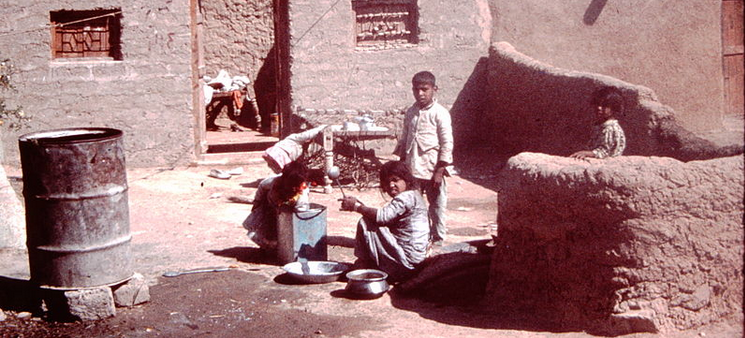
Eastern Mediterranean Health Journal 2023;29(5):371–379. https://doi.org/10.26719/emhj.23.062. Image credit: Pál Baross/Institute for Housing and Urban Development Studies via Wikimedia (CC BY-SA 3.0)
- Log in to post comments