










































Bridging the Vaccination Equity Gap: A Community-Driven Approach to Reduce Vaccine Inequities in Polio High-Risk Areas of Pakistan
Aga Khan University (Chauhadry, Soofi, Sajid, Ali, Khan, Naqvi, Hussain, Umer, Bhutta); The Hospital for Sick Children (Bhutta)
"This study shows that integrating community engagement with maternal and child health services through health camps can significantly enhance immunization coverage and reduce wealth-based disparities in high-risk, hard-to-reach areas."
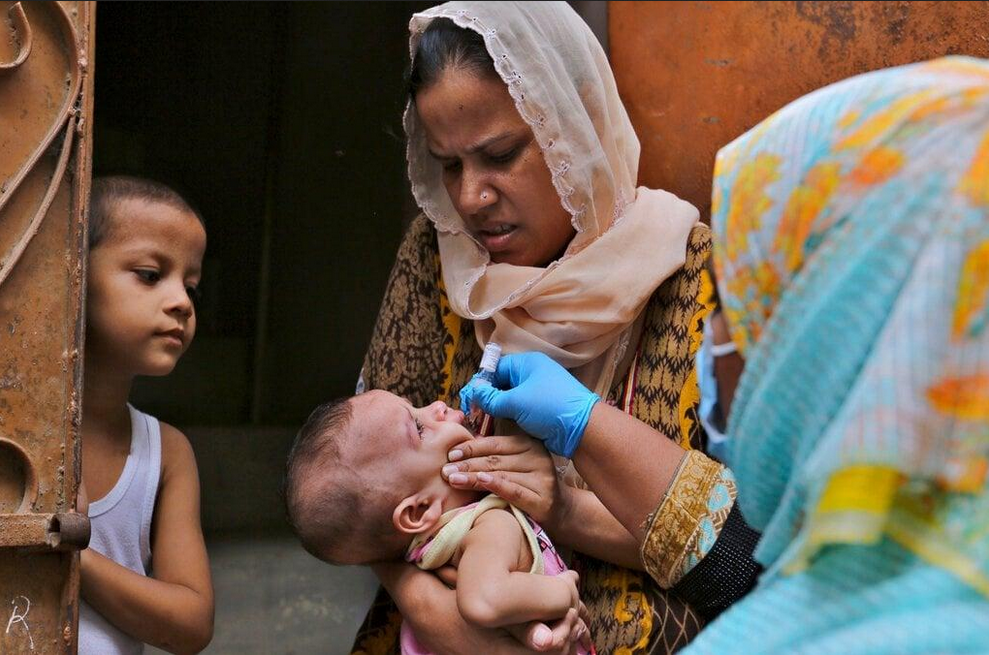
Global efforts to reduce disease burden can be hindered by social inequalities in vaccination uptake in low-and middle-income countries. This study evaluates the impact of an integrated strategy designed to enhance community engagement in maternal and child health immunisation campaigns in high-risk union councils of polio-endemic districts in Pakistan.
The analysis builds on the community-based demonstration project implemented between 2014 and 2016, as detailed at Related Summaries, below. The intervention focused on 146 union councils in Sindh, Khyber Pakhtunkhwa (KP), and Baluchistan provinces of Pakistan. The intervention involved structured community mobilisation led by trained mobilisers to promote vaccination and maternal and child healthcare (health camps). This strategy empowered local stakeholders to take ownership of the vaccination campaigns and health service delivery, ensuring that the interventions were culturally relevant and responsive to the community's needs.
Data were collected through cross-sectional independent surveys using a two-stage cluster technique at the baseline and the endline, covering over 120,000 children under 5 years old. The primary outcome was the change in full immunisation coverage among children under 5. Secondary outcomes included coverage rates for oral polio vaccine (OPV), inactivated polio vaccine (IPV), and changes in the proportion of unvaccinated children.
The proportion of fully vaccinated children increased in the lowest wealth quintile from 28.5% at baseline to 51.6% at endline. In comparison, the increase in the wealthiest quintiles increased from 56.4% at baseline to 72.7% at endline. Under-vaccination dropped by 10.2% (95% confidence interval (CI): -11.4%, -9.1%), with the economically poorest quintile showing an 11.8% reduction. The gap between the highest and lowest wealth quintiles in full immunisation narrowed by 6.9%, from 27.9% to 21.0% at the baseline and the endline, respectively. The prevalence of zero-dose children significantly decreased across all quintiles, with the highest reduction observed in the lowest quintile of -11.3%. The difference between the highest and lowest wealth quintiles reduced from 6.2% to 3.8%. A significant reduction in polio zero-dose children was achieved: from 29.2% (95% CI: 28.0%, 30.3%) to 15.6% (14.8%, 16.5%).
Thus, the study identified substantial improvements in immunisation coverage among children from various demographic and socio-economic groups. The children from the lowest wealth quintiles benefited the most. The gender disparity in vaccination coverage was also reduced. Both male and female children had a reduction in zero-dose prevalence, although the reduction was slightly more pronounced for male children.
The results also indicate that urban areas like Karachi have higher vaccination rates due to better health infrastructure. However, this project achieved equitable immunisation access through targeted interventions in conflict-affected regions. In contrast to Karachi, KP and Baluchistan showed larger reductions in zero-dose children, highlighting the greater number of unvaccinated individuals in these areas.
Reflecting on the findings, the researchers attribute the overall improvement in vaccination rates and equity to the holistic nature of the project. Combining access to healthcare facilities, building trust through community engagement, mobilising people through the inclusion of community leaders and representatives as focal persons, and increasing awareness about vaccination addressed the most prevalent barriers to vaccine uptake in this context.
These approaches are consistent with existing research and support the World Health Organization (WHO)'s Global Routine Immunization Strategies and Practices (GRISP), which emphasises delivering immunisation through fixed health facilities and mobile outreach services. This framework encompasses an inclusive model of locating and reaching underserved populations, enhancing service availability, and fostering vaccination demand through public health campaigns.
In conclusion, the approach outlined in this study "improved coverage for zero-dose and fully vaccinated children, suggesting a potential for scaling in regions with access issues, conflict, and vaccine hesitancy."
Vaccines 2024, 12, 1340. https://doi.org/10.3390/vaccines12121340. Image credit: Free Malaysia Today (CC BY 4.0)
- Log in to post comments