










































Building Alliances in Global Health: From Global to Local
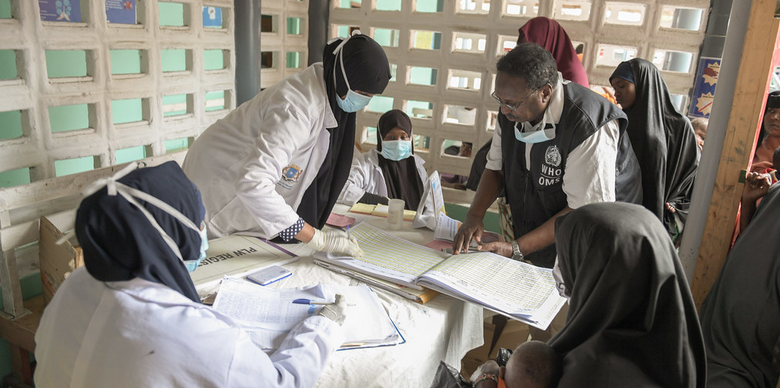
"What communication strategies might work where people are dissatisfied?" - A discussion prompt, Module 4
This hands-on online course is designed to prepare learners to overcome the challenges associated with alliance building within the global health sector. It covers themes of political advocacy, policymaking, health communication, and community engagement, while exploring the interpersonal relations and political considerations required to build a global health programme. The course uses as a case study the Global Polio Eradication Initiative (GPEI), a global partnership between United Nations (UN) agencies, the private sector, non-governmental actors, civil society organisations, and local communities. Through this case study, it is expected that learners will: (i) become familiar with the wide variety of stakeholders involved in policy and planning processes and (ii) gain insight into the challenges that can arise due to resistance, opposition, and even hostility.
There are 5 modules in this course:
1. Case Study: Polio Eradication Basics (1 hour to complete): offers an overview of the course and then covers the basics of poliovirus and polio eradication (choosing eradication, rather than control, as a strategy had deep impacts on the way global and community partnerships have played out in the polio programme). The characteristics of a disease, and the strategy chosen to address it, affect everything from global partnerships to local communication strategies. This information will lay the groundwork for understanding how the GPEI came together.
2. Global Alliance for Public Health (1 hour to complete): explores the history of the GPEI - how it came together, the key actors involved, and how it has evolved over three decades - and considers challenges faced by global health alliances such as the GPEI. This module concludes with strategies for successful alliance building across global, national, and community levels.
3. Policy Engagement and Influence (2 hours to complete): examines the role of policy engagement in a global disease control programme. The module begins by laying out the core pillars of the polio eradication effort and then dives into the process of health policymaking and its key constructs. Learners will be introduced to and, ultimately, complete a stakeholder and context analysis. They will then participate in a roundtable discussion on policy engagement strategies in conflict settings.
4. Health Communications and Behavior Change (2 hours to complete): delves into key principles for health communication in supporting a global disease control programme. The module begins with a look at the challenge of vaccine-derived poliovirus (VDPV): a major communication challenge for the GPEI. After exploring the basics of communication, the module will focus on some unintended consequences of communication plans and strategies experienced by the GPEI.
5. Community Engagement (3 hours to complete): begins with exploring approaches for effectively engaging communities, focusing particularly on the example of the Social Mobilization Network (SMNet) in India. Learners will then apply these approaches to different scenarios, considering marginalised populations and conflict settings. The module will conclude with a discussion on applying lessons from polio to non-polio efforts.
The 3-week course (3 hours per week) is expected to take approximately 11 hours to complete; the schedule is flexible (learn at your own pace), and the course can be started at any time. The course features 5 quizzes. Those who complete the course will receive a shareable certificate that can be added to their LinkedIn profile.
Johns Hopkins University course instructors include: Olakunle Alonge, Anna Kalbarczyk, and Svea Closser.
Coursera, November 10 2023. Image credit: UN Photo/Mukhtar Nuur via Flickr (Public Domain Mark 1.0 Universal)
- Log in to post comments