










































Building a Way Forward: Enabling Community Voices to Forge the Path toward Successful Immunization for All
Sabin Vaccine Institute (Peimbert-Rappaport, Hopkins); United Nations Children's Fund (Lihemo) - plus see below for full authors' affiliations
"Leveraging the tools and approaches presented here can help immunization professionals translate community expertise into action, design immunization services that are human-centered, and improve perceptions around vaccination, so that everyone, everywhere can benefit from the full power of vaccines."
The diverse Vaccination Acceptance Research Network (VARN) community brings together interdisciplinary professionals from across the immunisation ecosystem who play a role in vaccination acceptance, demand, and delivery. Over the course of the VARN2023 conference, which is described at Related Summaries, below, researchers and practitioners shared ideas and experiences focused on strategies and approaches to building trust between communities and health systems to increase equity in vaccination. This article summarises three skills-building sessions offered at the VARN2023 conference that offered practical, evidence-based tools for use across geographic and social settings to increase vaccination demand and uptake in communities.
The first session described in the article focuses on implementing human-centred design (HCD) to increase vaccine demand. HCD offers a systematic approach to developing products and processes that centre the experience and core needs of the end-users. The approach has had four cross-cutting pillars: (i) reaching zero-dose communities by uncovering the unknown, un-said, or otherwise invisible barriers in zero-dose and under-vaccinated communities; (ii) addressing gender and equity barriers by ensuring the inclusion of multiple local perspectives to understand the challenges to uptake and demand marginalised communities face; (iii) integrated thinking that considers both supply and demand as equal parts of a healthy immunisation system; and (iv) applying tailored community-specific solutions that are created by co-creating and co-designing local solutions with communities.
UNICEF and Firsthand conducted a skills-building workshop at VARN2023 to introduce some of the key tenets of the HCD approach. Participants learned how HCD applies a system lens to holistically understand its components, relations, and dynamics. This approach brings into perspective that challenges to vaccination uptake are not isolated, but multidimensional, comprising multiple factors, including motivations, power dynamics, and the surrounding environment. Three examples of HCD systems thinking tools were introduced during the HCD session:
- Journey mapping, which charts the barriers and enablers to vaccine uptake. To practice, participants at VARN mapped barriers and enablers to fathers in Nepal being involved in their children's vaccination. VARN participants considered a key barrier of social norms: Fathers are not part of the health and immunisation conversations. They also discussed an enabler to change this: the use of posters showcasing fathers who had completed their children's immunisations and thereby elevating them as community role models.
- Habit mapping, which charts a typical day in a person's life so that services, nudges, and norms can be aligned with what people are already doing. Participants mapped the daily habits of mothers in Northern Nigeria, which led them to focus on how to make the long journey to the clinic a social habit. By developing a "buddy" system, volunteer community mobilisers could help caregivers feel safe in their journey to the clinic by accompanying them.
- Relationship mapping, which considers how power and influence reshape social norms. It reinforces the fact that decisions are informed by influence more than they are by information. Relationship maps clarify where behaviour-changing power and influence are (formal or informal, political, financial, etc.), and a value map is developed to characterise both positive and negative value influences. Participants at VARN examined how to leverage the popularity of the accredited social health activist in India to shift family responsibilities during health days.
The second session described in the article focuses on listening to and connecting with people to improve vaccine confidence through motivational interviewing (MI). This person-centred, evidence-based conversational technique, which is grounded in empathy and autonomy, can be a powerful tool to boost vaccine confidence. By allowing a person to explore and address mixed feelings around vaccination in a trusting environment, the MI approach can reduce resistance and discord and help to enhance a person's internal motivation for vaccination. Strong evidence indicates that MI can be applied to facilitate patient-provider discussions to promote various health-seeking behaviours. Healthcare providers, community influencers, community health workers, and the general population - each of whom plays a role in building a trusting relationship between health experts and community members to address vaccine hesitancy - can be trained in MI to act as vaccination champions, empathetically engaging with patients and/or peers who may have doubts about getting vaccinated. Courses and tools are available to support practitioners who would like to learn more about MI and apply the skills in their roles, and a text box in the article provides four key steps for those who would like to get started.
The third skills-building session focused on sharing vaccination stories with journalists to mainstream fact-based information about vaccination. As VARN participants discussed, journalists and traditional media can be allies in helping disseminate meaningful research with and from communities, tackling misinformation, and sharing expertise from communities with decision-makers. One requirement: Researchers must consider novelty, timeliness, and relevance when sharing stories with journalists, and they need to understand why an issue is relevant for the audience and what kind of impact a story will have. Data by itself cannot convey the whole message. In addition, there needs to be a mutual relationship of respect and trust, where both journalists and immunisation researchers and professionals can learn from each other. There may also be situations where authoritarian governments or extremist groups aim to discredit media outlets, and engaging with journalists can be a tool to disseminate evidence-based information that should be widely available.
A specific strategy presented at VARN to help in engaging with journalists is developing a clear "single overriding communication objective" (SOCO) that succinctly describes a key message. The SOCO can be turned into a headline, a soundbite, or a quotable statement that can be shared in different media formats, like a radio or TV interview. To develop a compelling SOCO, researchers and health experts can:
- Write down the data to be shared with the media.
- Add context to help the journalist understand its importance.
- Choose the intended audience.
- Develop a SOCO that will resonate with that audience.
- Gather additional data and case studies to support the SOCO, and provide them to journalists.
"Great stories are compelling, timely, and universal. They need to feature real people and have strong visuals. Researchers and health experts can support this by taking photographs and videos of the communities with whom they work - with their consent - that can be shared with journalists to illustrate stories."
The article also offers suggestions for preparing for an interview with the media and for building trust between researchers and science journalists.
Overall, the researchers suggest that, "in alignment with principles of equity in vaccination, one of the core themes of VARN2023, vaccination policy must be informed through 'bottom-up' approaches that prioritize the experiences, perspectives, and local expertise within communities." Community engagement and community-centred and responsive approaches, such as HCD and MI, can elevate voices from the community and translate their expertise into action. Engagement with journalists and other formal communication channels using storytelling can also be leveraged to reach communities broadly and advise decision-makers who can usher in change based on the experiences and concerns of communities. In conclusion, the researchers "hope the tools presented here can help elevate community voices and concerns, particularly of marginalized voices that are often not heard, to boost immunization globally and equitably."
Full list of authors, with institutional affiliations: Nadia Peimbert-Rappaport, Sabin Vaccine Institute; Kathryn L. Hopkins, Sabin Vaccine Institute; Gloria Lihemo, United Nations Children's Fund (UNICEF); Talya Underwood, consultant, Sabin Vaccine Institute; Theresa Sommers, Sabin Vaccine Institute; Gena Cuba, Firsthand; Ana Bottallo Quadros, Folha de S.Paulo; Patrick Kahondwa, Science Media RDC, SciDev & Vaccines Work (GAVI); Jaya Shreedhar, Internews; Nessa Ryan, US Centers for Disease Control and Prevention (CDC); Nuadum M. Konne, CDC; Neetu Abad, CDC; Karen Ernst, Voices for Vaccines, Task Force for Global Health; Hinda Omar, Minnesota Department of Health; Arnaud Gagneur, Université de Sherbrooke; Julie Leask, University of Sydney; Raluca Zaharia, UNICEF Country Office, Bucharest, Romania; Ikram Abdi, University of Sydney; Miguele Issa, Firsthand; Charles Kakaire, UNICEF; Deepa Risal Pokharel, UNICEF; Ephrem Lemango, UNICEF; Anuradha Gupta, Sabin Vaccine Institute
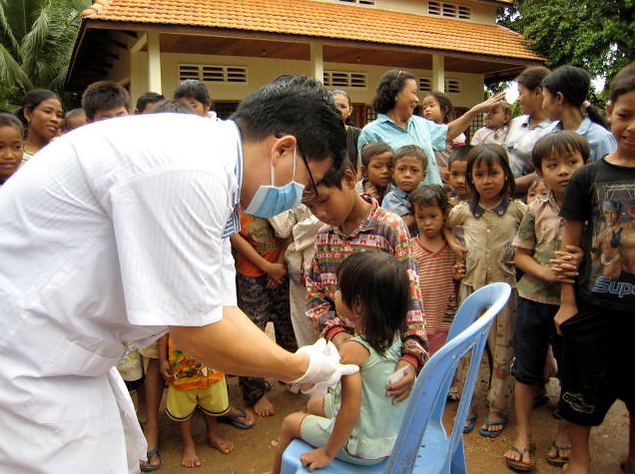
Vaccine https://doi.org/10.1016/j.vaccine.2024.05.065. Image credit: Cambodia4kids.org - Beth Kanter via Flickr (CC BY 2.0)
- Log in to post comments