










































Community Health Workers as Vaccinators: A Rapid Review of the Global Landscape, 2000-2021
VillageReach (Gibson, Zameer, Alban); Centre de Recherche en Reproduction Humaine et en Démographie (Kouwanou)
"As trusted community members trained to both work in a fixed health post and conduct door-to-door visits, CHWs are well positioned to proactively vaccinate underimmunized and zero-dose populations, especially those living in under-reached communities."
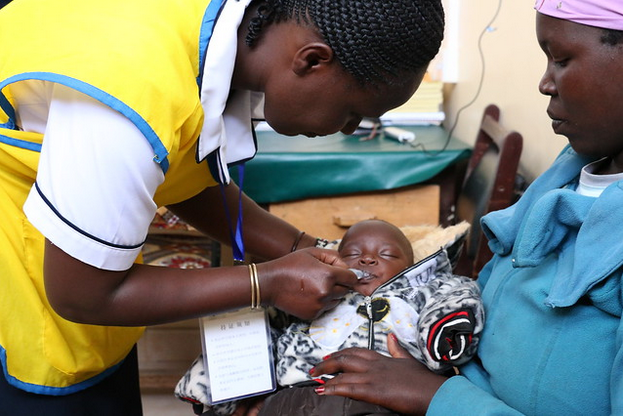
Community health workers (CHWs) are lay health workers who provide culturally and linguistically appropriate health services to specific communities. Research indicates that CHWs are trusted agents who can help reduce health disparities by bridging gaps in healthcare access for underserved communities. This rapid review aims to identify conditions and circumstances under which CHWs can provide vaccination, given decreasing immunisation coverage rates and health workforce shortages in various contexts around the world.
The search strategy included peer-reviewed literature, gray literature, and documents supplied by CHW subject matter experts that were dated/published between January 1 2000 and July 30 2021. The researchers retained 32 documents from 497 initial records and identified 23 CHW cadres that vaccinated in 20 countries, ranging from long-established national programmes delivering routine immunisations to pilot projects delivering 1 specific vaccine. In every country identified in this review, the CHW cadres that administered vaccines worked in nonurban contexts (e.g., villages and rural areas). They administered routine immunisation at health facilities and in the community. CHW cadres that administered 1 specific vaccine (e.g., oral polio vaccine - OPV) conducted primarily door-to-door visits.
Globally, the majority of CHWs are female (estimates indicate 70%), though there was not enough information in the included documents to indicate patterns in the gender breakdown. Safety concerns for female CHWs were mentioned for 2 cadres: auxiliary nurse midwives (ANMs) in India and lady health workers (LHWs) in Pakistan. ANMs and LHWs, who are all women, have experienced verbal, physical, and sexual abuse while conducting their work in remote areas. In some areas, a male CHW accompanied ANMs when traveling to remote areas in which they did not feel safe traveling alone. LHWs may also have been accompanied by their husbands or police escorts while traveling outside their communities, as they may have faced danger or been perceived poorly by outside communities as women traveling alone.
The literature indicates that CHWs of both genders who vaccinate also face: (i) inadequate supply chain training, (ii) inadequate cold chain equipment, (iii) insufficient transportation for supplies and to communities, (iv) heavy existing workload, (v) inadequate or irregular remuneration, and (vi) inadequate or irregular supervision. The personal job experiences of CHWs were mentioned for 10 countries included in this review. CHW cadres administering routine immunisation described their experience as follows: under-valued, frustrated, overburdened, underpaid, struggled to balance between time at health posts and time in the community, struggled to manage administering immunisations with other responsibilities, lacked a formal career trajectory, and dealt with staffing shortages.
On the other hand, for CHW cadres administering only 1 specific vaccine, some felt their community status was increased through their involvement in a vaccination campaign, and others experienced increased motivation to conduct home visits due to the addition of their vaccination responsibilities.
In short, the review identified several countries where CHWs with brief clinical training and experience were taught to vaccinate, suggesting the feasibility of task-shifting administering vaccines to CHWs with limited experience. Recommendations to ensure equitable treatment of CHWs who vaccinate and increase immunisation access and equity in under-reached and rural communities include:
- Ensure adequate, reliable remuneration for CHWs.
- Ensure reliable access to a dedicated CHW supervisor; frequent supportive supervision is an evidence-based strategy for bolstering CHW motivation and improving immunisation programme quality.
- Integrate CHWs as formal health workers in national health systems to create an enabling environment for them to be recognised and supported.
- Maintain accurate national records of CHW demographic data, which could improve governments' ability to train, pay, and provide other professional support for CHWs to successfully vaccinate.
- Include CHWs in supply chain planning, provide supply chain training, and ensure access to adequate cold chain equipment.
- Conduct additional research to conduct a deeper landscape of countries in which CHWs administer vaccines and to explore the acceptability of CHWs as vaccinators, necessary supply chain training and support, and the safety and efficacy of CHWs administering vaccines.
Click here for a 4-page overview of the methods and findings (PDF format).
Global Health: Science and Practice 2023 | Volume 11 | Number 1. https://doi.org/10.9745/GHSP-D-22-00307; and email from Rebecca Alban to The Communication Initiative on September 12 2023. Image credit: Irene Angwenyi, USAID/Kenya via Flickr (CC BY-NC 2.0)
- Log in to post comments