










































Community Perceptions of Vaccination among Influential Stakeholders: Qualitative Research in Rural India
Johns Hopkins Bloomberg School of Public Health (Dhaliwal, Closser, Jain, Shet); Bal Umang Drishya Sanstha (Chandrashekhar, Rattani, Seth); Harvard T.H. Chan School of Public Health (Bloom)
"Capturing nuanced perceptions of vaccination from groups that have decision-making power and influence within a community is essential to understanding and motivating vaccine acceptance and uptake."
In India and other low- and middle-income countries (LMICs), family and community members, along with community health workers (CHWs), are influential in caregivers' perceptions of vaccination. Mothers in India have been found to have limited decision-making power in accessing healthcare and vaccination, and they depend on others, such as their mothers-in-law and husbands, to make those decisions. This qualitative study investigated the role of stakeholders in India who influence caregivers' vaccination perceptions in order to inform development of strategies to promote vaccine acceptance and improve uptake.
The researchers conducted 6 focus group discussions (FGDs) between October and November 2019 to understand how various stakeholders interact to impact caregivers' vaccine decisions. The FGDs took place in a district in Haryana, India called Mewat, where only 13.1% of children under 2 years of age were reported to be fully immunised in 2015 (National Family Health Survey-4). The 60 FGD participants included: fathers of children under 5 years old, expectant mothers, mothers-in-law, CHWs (Anganwadi and accredited social health activists - ASHAs), and community influencers such as locally elected officials (village sarpanches) and religious leaders.
The results highlight four themes:
- While caregivers associated vaccination with reductions in specific diseases, they also noted that vaccination services brought broad health gains, including improved nutrition, antenatal guidance, and social support.
- The role of Anganwadi and ASHA workers is very important for vaccine uptake. Participants explained that ASHA workers provide the community with vaccine knowledge and access to vaccination services, and they instill trust in the vaccine process. Anganwadi and ASHA workers shared that their familiarity with the community enables them to lead targeted outreach in places where vaccination campaigns have not reached or have not been successful. Anganwadi and ASHA workers are members of the community they serve, have frequent contact with caregivers, and complete regular home visits, positioning them to facilitate this outreach.
- CHWs have suboptimal ownership over vaccine acceptance and uptake. Gaps in education, limited training on side effects, negative perceptions of their roles, and community rumours were discussed as limitations. Anganwadi and ASHA workers shared that they rely on auxiliary nurse midwife (ANM) workers to provide some information (e.g., on side effects) to caregivers, but ANMs are required to travel across villages and cannot consistently stay in one village long enough to comprehensively address these issues. When children experienced side effects that Anganwadi and ASHA workers could not address, participants shared that this inadequacy often led to negative perceptions of vaccines, frustrations with Anganwadi and ASHA workers, and ultimately caregiver resistance to vaccines.
- Mothers-in-law, fathers, and religious leaders influence caregivers' perceptions of vaccination. For example, mothers-in-law emphasised that their faith plays a large role in the health of their grandchildren; this faith in a higher power was stronger than their faith in health providers. There are some gaps: While fathers stated they were involved in discussions about vaccination at home, it is considered inappropriate for Anganwadi and ASHA workers to engage directly with men. These cultural dynamics in Mewat result in a breakdown in vaccine communications between men and Anganwadi and ASHA workers.
These data point to the importance of providing Anganwadi and ASHA workers with the skills to communicate with caregivers about vaccination services, including communicating broad benefits of vaccination and vaccination services. Beyond this need, enhancing Anganwadi and ASHA workers' ownership over vaccine acceptance may facilitate a sense of responsibility towards health services, which may ultimately improve care for the community. Engaging Anganwadi and ASHA workers to develop and lead interventions to increase vaccine acceptance could lay the groundwork for increasing ownership. One strategy to involve them in this process could revolve around using human-centred design (HCD). HCD is based on the idea that the individuals who are best suited to design and implement creative, context-specific, interventions are those who provide and advocate for vaccination services in the community. "Ensuring Anganwadi and ASHA workers have the resources, strategies, and skills necessary to design and sustain these changes will empower them and facilitate long-term success."
The study also highlights the need to involve a range of influential stakeholders, including men. Fathers were described as having the power to prevent their wives from vaccinating their children and yet appeared to be more disconnected from the vaccination process, as vaccination clinics were traditionally frequented by women, lending itself to the notion that the presence of men would be less appropriate in such a setting (and, as noted above, men tend not to interact with Anganwadi and ASHA workers). Involving male health workers to undertake targeted outreach to fathers could give them a chance to ask questions about vaccines and possibly facilitate vaccine acceptance and uptake in Mewat, considering men's role in decision-making.
Notably: "Building vaccine understanding and trust requires both a bottom-up and top-down approach. In order to address and improve vaccine acceptance among communities, top-down guidelines and implementation from the government as well as bottom-up action from groups at the local level are critical for equity-oriented policies..."
In conclusion, in the realm of vaccine acceptance and uptake, "It is essential to think...beyond the role of the mother alone, and [to] design strategies that target community members, including men and religious leaders, who have influence and decision-making power in the community. Furthermore, by facilitating community health workers' ownership of vaccine uptake..., we can improve vaccine delivery, bring agency to communities, implement lasting strategies for vaccine acceptance, and overcome context-specific barriers in areas of low vaccine coverage."
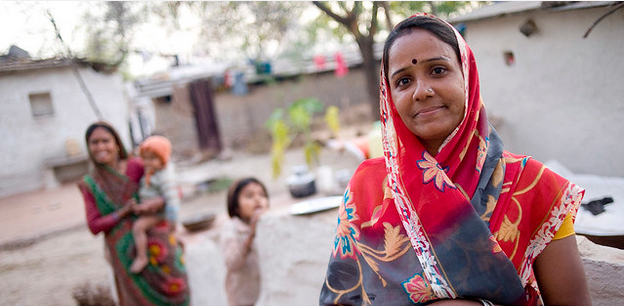
BMC Public Health 21, 2122 (2021). https://doi.org/10.1186/s12889-021-12188-4. Image credit: © Nick Cunard / Department for International Development via Flickr (CC BY-NC-ND 2.0)
- Log in to post comments