










































The Comprehensive Approach to Health Systems Management
"Traditionally speaking, public health planning is often driven by central-level policies and resource allocation that trickle their way down the health system. If you only start at the top, however, you miss the bigger picture." - Betty Cox and Meredith Klein
The Comprehensive Approach to Health Systems Management is a Maternal and Child Survival Program (MCSP)-developed process in which subnational managers - typically at the district level - leverage, mobilise, and coordinate local health system resources for increased coverage, utilisation, quality, equity, and sustainability of health services. The approach supports local decision-makers in identifying, analysing, and prioritising health system challenges that have hindered the achievement of strategic objectives, and allocating available or potential local resources for corrective actions.
In brief, through a proactive joint planning process, the Comprehensive Approach brings together subnational stakeholders to take a holistic view of improving health outcomes with an efficient and effective system. Local health managers working under the approach: identify gaps and bottlenecks in the delivery and uptake of reproductive, maternal, newborn, and child health care (RMNCH); develop contextualised systems strategies to solve problems; and monitor and use available data to track progress and adjust plans. MCSP provides mentorship to subnational teams throughout a 5-step process that involves: (i) identification of health system challenges through activity review; (ii) analysis and prioritisation of health system challenges; (iii) identification of local resources, including engagement of community health workers (CHWs), women's groups, youth groups, and radio broadcasters, for example; (iv) development of action plans with allocated resources; and (v) mentored implementation (MCSP provides mentoring throughout this implementation phase to support districts in mobilising additional resources and monitoring progress of action plans).
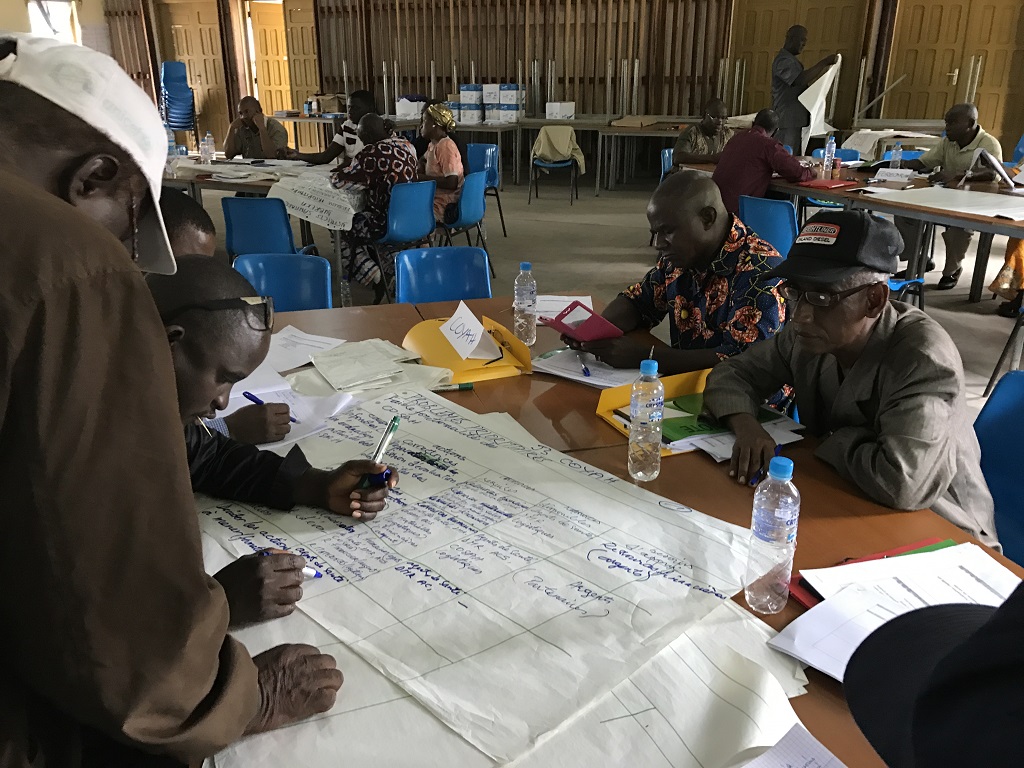
To date, the Comprehensive Approach has been implemented in Tanzania and Guinea. MCSP is working with subnational health managers (and national-level policymakers and managers) to address the fact that public employees working at the subnational level in low-and middle-income countries can lack a sense of power to make decisions around the day-to-day challenges they face on the frontlines. In Tanzania, fishbone diagrams were used to conduct root cause analysis during regional workshops with health management teams in Mara and Kagera regions. Fishbone diagrams are simple visual charts that allowed the teams to systematically review bottlenecks and gaps across people, materials, information, finances/resources, and management that might be impeding health system performance. In Guinea, MCSP instead used a vertical problem tree to probe deeper into the root causes and help the teams work through the analysis in a way that felt more natural. This activity was conducted as part of four three-day regional workshops in four MCSP-supported regions that experienced the highest Ebola burden (Conakry, Kindia, Boké, and N'Zérékoré). Workshop facilitators guided participants through a series of interactive activities, including the problem tree, aimed at developing a shared understanding of the health systems building blocks and increasing their understanding of the roles and responsibilities of district health managers.
The Comprehensive Approach encourages district teams to recognise the importance of all actors in the local health system, and to value them as assets that can be leveraged for supporting improvements. In Guinea, for example, the MCSP team sought to bring together a variety of actors. This meant that, instead of including participants only from the health sector (health facilities and health managers), the workshop included municipal representatives, community members, implementing partners, and potential investors in the region. All worked together through the workshop activities. "Engaging the right stakeholders at the right stage of the planning and management process is essential to make sure that local needs are met, local resources are used and that the community feels involved."
Click here to access The Comprehensive Approach to Health Systems Management Resource Compendium, which can be used as an additional resource to support the Approach.
Emails from Koki Agarwal and Meredith Klein to The Communication Initiative on June 18 2017 and June 22 2017, respectively; and "Rising from the Ashes: Strengthening Guinea’s Local Health Systems after Ebola", by Cicely Thomas, Meredith Klein, and Meera Suresh, June 8 2017, and "5 things we've learned from a bottom-up approach to health system strengthening", by Betty Cox and Meredith Klein, June 22 2017 - both accessed on June 22 2017. Image credit: MCSP
- Log in to post comments