










































Effects of Faith Actor Engagement on the Uptake and Coverage of Immunization in Low- and Middle-Income Countries (LMICs)
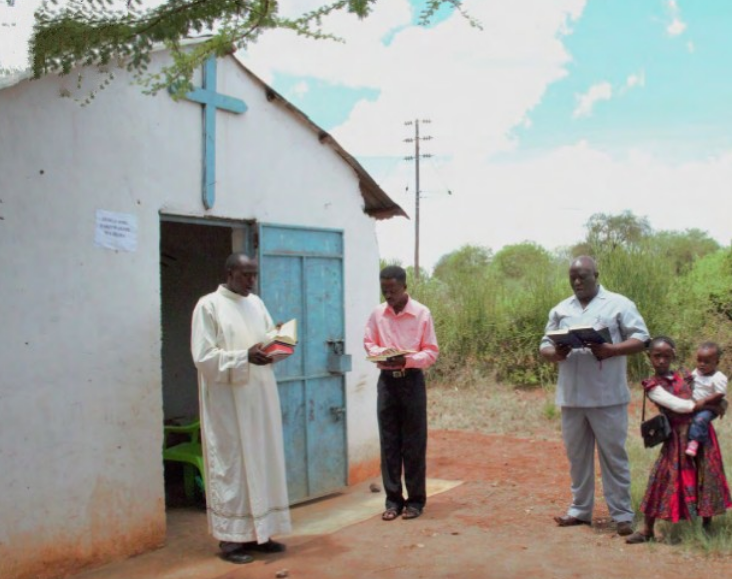
Consultant (Melillo); MOMENTUM Country and Global Leadership (Fountain, Bormet, O'Brien)
"The polio experience showed us that one word from a religious leader just upset the apple cart. You had another 10 years of fighting polio and billions of dollars spent." - Key Informant Interviewee
Religious leaders and local faith actors (LFAs) are recognised as influential to immunisation uptake and coverage. For example, they can: influence caretaker beliefs and values, impact access to resources that facilitate immunisation uptake, communicate immunisation messages and conduct social mobilisation, and provide routine immunisation in hard-to-reach areas or humanitarian settings. However, there is limited information on, and understanding of, how faith actors impact the uptake and coverage of immunisations in low- and middle-income countries (LMICs) and how to engage them to promote immunisation. Thus, the United States Agency for International Development (USAID) MOMENTUM initiative undertook a global landscape analysis to bring to light existing evidence and common themes around vaccine hesitancy relating to faith. Guiding questions included:
- How do religious leaders and faith-based organisations (FBOs) impact the uptake and coverage of immunisation in LMICs? What effects do LFAs have in contributing to vaccine hesitancy?
- What strategies have been successful in terms of working with LFAs and communities to improve immunisation acceptance and reduce vaccine hesitancy?
- What evidence gaps exist in relation to faith engagement and immunisation?
Building on learnings from earlier literature reviews, the team conducted a literature review (110 resources, as of January 2021) and 18 key informant interviews, or KIIs (February - March 2021). For details, see Annex 01: Methods.
The report shares the findings of the review, including for specific vaccines and major religions, summarising the evidence and identifying gaps. Overall, the evidence indicates that vaccine hesitancy among faith communities threatens routine immunisation coverage but also demonstrates the potential of engaging faith actors as partners to increase immunisation coverage. A few key takeaways:
- Listening and dialogue with faith leaders is critical to finding theologically-acceptable solutions to vaccine hesitancy. COVID-19 elevates the urgency of this work, as vaccine hesitancy is sometimes exported from high-income countries (the first vaccine recipients) to faith communities in LMICs.
- Religious factors are the third most frequently cited reason for vaccine hesitancy globally. But few religious groups' official religious texts explicitly reject immunisation, and views on vaccines vary, even within a religious group. Thus, it's hard to tell if vaccine hesitancy stems solely from theology, or if faith-based objections are a cover for more complex/interrelated sociocultural/political issues.
- We know a lot about polio vaccine hesitancy among Muslim communities (e.g., such as studies on concerns that the oral polio vaccine [OPV] included non-halal ingredients, or reported fears that polio vaccination campaigns were part of a plan to sterilise Muslims and thus reduce the Muslim population among some surveyed countries). But we know a lot less about engaging with the growing un-networked Pentecostal and Charismatic faiths in Africa or Buddhist and Hindu faiths in Asia on immunisation.
- Practice-based knowledge reigns supreme. On this note, evidence-based recommendations for immunisation and faith actors to take action that are identified in the review include:
- Engage religious leaders and church structures in social mobilisation and advocacy.
- Address religious concerns about vaccines through theological analyses, dialogue, and sensitivity, as well as understanding alternatives among available vaccines.
- Communicate effectively in response to concerns about the halal status of vaccines.
- Engage FBOs in the rollout of new vaccines, such as the COVID-19 vaccine.
- Pursue a multi-pronged strategy that includes, for example, increased service delivery availability along with messaging on immunisation.
- Leverage church infrastructure, faith-based health facilities, and rituals for vaccination points, including in humanitarian settings.
Other promising practices for faith engagement and immunisation identified through the KIIs include:
- Use a "top-down" approach with religious leaders in hierarchically-organised religions (e.g., in Northern Nigeria) to cascade interventions and get buy-in for messaging in appropriate contexts.
- Tap into umbrella inter-religious organisations (e.g., Religions for Peace faith councils) when appropriate to create a clear and unified message of vaccine acceptance.
- Provide clear scientific information on the safety and efficacy of vaccines: Break down complex science into digestible pieces for the audience (faith leaders, families). Don't assume religious leaders are ignorant on health or vaccine issues. Be honest when vaccine science is evolving or there are open-ended questions remaining.
- Work with male decision makers, in tandem with religious leaders and mothers, to promote immunisation messaging and services (e.g., use Friday prayer meetings/male religious groups as sensitisation platforms).
- Work with religious scholars to examine sacred text, and use religious argumentation to promote vaccines.
- Tap into health workers - who may be members of congregations - to play a leadership role in immunisation messaging, building on their esteem and trust in the community.
- Work on global faith leader governance to ensure there is accountability for clergy in vaccine messaging (and education of clergy staff).
- Use short, engaging WhatsApp videos for sharing of vaccine messaging.
- Partner with faith entities over a period of time ("When we see what has gone well with faith engagement, it is that it goes well when it moves slowly!" - KII).
Annex 03 of the report features additional recommendations for future research and learning agenda questions on the topic of vaccine hesitancy and faith actors. One KII commented: "Hesitance can be a dangerous assumption in low-resource settings. The data is not always well-collected or nuanced, so we assume that there is resistance among mothers or communities (rather than probing other factors)."
Annex 06 of the report features a list of current and recent projects focused on faith engagement and immunisation. The review identified 36 such projects, 33% of which are global in scope or multi-country focused. Of country-specific projects, 83% are focused on Sub-Saharan Africa. Most programmes engage religious leaders to promote vaccine uptake through social and behavioural change communication (SBC).
This Phase 1 analysis will inform the selection of country case studies (Phase 2), which will provide concrete recommendations on effective strategies for engaging religious leaders and faith communities in immunisation.
USAID MOMENTUM website, July 21 2021; email from Holly O'Hara to The Communication Initiative on July 28 2021; and CCIH website, April 1 2022. Image credit: John Rivera/IMA World Health
- Log in to post comments