










































Evaluating the "Zindagi Mehfooz" Electronic Immunization Registry and Suite of Digital Health Interventions to Improve the Coverage and Timeliness of Immunization Services in Sindh, Pakistan: Mixed Methods Study
HealthEnabled (Mechael); Johns Hopkins Bloomberg School of Public Health (Mechael, Mohan, Chandir); Gallup Pakistan (Gilani, Memon); independent consultant (Ahmad); University of Cape Town (LeFevre); IRD Global (Shah, Siddiqi, Chandir); IRD Pakistan (Chandir); Gavi, The Vaccine Alliance (Soundardjee)
"Through greater availability and use of data, the ZM-EIR implementation, as part of a broader package of immunization program-strengthening activities in Sindh Province, may have contributed to an increase in immunisation coverage and timeliness for BCG [Bacillus Calmette-Guérin] vaccinations and a decrease in zero-dose children in 2018-2019 from 2014."
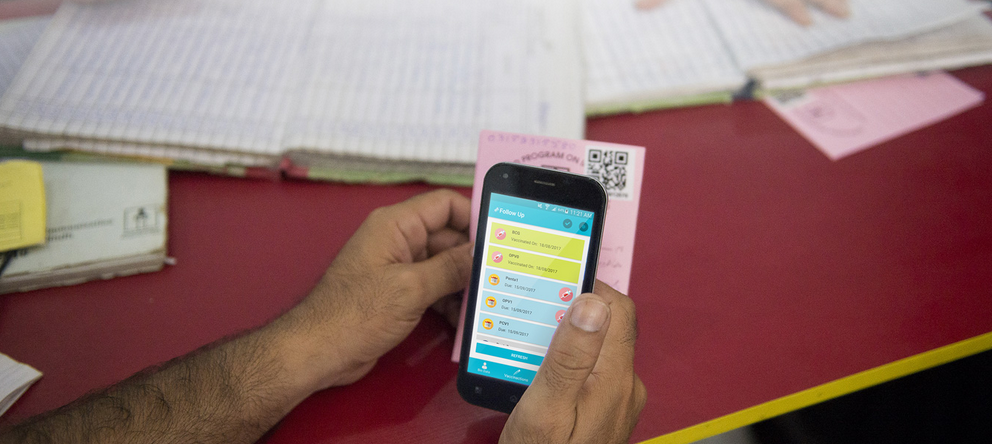
Electronic immunisation registries (EIRs) are digitised case-based immunisation record–keeping systems designed to improve the collection, analysis, and use of data to improve the efficiency, equity, and coverage of immunisation programmes. The Zindagi Mehfooz (safe life; ZM) EIR is a suite of digital health interventions that aims to improve equitable access, timeliness, and coverage of child immunisations through a smartphone-based app for vaccinators, web-based dashboards for supervisors and managers, text message alerts and reminders for caregivers, and a call centre. It has been implemented at scale in Sindh Province, Pakistan. This paper presents findings from an evaluation of ZM-EIR in an effort to improve data availability and use, with the ultimate goal, along with other interventions, of enhancing immunisation outcomes for children aged 12-23 months in Sindh Province. This province recorded full immunisation coverage of only 35% in 2014, according to the Multiple Indicator Cluster Survey (MICS).
The figure below illustrates how ZM-EIR works; see the paper for full details, but, in short, the ZM mobile Android app is used to capture data for each point of contact between the immunisation service, caregivers, and their children.

As outlined here, the ZM-EIR comprises complementary digital health interventions that go beyond the conventional definition of an EIR. The ZM-EIR aims to strengthen Expanded Program for Immunization (EPI) service delivery and the broader health system by addressing both supply- and demand-side barriers that contribute to suboptimal use of immunisation services. On the supply side, it is designed to enable health workers to track individual children's immunisation history and assess catch-up immunisation schedules, support motivation among health workers by reducing the excessive burden of paperwork and demonstrating the value that quality data can contribute to their workflow, and reduce the occurrence of poor reporting, management, supervision, and monitoring of vaccinators. On the demand side, the ZM-EIR is designed to overcome challenges associated with low uptake of immunisation services due to a lack of awareness and motivation among parents, as well as the inability to remember vaccine appointments.
The mixed-methods study included: (i) analysis of ZM-EIR system data to identify high-, moderate-, and low-adoption and compliance sites; (ii) in-depth interviews with caregivers, vaccinators, supervisors, and managers in the EPI; and (iii) pre-post outcome evaluation using vaccine coverage from the MICS 2014 and 2018-2019. Key outcomes of interest were improved data availability, use and contribution to immunisation outcomes, including receipt of individual antigens (Bacillus Calmette-Guérin [BCG], pentavalent [Penta] 1-3, measles), full immunisation (all antigens), and zero-dose children (defined as children aged 6-23 months who have not received the first dosage of the diphtheria-pertussis-tetanus 1/Penta vaccine).
From 2017 to 2019, the ZM-EIR immunisation registry enrolled nearly 5.4 million children and 1.9 million married women of reproductive age (15-49 years). The study found that, by registering newborns, providing alerts and reminders, and tracking immunisation completion, the ZM-EIR improved data availability and use in the EPI. The ZM-EIR was well received by EPI administrators, supervisors, vaccinators, and caregivers. The key benefit highlighted by ZM-EIR users was a list of children who missed scheduled vaccines (defaulters). For example, the provincial managers shared that the ZM-EIR's provision of defaulter and zero-dose lists enables those who supervise to encourage the vaccinators to bridge the gaps in the coverage of immunisation targets. The data are viewed as reliable due to the feature allowing the system to operate in both offline and online modalities, and the use of the platform is not dependent on the availability of internet services. These data are then communicated to other responsible representatives at the district and provincial levels.
Although changes in immunisation coverage across all antigens, timeliness for the BCG vaccine, and the reduction in the number of zero-dose children cannot be attributed wholly to the ZM-EIR programme, "the study findings are a promising indication that EIR data availability and use can support improvements in child health outcomes, such as vaccination, possibly through better tracking of clients and availability of data."
From a ground-level perspective, vaccinators shared that the selection of local people for authority positions in rural governments has increased the trust of the people in the government, leading local caregivers to trust health authorities and their immunisation efforts. In general, the vaccinators also believe that there has been an increase in awareness, coupled with an increase in diseases, which has had a concurrent effect on improved vaccination rates among rural communities.
Several suggestions and areas for improvement were made by key informants to address some of the challenges experienced by users of the ZM-EIR.
- Gender dynamics, gender segregation (male vaccinators/female caregivers), education, literacy, and cultural norms impacted access and use by vaccinators and the ability to make direct contact with caregivers. Although their numbers are lower, female vaccinators have higher compliance with the ZM-EIR system than their male counterparts. Power, trust, and relationships were noted to present challenges between vaccinators and clients of the opposite gender. In some cases, female caregivers refused to provide their phone numbers to male vaccinators, creating barriers to greater uptake of the ZM-EIR. One key informant emphasised the need for female health workers who can bond with female caregivers (who are usually more responsible for taking care of their children than male caregivers are) to resolve any resistance or anxieties regarding vaccinations to further expand immunisation efforts.
- The researchers noted reliance on double record keeping, which respondents recommended phasing out to reduce the data entry burden (double requirement to complete both paper and mobile data entry) for field vaccinators and facility staff. The study found the perception that ZM-EIR uptake is hindered by physical record keeping, with a recommendation to transition to paperless reporting.
As August 2022, the ZM-EIR was scaled to cover all of Sindh Province, including 2 new districts that were not covered during the evaluation period. The ZM-EIR has also been introduced in other areas of Pakistan, including the Federal Capital (Islamabad), Khyber Pakhtunkhwa Province, and the Gilgit-Baltistan region, and it has been used by over 5,000 vaccinators at public and private immunisation clinics to enroll over 7 million children.
In conclusion: "The ZM-EIR is a promising technology platform that has increased the availability and use of immunization data, which may have contributed, along with other intensive immunization program interventions, to improvements in immunization outcomes through systematic registration of children, alerts and reminders, and increased use of data for planning and monitoring by the EPI."
Journal of Medical Internet Research 2024;26:e52792) doi: 10.2196/52792; and IRD Global website, October 15 2024. Image credit: IRD Global
- Log in to post comments