










































Evaluation of the WHO Regional Office for Europe Tailoring Immunization Programmes (TIP) Behavioural Insights Tool and Approach
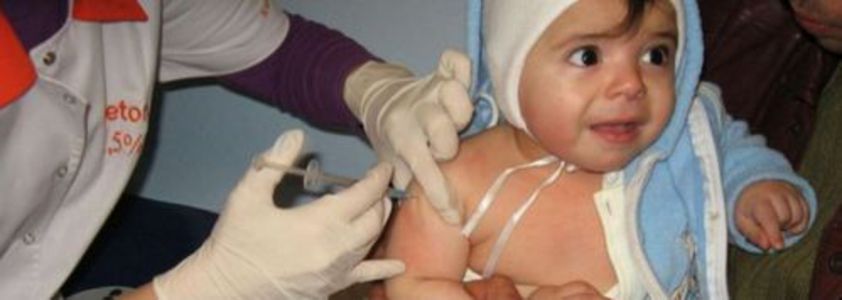
"TIP's overall value involves participatory appraisal. To that extent, the principles are relevant to other settings such as outbreaks and emergencies."
In 2013, the World Health Organization (WHO)/Europe developed the Guide to Tailoring Immunization Programmes (TIP), offering countries a process through which to diagnose barriers and motivators to vaccination in susceptible population groups and design tailored interventions. (See Related Summaries, below.) To take stock of TIP implementation so far, an external committee of six global experts conducted an evaluation from June to December 2016, informed by country assessments, a review of national and regional documents, and an online regional survey. In this, their final report, the team explores TIP's health impact, takes stock of its use and implementation in European Union (EU) Member States, and provides recommendations for the next phase of this work.
Drawing on social sciences, ethnographic research techniques, and behavioural insights methodology, TIP offers Member States a process through which to: identify susceptible groups; diagnose health-seeking behaviour barriers and motivators; and segment populations according to behavioural determinants, in order to design tailored interventions. The hope is that insights gained through a structured process of community engagement and social science research, and tailored strategies and interventions based on these insights, may make in-roads into disease elimination and eradication targets. TIP was piloted and implemented in four countries in the Region, and was also adapted for seasonal influenza (TIP FLU) (see below) and antimicrobial resistance programmes (Tailoring Antibiotics Programs, or TAP), with an additional four pilot projects in Member States.
The survey findings indicated strong demand for the type of research TIP addresses and strong awareness of the existence of the TIP guide. The response rate was 85 % - considerably higher than the usual rate of around 35% for such surveys, and thus an indication of interest among Member States. More than half of the respondents indicated an intention to implement a TIP project in their country in the future, and many countries requested TIP guidance and WHO support so they could use TIP to address critical challenges in their national immunisation programme.
Countries varied significantly in how they undertook and experienced the TIP process, which suggests that TIP is a structured but flexible approach. Nevertheless, certain strengths and challenges were identified; for instance, the interdisciplinary approach and the community engagement and qualitative research were among the most important strengths of TIP, enhancing the ability of programmes to listen and gain an understanding of community and individual perspectives. Other strengths cited were its ability to facilitate the questioning of assumptions, generate localised insights, and identify interventions responsive to the insights and relationships established through the approach. The interdisciplinary stakeholder engagement, the insights gained, and the relationships generated merely by assembling a diverse group of stakeholders were reported to have added value in themselves. Similarly, the initial step of collectively agreeing on the susceptible groups was cited as a valuable accomplishment in its own right. In this way, TIP seems to be particularly relevant for approaching groups with common environmental, social, or behavioural characteristics.
As such, a TIP project can be a means to two ends: building in-depth understanding on the side of health authorities, service providers, and researchers; and building trust and helping to break barriers of misunderstanding in the susceptible community. The emphasis on considering changes to service delivery rather than focusing solely on communication was another highlighted strength of the approach.
Some countries that have implemented the TIP approach have evaluated the results and found that the interventions were positive. One country has been able to show an increase in vaccination uptake (Lithuania); the others have not yet measured the bottom-line health impact of their TIP-related interventions.
WHO engagement and support were highly appreciated by country implementers, but these entail the risk of dependence and reduced local ownership and leadership. Another consideration with regard to TIP implementation is the fact that changing service delivery is a long, slow, and often complicated process. Emphasising that the purpose of TIP should go beyond identification of susceptible groups and diagnosis of barriers and enablers to vaccination, the evaluation committee recommended that WHO place emphasis on helping countries translate diagnostics into interventions and start the process of overall change. The implementation of interventions should be supported by an emphasis on: enhanced local ownership; integrated diagnostic and intervention design; and follow-up meetings, advocacy, and potentially incentives like seed funding for intervention and evaluation activities.
The evaluation results suggest that successful TIP implementation requires a local institution with a long-term commitment to lead the process. Ideally, to ensure implementation of interventions, implementing partners should be engaged from the early phases. Because TIP encourages application of social science methods to enhance listening and engagement, national teams need to ensure available capacity for designing, collecting, analysing, and presenting observational, qualitative, and/or survey research. Where TIP results in change of practice, capacity to design and evaluate programmes is also strongly advised. In light of such requirements, the evaluation committee recommends that countries considering their own TIP projects complete a basic needs assessment as a way of communicating the commitment expectations to implementers and highlighting capacity-building needs. WHO could develop a checklist for such a needs assessment. Finally, WHO should develop and share an "exit strategy" for every country and return to each country to assess progress and determine what might be useful to help ongoing intervention.
The committee recommends that future TIP materials should be more user-friendly, shorter, and simpler than the current guide, drawing on user feedback and user-centred design research. The stepwise structure and WHO branding should be retained, they say, along with the illustrations and figures that have supported national planning. They propose a stronger emphasis on translating diagnosis into implementation and offer specific suggestions for supporting materials, including digital communication tools for enhanced access to TIP, such as online videos or infographics. They also recommend that WHO continue to offer training workshops and take additional steps to establish a community of practice with TIP-implementing countries.
"In summary, based on data collected for the TIP evaluation, the evaluation committee concludes that the idea of strong community engagement and targeted tailoring of services remains as compelling as ever, and is supported by the majority of countries in the WHO European Region. However, it is important to emphasize that the purpose of TIP is not simply to diagnose enablers and barriers to immunization uptake but to intervene appropriately and effectively and ensure long-term change."
"Community Insights and Social Interventions to Increase Vaccination Coverage: New Evaluation Report", by Katrine Bach Habersaat, Global Immunization News (GIN), March 2017 [PDF]; and WHO website, April 11 2017. Image credit: Dr Zsuzsanna Jakab, WHO Regional Director for Europe
- Log in to post comments