










































Family Planning & Immunization Integration Toolkit
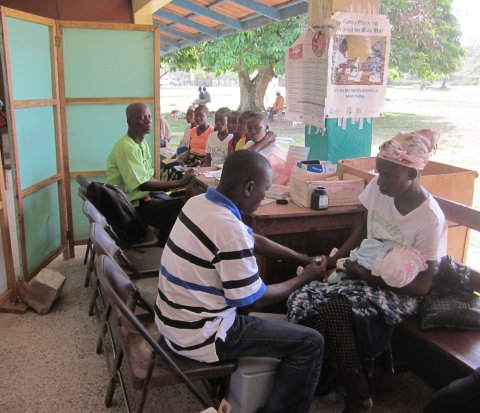
With the dual goals of (i) providing a repository of information on integrated family planning (FP) and immunisation service delivery and (ii) making evidence-based information and tools accessible to health professionals and others around the world, this toolkit was developed by the Family Planning and Immunization Integration Working Group to house relevant resources developed by partner institutions. Its premise is that providing FP information and services to postpartum women around the world during their infants' immunisation visits provides an opportunity to reach women with unmet need for family planning. Furthermore, while evidence of the effect of integration on immunisation services is limited, "it is possible that effective integration may result in strengthened health systems, more focus and attention brought to immunization services and outcomes, and more efficient use of staff time and resources."
This toolkit contains the following sections:
- Essential Knowledge: highlights the rationale for integration and presents resources documenting the evidence around FP and immunisation integration. The High Impact Practices (HIP) Brief summarises the global evidence and guidance for this practice, and the FP and immunisation integration Annotated Bibliography presents more than 40 articles and reports on this topic. The Conceptual Models page outlines the two primary models and distinguishing factors for integrated service delivery.
- Evidence-based Advocacy: presents advocacy considerations, as well as briefs, reports, and presentations used to advocate for FP and immunisation integration among key stakeholders. One rationale for the focus on advocacy: "There have been instances...- usually in connection with highly visible mass vaccination campaigns - in which rumors that vaccination is a covert attempt to sterilize women and children have led to setbacks in immunization. For this reason, advocacy for integrated immunization and family planning service delivery must recognize the perspectives and priorities of both services and make a compelling case for benefits while also addressing any concerns about potential risks. Such an approach to advocacy is central to securing buy-in from decision makers, building bridges across services, and identifying common ground."
- Implementation Tools: includes field-tested tools used to guide implementation of integrated service delivery, such as tools for screening and referral, training, supervision, and cost assessment.
- Social & Behavior Change Communication [SBCC]:, which is "a research-based, consultative process that uses communication strategies to facilitate change with the aim of improving health outcomes. SBCC is guided by a comprehensive ecological theory that incorporates both individual level change and change at broader environmental and structural levels. Within family planning and immunization integration efforts, SBCC serves a critical role for building buy-in and generating demand for both services, promoting high quality provider/client interactions, and ensuring that information shared by vaccinators and family planning providers is strategic (informed by findings from formative research; complemented by reliable, convenient services) and clearly relayed to clients." This section of the toolkit provides a range of tools and materials for designing a strategic approach integrated service delivery, including tools for formative assessment, sample job aids, and information, education, and communication (IEC) materials, as well as guidance on SBCC strategy design.
- M&E and Research Tools: presents guidance documents and tools to guide monitoring and evaluation (M&E) of integrated FP and immunisation service delivery, including recommended indicators and priority research questions.
- Country Experiences: offers examples of country experiences with integrating FP and immunisation services and highlights various strategies used, challenges faced, and lessons learned. For instance, a study which took place in Togo in the early nineties used a "combined service provision" model, whereby immunisation providers delivered simple messages to mothers of children being immunised, encouraging them to take advantage of same-day FP services available in the clinic. A similar approach was used in a demonstration project in Liberia. Country experiences in Ghana, Zambia, Rwanda, and Nigeria also applied a combined service provision model, but with the specific use of a screening tool to refer for same day, co-located family planning services. In Mali, dedicated family planning providers offered same-day FP services during a weekly immunisation event at urban health centres. Other country experiences documented here include the Philippines, India, Senegal, and Uganda.
- The Working Group: includes FP/Immunization Integration Working Group meeting reports and other documents.
FP and immunisation integration has been recognised by the United States Agency for International Development (USAID) as a "Promising Practice". USAID maintains a map and inventory list of countries implementing FP and immunisation integration activities through their Family Planning High Impact Practices website.
The Family Planning and Immunization Integration Working Group, initiated in 2010, is co-hosted by USAID's Maternal and Child Health Integrated Program (MCHIP) and FHI 360. Working Group members include representatives from a variety of institutions and countries. The Working Group welcomes additional resources for inclusion in the toolkit. Please email toolkits@k4health.org or click here to share a relevant resource via an online feedback form.
42
K4Health website, November 1 2013.
- Log in to post comments