










































How to Deal with Vaccine Hesitancy?
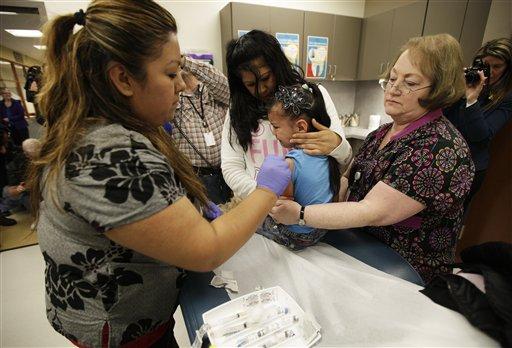
National Institute for Health and Welfare, Finland (Eskola); World Health Organization (Duclos, Schuster); Department of Paediatrics, Dalhousie University, Canadian Centre for Vaccinology, IWK Health Centre (MacDonald)
"It can be expected, as vaccine hesitancy evolves and new insights and information become available, that further research questions will continue to arise. The research portfolio therefore needs to be expanded to encompass the multiple facets of this phenomenon at individual, community, and contextual levels in a multi-disciplinary effort to reduce vaccine hesitancy..."
As detailed in this article, based on the concerns about vaccine hesitancy and its impact on vaccine uptake rates and the performance of national immunisation programmes, the Strategic Advisory Group of Experts (SAGE) on Immunization Working Group on Vaccine Hesitancy carried out a review and proposed a set of recommendations directed to the public health community and to the World Health Organization (WHO), its partners, and WHO member states.
Reluctance to accept the measles vaccine in parts of Europe, the human papillomavirus (HPV) vaccine in Japan and India, and the polio vaccine in parts of Nigeria and Pakistan are some recent examples of vaccine hesitancy.
In addition to offering a list of research subject categories for this rapidly emerging field, SAGE issued final recommendations in October 2014. They focus on:
- The need to increase understanding of vaccine hesitancy, its determinants, and the rapidly changing nature of the challenges that this hesitancy entails. "Dealing with vaccine hesitancy within a country and/or a population subgroup requires at first an understanding of the magnitude and setting of the problem and a diagnosis of its root causes. This is followed by the identification and tailoring of evidence-based strategies to address the root causes, and a subsequent evaluation to determine the impact of the interventions and monitoring whether vaccine acceptance has improved." Finally, the authors note that an ongoing surveillance should be maintained to watch for possible recurrence of the problem.
- The structures and organisational capacity needed to decrease hesitancy and increase acceptance of vaccines at global, national, and local levels. Among the suggestions:
- "Cross-linkages between specific WHO programmes should be strengthened as hesitancy is a cross-cutting concept which concerns various immunization-related fields. WHO should also engage partners, including civil society organizations, at the global, regional and country levels, to mobilize in support of immunization and to combat vaccine hesitancy. The landscape of organizations active in the field of vaccine hesitancy, delineated by the Working Group, needs to be maintained and updated as a resource to facilitate collaboration in global networks of researchers and stakeholders working on vaccine hesitancy....
- Given its vast experience in the field of polio with expertise in civil society organization, communications and behavioural change, UNICEF [the United Nations Children's Fund] is encouraged to continue the work with member states and strengthen competencies in the field of vaccine hesitancy....
- Creation of an organizational structure, by both WHO and UNICEF, to address and coordinate vaccine hesitancy and demand issues at their headquarters level, would facilitate a coordinated cross-cutting approach to counteracting vaccine hesitancy globally, by building regional capacity to support countries in dealing with vaccine hesitancy...
- Health-care workers should be educated and trained to deal with vaccine hesitancy in patients and parents. Negative attitudes of health-care workers towards vaccination strongly influence their patients and potential vaccine recipients, and vaccine hesitant behaviours among health-care workers need to be addressed. It is also important to ensure education on vaccines and immunization in general, and concerning vaccine-hesitant individuals in particular, by inclusion of appropriate training in the curricula of nursing, medical and other health-care students.."
- The sharing of lessons learned and best practices based on experiences from various countries and settings, as well as the development, validation, and implementation of new tools to address hesitancy. "...[R]egular updating and dissemination of best practices and lessons learnt should be facilitated. This includes regular synthesis, review and sharing of best practices for vaccine hesitancy monitoring, intervention, and prevention, as well as promoting training and making research findings available globally and regionally. SAGE encouraged the public health community to work together to develop, validate and promote the use of tools to address vaccine hesitancy, including tools for monitoring, diagnosis, intervention, evaluation of impact, cost, and community acceptability." The authors point to Tailoring Immunization Programmes (TIP) model, which was developed by WHO/Regional Office for Europe (EURO). They suggest that: "Countries should be supported in using TIP, and sharing their experiences of its effectiveness with monitoring and evaluation of outcomes, especially in low and middle income countries."
The authors say that further research is needed on vaccine hesitancy to study factors at the individual, community, contextual, and organisational levels. "One of the main difficulties identified by the Working Group was the lack of validated and standardized tools to assess and measure vaccine hesitancy rates and underlying hesitancy determinants across settings and between population groups, and for monitoring trends over time." Secondly, it is noted that "[s]pecial attention needs to be paid to differences and similarities between routine immunization programmes and mass vaccination campaigns in different settings and contexts." Finally, the authors observe that, thus far, "most studies have not defined vaccine hesitancy in the study population and have only measured change in vaccine uptake, without assessing whether the intervention had any impact on hesitancy...[W]henever strategies to address vaccine hesitancy are implemented, the population should be fully described, and a rigorous evaluation should be conducted of the impact of the intervention and its components on vaccine hesitancy as well as on vaccine acceptance."
Vaccine Volume 33, Issue 34, August 14 2015, Pages 4215-4217 - sent via email from Michael Favin to The Communication Initiative on August 18 2015. Image credit: AP File Photo/Ted S. Warren
- Log in to post comments