










































Immunization among Tribal Population in India: A Need Assessment Report
National Cold Chain & Vaccine Management Resource Centre (Singh, Gupta), United Nations Children's Fund (Bhadana, Negi)
"There was an imperative need to understand the socio-cultural practices and the immunization service delivery among tribal populations for better strategic interventions to bridge the inequity gaps in immunization coverage in India."
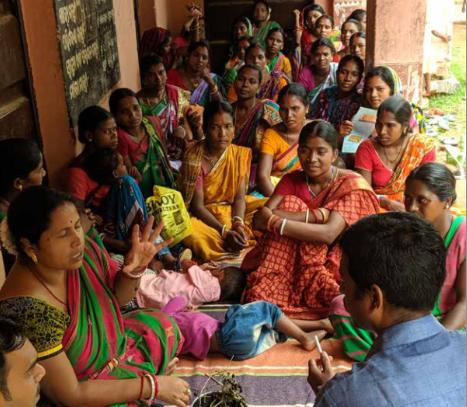
In India, the scheduled tribes are under-represented, marginalised groups with consistently low full immunisation coverage (56% as compared to the national average of 62%). Making up 8.6% of the total population, they live in an economic, social, and geopolitical environment with poor health indicators across all age groups. This document details a study on immunisation-related awareness, myths, and service delivery issues in the tribal-predominant areas of seven states across India. It is intended for policymakers to frame evidence-based state-specific strategic tribal immunisation action plans to bridge the gaps in immunisation coverage in India.
The study was conducted by a team of experts from the Ministry of Health and Family Welfare (MoHFW), National Institute of Health and Family Welfare (NIHFW), National Cold Chain & Vaccine Management Resource Centre (NCCVMRC), United Nations Children's Fund (UNICEF), Immunization Technical Support Unit (ITSU), and World Health Organization (WHO), with inputs from the Ministry of Tribal Affairs (MoTA). The researchers undertook a qualitative cross-sectional study consisting of in-depth interviews (IDIs) and focus group discussions (FGDs) at the state, district, block, and village levels. IDIS were conducted with government officials, frontline health workers (auxiliary nurse midwives (ANMs), accredited social health activist (ASHAs), anganwadi workers - AWWs), key influencers, and caregivers; FGDs were conducted with caregivers/family members and the community. Semi-structured questionnaires were used for data collection. Data were analysed using theme-based content analysis.
The study found that there is no specific plan/budget to address the vaccination needs and conduct sessions in tribal areas, including the particularly vulnerable tribal groups (PVTGs). Lack of coordination between the tribal department and health department affects the service delivery in tribal communities. Difficult working conditions, distant session sites, and lack of transportation and connectivity in most areas (particularly during rainy season) were major impediments in conducting outreach sessions and in the mobilisation of beneficiaries. Limited health staff in some sub-centres, not enough cold chain points, and delayed/incomplete ASHA payments were some of the weaknesses highlighted.
Most of the tribal population accepted immunisation, despite low literacy levels and low per capita income. However, loss of daily wages secondary to adverse events following immunisation (AEFIs), fear of AEFIs, migration for better livelihoods, lack of connectivity/transportation to session sites, and the PVTGs' belief in traditional faith healers were predominant reasons for left-outs and drop-outs in tribal groups.
In short, the study highlighted the fact that the challenges faced by the tribal population are highly variable and dependent upon their geographical location and vary from tribe to tribe. However, the following common factors were identified as reasons for low immunisation coverage in tribal population: fear of side effects and lack of awareness; loss of wages; inaccessible session sites; scattered population; vaccine hesitancy due to resistance by family members; migration of families; vaccine delivery in hard-to-reach areas; language barriers; lack of proper healthcare facilities; shortage of human resources (HR); and poor inter-sectoral coordination.
The study also highlights the fact that the immunisation programme has reached even the remotest of locations. This opportunity could be utilised to reach and deliver need-based services provided by other health programmes, giving a comprehensive package of services to improve the tribal population's overall health indicators. This approach could have a synergistic effect by not only improving trust in and acceptance of the immunisation programme but by also addressing tribal health issues as a whole.
A SWOT (strengths, weaknesses, opportunities, and threats) analysis of the immunisation programme in tribal areas also indicated receptive health functionaries and communities, strong immunisation supply chain, and multiple state-level innovations as key internal strengths of tribal immunisation. Lack of awareness and limited access to healthcare services due to poor infrastructure and connectivity were the predominant weaknesses of the system. The system further faces external threats such as climatic havoc in an already-difficult geographic terrain. However, there is an opportunity for developing strong inter-departmental coordination with the tribal department, utilising and strengthening vaccination acceptance among communities, and increasing the involvement of religious and local leaders. The study also highlights the fact that the immunisation programme has reached the remotest of locations. This opportunity could be utilised to reach and deliver need-based services of other health programmes, providing a comprehensive package of services to improve overall health indicators of the tribal population.
Many states and districts have adapted some local methods to tackle the challenges faced in beneficiary mobilisation, immunisation service delivery, and improvement in coverage in their respective areas. The report details these approaches, such as the engagement of ASHAs and AWWs in mobilising beneficiaries, counseling them about the benefits of vaccination, and addressing myths/fears; here are some examples of strategies in specific locales:
- In Dhule (Maharashtra), an ANM believes that an effective mode of communication in the community was the involvement of the mahila mandals (voluntary service organisations), door-to-door visits, and information disseminated through schools, ashrams (monasteries), self-help groups, and non-govermental organisations (NGOs). Door-to-door spread of information was particularly highlighted for scattered populations as an effective means of information, education, and communication (IEC).
- An ASHA in Gumla District (Jharkhand) suggested impactful, visually enriching messages using mobile vans along with one-to-one interaction as an effective communication startegy.
- In Jhabua (Madhya Pradesh - MP), it was suggested that the sessions be integrated with important events such as weekly haat bazaars, church congregations, and gram sabha (the primary body of the Panchayati Raj Institution (PRI) system). The regular meeting of PRI members (the panchayat baithak), could also be utilised to increase awareness about immunisation and its benefits to the community.
- In Alirajpur (MP), an ANM counselled the mothers and other community members to dispel their misconceptions and make them aware of the benefits of immunisation on Village Health Sanitation and Nutrition Day (VHSND) and Immunisation Day. ANMs here also give the example of a completely immunised and healthy child to motivate parents to get their child immunised, too.
- In Rajasthan, the use of traditional methods for spreading information such as nukkad natak, puppet shows, magic shows, and harkare for community engagement were suggested for increasing awareness and enhancing community mobilisation.
- In communities where traditional healers have a strong influence, such as the Manjhi tribe (Chhattisgarh), Bhumij community (Odisha), and Sokha-Bhoga (Jharkhand), liaising with traditional healers or those practicing alternative medicine can be used to promote immunisation.
- In Batauli, Surguja, Chhattisgarh, the kothwas or mahato (local announcers) announce the session time and immunisation site one day prior to the outreach session at the anganwadi centre.
- In Odisha, a special plan has been devised to strengthen healthcare service delivery across 11 PVTGs in 82 blocks of 12 districts of the state. It identifies 8 special strategies, including immunisation. Key components include strengthening of HR, identification of local healers, sensitisation of traditional and local healers, formation of a database, review of activities performed by traditional healers, social mobilisation and awareness campaigns (nukkad natak, road show, wall paintings), provision of funds, and awards and recognition for health workers.
During the FGDs and IDIs with caregivers, community leaders, and key influencers, a few common suggestions emerged for improvement in access to and acceptability of immunisation services. For example, in Jharkhand, tagging immunisation with other important events such as monthly haat bazaars, melas, weekly gatherings, etc. can promote more participation. The majority of people also suggested that more information on vaccination should be provided through local methods like nukkad nataks, drum beating, dance drama, and film shows, in addition to timely reminders by health workers. It was suggested that the mahila sangathan (the women's wing of the Socialist Unity Centre of India) in the village be involved for better community participation.
Key recommendations for improving immunisation coverage among tribal children and ensuring quality services offered in the report can be grouped under two categories:
- Ensuring service delivery and quality of immunisation services - for example, involvement of departments such as Education, Integrated Child Development Services (ICDS), and PRIs should be encouraged to increase community awareness and improve the mobilising of beneficiaries to the session sites. Holding outreach sessions at local bazaars, melas, and festivals in coordination with the PRIs can also increase accessibility and availability of immunisation services to the communities.
- Strengthening community engagement and demand generation - for example, the study suggests:
- Community awareness and mobilisation through locally adapted methods - e.g., As the literacy rate is barely 50% in tribal areas, the conventional IEC channels, like erecting posters and banners in the common language, will not prove effective. Instead, audio-visual and mid-media material such as wall paintings, nukkad nataks, folk dances and songs, door-to-door information in scattered hamlets, mahila mandal meetings, awareness camps, magic shows, and local festivals, should be the preferred medium of awareness generation and mobilisation.
- Special communication strategies for decision makers - e.g., Mothers-in-law and fathers (the primary decision makers of the Indian family), can be engaged in immunisation awareness and motivation through regular mahila mandal meetings, rituals and customs, and efforts to address their own health problems.
- Health promotion through local influencers - e.g., Identifying locally active ward members, the Sarpanch of the village, and local religious healers as influencers and advocating with them to deliver information related to health and immunisation during monthly mahila mandal meetings, community awareness meetings, or other gatherings and ceremonies can aid in motivating and mobilising the community and increasing the acceptability of vaccination.
- Improved follow-up mechanisms - e.g., To alleviate the fear of the vaccination's side effects within the community and to strengthen current AEFI control measures, a practice can be put in place where the ANM calls the caregivers one day after the immunisation session to ask them about any side effects and counsel parents about how to mitigate the side effects, if any.
- Involvement of traditional healers and civil society organisations (CSOs) - e.g, There should be an effort to involve and sensitise traditional healers and alternate medicine practitioners to enhance their capacity on the importance of immunisation, promotion of healthcare-seeking behaviour, and referral to the government health system. Locally active CSOs can be utilised to form a strong link between the health system and community that can actively take part in promoting healthcare-seeking behaviour.
- Focus on the health worker's interpersonal communication (IPC) - e.g., ASHAs in the tribal community generally have lower literacy levels and were observed to have relatively lower self-confidence as compared to those working in non-tribal areas. Special attention needs to be given to their capacity building.
- Advocacy and sensitisation to counter wage loss - e.g., Planning the sessions to coincide with local holidays may be an alternative so that the family does not fear losing wages.
- Efforts to ensure coverage of migratory populations - e.g., A migration tracking system could be established, with a special outreach session to cover flagged migrant families during festivals/harvest seasons to ensure catch-up of all such beneficiaries.
- Innovations - e.g., A database of all families in the district can be created using information technology, where each family has a unique identifier (number to be provided to the family) with details of all family members, pregnant women, and under-five children in the family.
In conclusion: "The findings from the study clearly identify the need for a localised and highly customised strategy addressing specific challenges faced by the diverse tribal population....It is, therefore, recommended that all...districts with a large tribal population (more than 25%) should develop a district-specific 'Tribal Immunization Action Plan' identifying the geographical location of the tribal population in their district, in collaboration with the Tribal Department, and detail strategies for service delivery as well as community engagement. Local innovations (technological and non-technological) have potential to provide new direction and treatment for addressing the bottlenecks and challenges to reach and fully immunise every child."
Behaviour Change Matters, Vol. 8 (November 8 2021), UNICEF C4D India. Image credit: UNICEF India
- Log in to post comments