










































Increasing Trust and Vaccine Uptake: Offering Invitational Rhetoric as an Alternative to Persuasion in Pediatric Visits with Vaccine-Hesitant Parents (VHPs)
Independent researchers
"When healthcare providers encounter hesitancy, invitational rhetoric offers a way for providers and families to work together to cultivate mutual understanding in the context of a trusting provider-parent relationship."
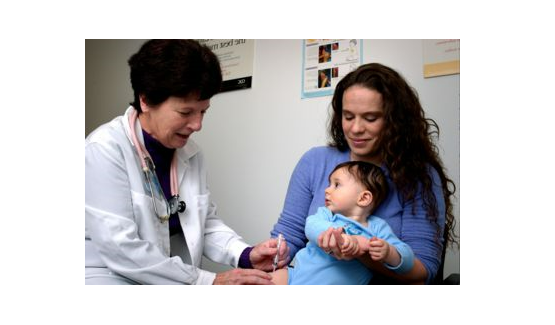
Research suggests the communication techniques healthcare providers adopt with vaccine-hesitant parents (VHPs) play a role in parents' vaccination plans for their children. Traditional rhetorical strategies (e.g., persuasion via use of fear-based messaging) remain the default to help increase vaccine uptake, despite mounting evidence such techniques may increase hesitancy and negatively affect the provider/family relationship. Conducted in the United States (US), this study introduces and evaluates an alternative to traditional persuasion in conversations between healthcare providers and vaccine-hesitant families: "invitational rhetoric".
In the words of the theoreticians who proposed it, invitational theory offers communicators "an invitation to understanding as a means to create a relationship rooted in equality, immanent value, and self-determination" (Foss and Griffin, 1995). Instead of encouraging communicators to seek out weaknesses in opposing perspectives and argue against them (persuasion), invitational rhetoric invites communicators to listen across difference, engage in dialogue, and try to understand and value alternative perspectives - not to try to change them.
This case study began in 2019 at a small, urban, paediatric practice in the western US. The researchers: administered pre- and post-visit surveys to 105 families; audio recorded and transcribed their two-month well child checks (WCCs), which are the first opportunity to administer recommended immunisations according to the Centers for Disease Control and Prevention (CDC); and facilitated individual, one-hour semi-structured interviews with all six providers at the practice. The study focused exclusively on those participants who selected a plan other than the full, recommended CDC vaccination schedule in their pre-visit survey: 35 of the families (VHPs).
Of the 35 families, 16 (46%) of them reported that the provider tried to persuade them at least somewhat during the WCC, using some degree of traditional/non-invitational rhetoric. In one example, the provider used a presumptive tone (the supposition that all families intend to vaccinate until expressed otherwise) when initiating the conversation about vaccines. That family's post-visit survey reflected their discomfort - e.g., no change to the vaccination plans and a reduction in trust from "very trusting" to "somewhat trusting". The researchers also noted instances of another non-invitational technique called "privileging positivism" (reliance on empirical science as the basis for knowledge) that may have led to fewer high trust scores and no change in vaccination plans. Overall, the vaccination uptake of 10 of those 16 (63%) families remained the same or decreased, confirming the hypothesis that non-invitational communication styles may lead to more cemented vaccine hesitancy.
In addition to the presence of non-invitational communication, all providers adopted elements of invitational rhetoric in their encounters with the VHPs. Examples are given from the audio recordings that illustrate invitational elements including: encouraging critical engagement with the decision-making process; viewing parents as an additional authority on their children's lives; deferring to a family's authority on their reality; honouring autonomy; and accepting decisions without judgment.
In all, 13 of the 35 VHPs (37%) increased their vaccine uptake compared to their pre-visit plans; 80% selected the highest scores for trust in their providers; and 85% of those VHPs who chose to increase their vaccine uptake also selected those top trust scores. Notably, three families who specifically remarked on the invitational style of their providers (selecting top scores for safety, respect, freedom, and trust on their post-visit surveys) also increased their vaccination uptake.
During individual interviews, all six of the providers described a tension they felt between wanting to establish trusting relationships with families and feeling pressure from the medical community to use traditional strategies to persuade families to vaccinate. However, they said they prefer invitational approaches in discussions with vaccine-hesitant families.
In discussing the findings, the researchers make a distinction between motivational interviewing (MI) and invitational rhetoric. The intention of latter is not to change behaviour but, rather, to foster trust and mutual understanding. They write: "Practitioners of MI might find invitational rhetoric honors and even extends the application of some of the basic tenets of MI; indeed, future research could explore the relationship between invitational and motivational styles."
Based on the findings, the researchers conclude that invitational rhetoric may play a meaningful role in increasing vaccine uptake while sustaining or even improving a family's trust in their provider and reducing feelings of alienation and dissatisfaction for both families and providers. "Providers and families engaging in invitational dialogue might expect a satisfying change to their relationship, regardless of their specific vaccination plans."
Vaccine: X Volume 10, April 2022, 100129. https://doi.org/10.1016/j.jvacx.2021.100129. Image credit: James Gathany, Judy Schmidt, USCDCP via Public Domain Images
- Log in to post comments