










































Influence of the COVID-19 Pandemic on Caregiver Beliefs and Experiences of Routine Childhood Immunisation in Indonesia
University of Sydney (Randell, Sheel, Li, Tinessia, Jenkins, Leask); United Nations Children's Fund (UNICEF) East Asia & Pacific Regional Office (Dynes); University of Melbourne and Royal Children's Hospital (Danchin); Universitas Indonesia (Oktarinda, Sukesmi, Wahyono); Universitas Diponegoro (Saraswati); Republic of Indonesia Ministry of Health (Dewi, Yosephine); UNICEF Indonesia (Saman)
"[S]ystematically measuring the social and behavioural drivers of childhood immunisation from the perspective of caregivers...contributes to an evidence-based grounding for developing tailored and cost-effective interventions."
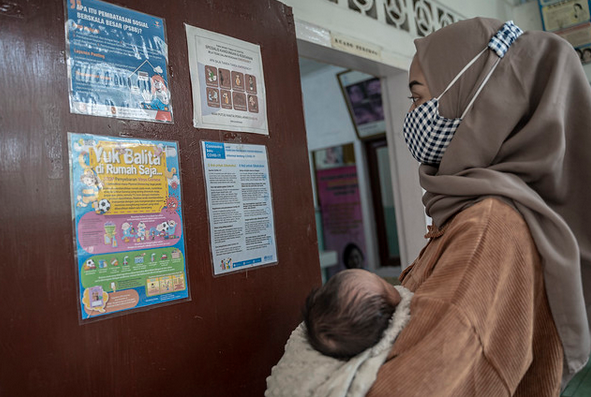
Even prior to the COVID-19 pandemic, routine immunisation in Indonesia faced numerous vaccine access and demand challenges, including a lack of actions taken to seek, support, or advocate for immunisation services. Factors found to play a role in vaccine demand in Indonesia include a lack of awareness of the benefits of immunisation, safety and efficacy concerns, trust issues and misinformation among caregivers, and religion. The pandemic exacerbated these issues, affecting a median of about 5 early infancy antigens and 14 infant antigens and leading to a case of vaccine-derived polio in Aceh province at the end of 2022. This study investigated the influence of the pandemic on the beliefs and experiences of caregivers of children related to routine immunisation.
This study involved a cross-sectional survey among 1,399 caregivers of children aged 0-24 months in Central Java and West Nusa Tenggara provinces from March-April 2022. At the time of the survey, parts of Central Java had level 3 (activities and operating times of posyandus (integrated service posts) restricted) and level 4 restrictions (posyandus are closed and services are re-directed to puskesmas, which are government-mandated community health clinics). West Nusa Tengara had level 1 and 2 pandemic restrictions, where posyandus were able to re-open with strengthened health protocols. As such, access to immunisation services was hampered, and caregivers may have perceived them to not be available even beyond the time of re-opening.
Data on beliefs and experiences of childhood immunisations were captured using core items from the World Health Organization (WHO)/UNICEF Behavioural and Social Drivers of Immunisation (BeSD) survey. The BeSD survey items have been globally validated and include the domains of Thinking and Feeling, Social Processes, Motivation (intentions), and Practical issues. Each domain includes key constructs (themes) that are designed to assess the major drivers of vaccination. Bivariate and multivariate logistic regression analyses identified factors associated with uptake of routine immunisations.
While nearly all caregivers (95.7%) reported wanting their child to receive all recommended routine immunisations, and 99% of caregivers thought routine immunisation was moderately or very important for their child's health, only 40.3% of children aged 2-24 months were up to date with all vaccines for age. Factors associated with being up to date included higher parental education (adjusted odds ratio (aOR): 1.76, 95% confidence interval (CI) 1.02-3.05), higher household income (aOR: 1.54, 95% CI 1.09-2.18), and caregivers who found it moderately or very easy to get immunisations (aOR: 2.26/2.22, 95% CI 1.06-4.83/1.06-4.69).
Based on these findings, the researchers suggest that recovery efforts should prioritise responding to the factors associated with immunisation status (e.g., perceived ease of access) and on families experiencing disadvantage (e.g., caregivers with lower education and household income) to ensure protections against future outbreaks that are responsive to the context-specific needs and priorities of districts and communities. "Important to immunisation program recovery will be leveraging...community confidence through continued and strengthened community engagement, coupled with the accessibility and provision of high-quality services.
As many countries move toward immunisation programme recovery, this study "highlights the value of the WHO/UNICEF BeSD tools in understanding some of the major behavioural, social and practical contributors to low uptake....Systematic measurement and ongoing documentation in a range of settings will support data-driven programme implementation. It may also allow for comparison across the key behavioural and social drivers of vaccination uptake over time in Indonesia and at a regional or global level to further support policy and programme implementation."
In conclusion: "This study can inform the recovery of immunisation programs in Indonesia and build resilience for future emergencies and pandemics."
Vaccine https://doi.org/10.1016/j.vaccine.2024.01.013. Image credit: Oscar Siagian/USAID-JALIN via Flickr
- Log in to post comments