










































Lao PDR Polio Communication Strategy and cVDPV Outbreak Response Action Plan 2015 - 16
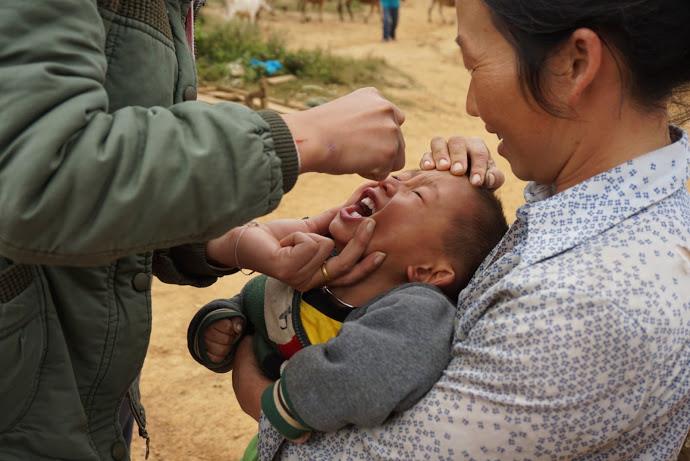
"For the polio outbreak response to succeed, a timely and strategic communication response is necessary to mobilize partners, mass organizations, communities and parents. Engaging communities and their leadership in dialogue, especially in the backdrop of vaccination hesitancy in some communities, is essential..."
This communication strategy and action plan, part of the National Response Plan to circulating Vaccine Derived Poliovirus, or CVDP (see Related Summaries, below), provides direction and interventions to reach out to parents, communities, and stakeholders in support of polio vaccination in Lao PDR. In it, the Ministry of Health (MoH), the World Health Organization (WHO), and the United Nations Children's Fund (UNICEF) describe challenges including: low awareness about vaccine-preventable diseases and their risks; prioritisation of engagement in the rice fields during sowing and harvesting season over taking children for immunisation; concerns about relevance and safety of vaccines; lack of both local/minority language and interpersonal communication (IPC) skills on the part of health workers (complaints against health workers being insensitive, imposing, and prescriptive); and belief in and use of traditional/local remedies.
Central approaches planned to address these challenges include: a strong network of community influencers, enhanced communication for development (C4D) capacity, visible political commitment, and improved micro and communication planning. Specific strategies will include: advocating with provincial and district governments, line departments, and mass organisations to create a sense of urgency for polio vaccination and provide visible support; mobilising community leadership to take the lead in face-to-face communication for raising awareness, acceptability, and participation, especially in high-risk districts; rolling out a cross-channel campaign to complement face-to-face contacts and persuasion; and using a uniform colour scheme and symbols for improved recognition of campaign material, even by those who are illiterate. The main approaches for reaching out to groups like the Hmong community are through community-driven strategies to address the knowledge gaps, vaccine hesitancy and other access and utilisation issues and improved outreach to socially excluded groups and/or economically poorer households. For example, local festivals such as the Hmong New Year are important engagement points when almost all the community members are present and can be reached for polio messaging and motivation. Communication interventions, which include the opportunity to discuss one-on-one with trusted people what they have seen or heard in the mass media, are to be built on the right to information, following principles of inclusion and self-determination. Improving communication skills (including the local dialect) of health workers, volunteers, and community ambassadors serving in remote, underserved areas and high-risk communities will be a strategic process to narrow the gaps. In the face of limited numbers and capacity of health workers and volunteers, polio and routine immunisation (RI) will be integrated in training, collaboration among workers will be encouraged, and IPC training needs adjusted to include RI as well as polio messages.
Pages 8-14 of the document include charts that outline the polio communication action plan 2015-2016, including: the national advocacy, mobilisation, communication, capacity and monitoring activities; the plan for 75 high-risk districts; the plan for communication materials development, production, and distribution; and guidelines for communication material usage. Regular and institutionalised monitoring of communication process and social investigation are an integral part of the strategy. Thus, process indicators as well as monitoring and assessment indicators are listed, as is the plan for two social investigations/rapid appraisals. (Also, a communication monitoring checklist is included in Annex 1 and a pretest questionnaire is offered in Annex 2).
In recognition of the fact that risk or crisis communication preparation and management can avert costly problems, reflected by complacency, rumours, adverse events, and a lack of confidence in vaccines or health systems, the document offers guidelines such as "let the media and public know if you don't know."
Emails from Ellen Coates to The Communication Initiative on February 16 2016, February 17 2016, June 29 2016, and July 7 2016. Image credit: © WHO/R. Tangermann
- Log in to post comments