










































Leveling the Research Playing Field: Decolonizing Global Health Research Through Web-Based Platforms
Bal Umang Drishya Sanstha (Seth, Thankachen, Qaiyum); Johns Hopkins Bloomberg School of Public Health (Dhaliwal, Miller, Best, Sullivan, Shet)
"Harnessing web-based approaches in research provides a pathway toward opportunities to promote equity and contribute to the decolonization of global health spaces."
Research collaborations have historically relied on in-person gatherings to implement research and interventions. In the initial phases of the COVID-19 pandemic, in-person gatherings were difficult to sustain, triggering discussions on how certain formats of research in the context of colonialism, where some investigators in high-income countries lead and manage research and investigators in low- and middle-income countries (LMICs). This article proposes an approach with the potential to contribute to the decolonisation of global health research. Specifically, it desecribes the Community Health Worker-Led Intervention for Vaccine Information and Confidence (CIVIC) project's incorporation of web-based platforms to lead to a more horizontal and inclusive approach to partnerships between researchers and the community.
As the CIVIC team explains here, decolonising global health involves "removing all forms of supremacy in all spaces of global health practice and research, including within countries, between countries, and at the global level....Colonization was historically justified by delusions of supremacy; this included an epistemic supremacy that individuals in LMICs could not be producers of knowledge....Colonization has further contributed to a refusal to learn from people who are local experts and a failure to understand that there are many ways to approach public health issues....However, participatory research and embracing indigenous ways of knowing have repeatedly produced more in-depth knowledge than what would be possible through an outsider's approach..."
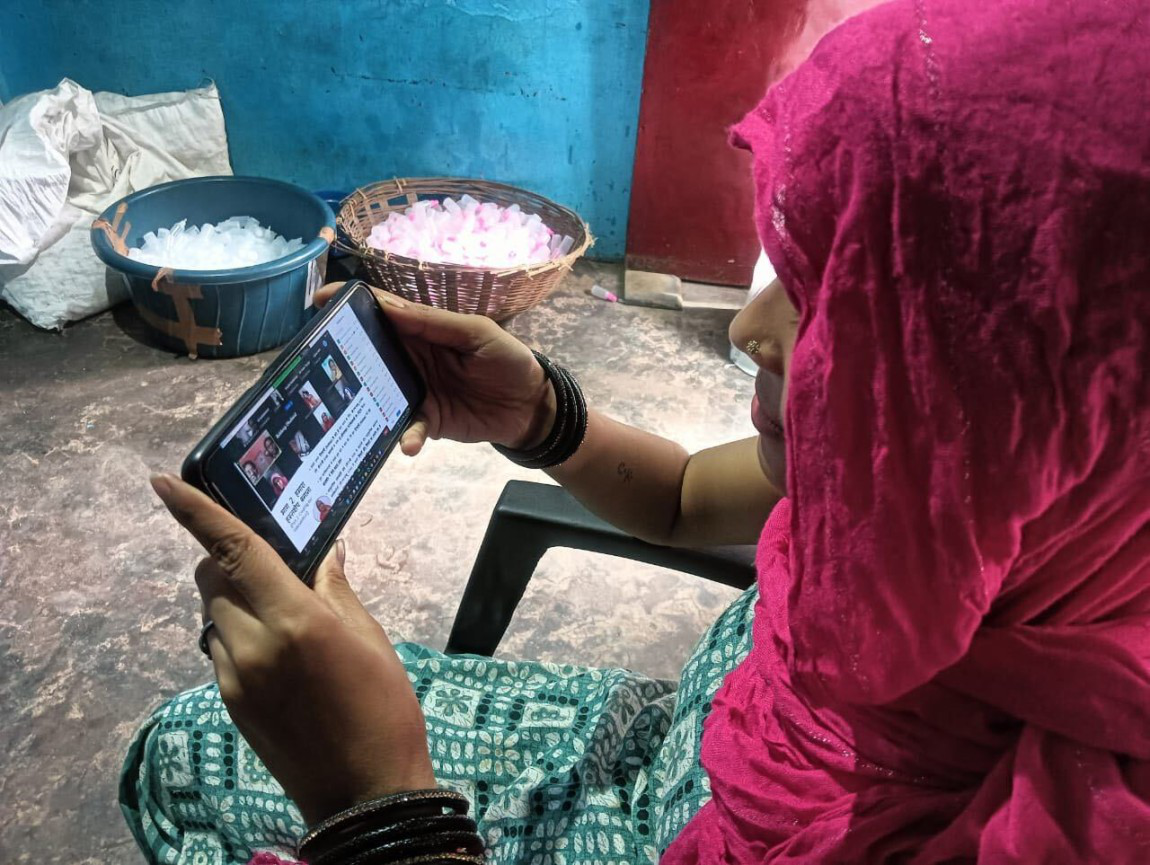
Conducted in Mewat, India, and led jointly by India- and United States (US)-based investigators, the CIVIC project (detailed at Related Summaries, below) recognised local community members as subject matter experts and worked to ensure their full participation in the research. To do so, the team engaged 10 community leaders, ranging from teachers to religious leaders, to form a community accountability board (CAB) that was at the centre of CIVIC - from conception to implementation of the intervention. The team used web-based platforms to complete baseline data collection with community health workers, CAB members, and caregivers of children to understand vaccination barriers and facilitators. After identifying barriers and facilitators, they conducted 2 web-based human-centred design (HCD) workshops to develop a tailored intervention to improve vaccine uptake. While implementing this intervention, the team used web-based platforms to meet monthly with the CAB over 4 months. Through these meetings, the CAB guided the team on where to iteratively refine the intervention. Lastly, they collected postintervention data from community health workers, CAB members, and caregivers of children through web-based platforms to assess perceptions of the intervention, as well as perceptions of its impact on vaccine uptake.
In bringing together a diverse range of perspectives, the team aimed to facilitate long-lasting, sustainable changes in community health through research that was led by in-country investigators and community leaders. Using web-based platforms to conduct research was found to be an effective strategy to engage researchers at all levels and combat systemic barriers associated with in-person activities such as power, economic, social, and gender dynamics. Connecting online for research meetings created a more equitable environment for community members to engage meaningfully with research. Further, by conducting research through web-based platforms, the team found they were able to strengthen the diversity of participants, provide a space for more marginalised groups to speak up, and minimise logistical barriers to attendance.
While arguing for the potential of digital approaches to contribute to the decolonisation of global health, the CIVIC team acknowledges some challenges associated with web-based platforms and argues that researchers must still grapple with doing more to ensure equity, particularly in populations without internet access or with limited digital literacy.
In conclusion: "Current research systems require reform and the creation of forums, so that global health can embrace the direct expertise of the very people it intends to serve and address their needs. In these forums, it should be local community members sharing their needs and trusted community leaders developing tailored solutions. Global health researchers from high-income settings, both from within countries and in north-south collaborations should serve as advocates for the communities in which they are conducting research instead of dictating research. The aim should be to create a space for their voices, lived experiences, and expertise and to push community priorities to the forefront of discussions....To further strengthen equity, there is a need to recognize the power of digital strategies in facilitating the meaningful participation of underrepresented groups in all aspects of research."
Journal of Medical Internet Research 2023;25:e46897. doi:10.2196/46897. Image credit: The Authors (Creative Commons Attribution - CC-BY)
- Log in to post comments