










































Misinformation, Infighting, Backlash, and an 'Endless' Recovery; Policymakers Recount Challenges and Mitigating Measures after a Vaccine Scare in the Philippines
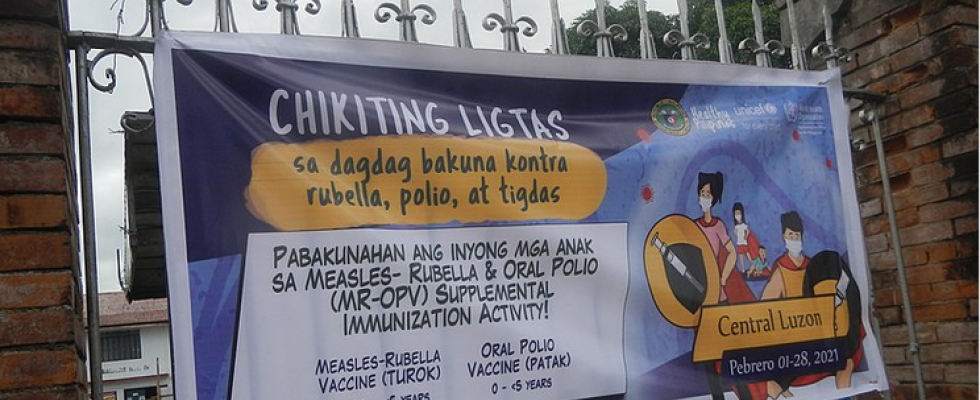
Ruprecht-Karls Universität Heidelberg (Reñosa, Wachinger, Bärnighausen, McMahon); Research Institute for Tropical Medicine (Reñosa, Endoma, Landicho-Guevarra, Landicho, Bravo, Aligato); University of the Witwatersrand (Bärnighausen); Johns Hopkins Bloomberg School of Public Health (McMahon)
"Respondents...saw social media as playing a decisive role in spreading misinformation or emotionalized images (e.g. children allegedly dying from the vaccine) in the Philippines, leading to widespread suspicion of vaccines and the government..."
Vaccine scares, defined as highly publicised discourses on vaccination safety and efficacy, can affect public opinion not only regarding the specific vaccine in question but also regarding vaccination in general. Following vaccine scares, personnel engaged in vaccine promotion often have to negotiate the fallout - including a proliferation of misinformation - while continuing to address preexisting, broader challenges in vaccination rollout. This study explores the perspectives of policymakers in the Philippines who are involved in ongoing public health efforts to rebuild and expand vaccination efforts after the 2017 Dengvaxia vaccine scare.
Some background: In April 2016, the Philippines Department of Health (DOH) launched Dengvaxia as part of the school-based immunisation programme for children aged 9–14 years in regions of the country most severely affected by dengue. A press release outlining possible vaccine-associated risk sparked panic among the general public, and the new Philippines government first suspended the rollout of Dengvaxia in December 2017 and later, in February 2019, banned the vaccine nationally. Shortly after misinformation went viral and circulated on Facebook, allegations surfaced that Dengvaxia was linked to the death of a Filipino child, and some government officials criticised the previous government as corrupt for its adoption of Dengvaxia. Despite many mitigating measures such as nationally televised dialogues, the creation of hotlines, and close monitoring of Dengvaxia recipients, vaccine confidence and vaccination rates plummeted.
Between August and November 2020, the researchers conducted 19 semi-structured narrative interviews with purposively selected policymakers living and working in the Filipino setting who are formally involved in the field of vaccination. Regardless of their position, gender, or years of professional experience, the policymakers experienced a 4-stage process in the face of acute vaccine-related discourses: (i) The scare - the case of Dengvaxia; (ii) The fallout unfurls - domino and spillover effects; (iii) The fallout deepens amid the COVID-19 pandemic; (iv) Taking action - policymakers' perspectives on rebuilding trust and vaccine confidence. The model also reflects 3 essential concepts that contribute to policymaking (particularly related to agenda setting): external observation (how policymakers perceive the situation), internalised perspective (how policymakers internalise what is happening), and actions taken. For each theme, the paper presents key quotes with the respondent's educational background and their duration working as policymakers as identifiers.
A summary of some of the themes that emerged (with actions taken incorporated into each stage) follows:
- The scare: Respondents described the Dengvaxia scare as a "reeling event" [MD (medical doctor)] that overwhelmed the entire vaccination programme. In addition to perceived shortcomings of government communication efforts (outlined in the paper), respondents critiqued how media outlets allowed false narratives to proliferate. Taken as a whole, policymakers described finding themselves being put "in a bad light" [MD] by the sentiment in lay and social media, and felt like they were "gasping for air" [MD]. Actions taken included, for example, inter-agency consultative meetings, community dialogues with parents and affected families, and local health education campaigns. The goal: to mitigate burden for affected families.
- The fallout unfurls: One key experience of the fallout for respondents was the Philippines losing its 20-year polio-free status in 2019 due to the rapidly declining vaccination rates, which respondents felt sad and "deeply frustrated" [MD] about. Several respondents sensed that Dengvaxia scares increased vaccine hesitancy (VH) - particularly with regard to vaccines administered via community mobilisation or school-based vaccination. Actions taken included, for example, engagement meetings with local government stakeholders to ensure their buy-in for catch-up vaccination campaigns. In these roundtable discussions, policymakers attempted to create a "sense of local ownership of the program" [CO (communication officer)] by asking for and listening to recommendations of local stakeholders.
- The fallout deepens: Respondents spoke at length about the impact of the COVID-19 pandemic on a vaccination programme that was still reeling in the aftermath of the Dengvaxia scare. For instance, healthcare workers (HCWs) had to face parents who remained afraid of the HCWs' potentially transmitting COVID-19 when administering oral polio vaccine. Respondents recounted experiencing widespread public excitement on TV or social media regarding a potential COVID-19 vaccine (at the time of data collection, no vaccine had been approved for national rollout) but were worried that such a vaccine might meet the same fate as the dengue vaccine, urging caution and careful communication and rollout. Actions taken included, in cases where community entrance for vaccination campaigns remained feasible, various protective procedures.
Recommendations for future action to bolster vaccine uptake in the Philippines include:
- Rebuild trust in the government: Respondents said the government should have one clear and consistent voice, as conflicting messages might cause doubts and apprehension. Transparent communication of all processes, from vaccine components and trial results (specifically for new vaccines) to national procurement efforts, is key.
- Provide clear vaccine messaging: Respondents highlighted the importance of creative yet clear messages and the need for educational material that could be acceptable to end-users in various contexts (e.g. for facility-based information, as part of house-to-house campaigns, or for independent reading at home). Respondents also highlighted the potential of social media, especially Facebook, potentially combined with the engagement of influential people, to maximise visibility and reach. Among others, respondents recommended exploring animated videos, real-life documentaries, pamphlets, and presentations in the form of infographics to reach VH parents. Respondents also conveyed the importance of engaging and conversing with religious leaders due to their role as trusted agents. Considering the role of misinformation in vaccine scares, respondents called for traditional media and journalists to be actively involved in conscious vaccination communication and in confidence recuperation efforts.
- Foster HCWs' communication skills: Respondents discussed the need for continued training to expand HCWs' communication approaches, including special risk and science communication training for all HCWs delivering health services. This was particularly relevant in the context of respondents' concern that if medical doctors (whom the community really trusts) were to be perceived as doubting vaccination effectiveness and safety, this could further exacerbate community VH.
In contextualising and reflecting on the lessons learned through interviews with the respondents, the researchers note that the fallout of the Dengvaxia scare in the Philippines is particularly noteworthy in contrast to the situation in the four other countries (i.e., Brazil, Mexico, El Salvador and Costa Rica) where Dengvaxia was introduced. None of these countries experienced the same level of public outcry. In addition to the "weaponisation" of Dengvaxia for political interests following a change in government, this study underscores the role of social and traditional media in shaping the public's vaccine-related decisions and igniting polarised understandings about vaccines. Per the researchers, the situation of fomenting fear but leaving no party accountable (none of the original charges against government or pharmaceutical company officials have resulted in convictions) may have sparked additional frustration among the Filipino public.
In conclusion, the Dengvaxia vaccine scare has continuously affected parental decision-making and trust and resulted in negative spillover effects within other health programmes in the Philippines. The fact that actionable recommendations from the data on how to rebuild vaccine confidence have emerged from this study highlight "the importance of considering the views and experiences of local policymakers in the design and research of targeted health interventions. Rebuilding trust and buy-in for vaccines globally is more necessary - albeit more challenging - than ever."
Global Health Action 2022, Vol. 15, 2077536. https://doi.org/10.1080/16549716.2022.2077536. Image credit (top): Judgefloro via Wikimedia (Creative Commons CC0 1.0 Universal Public Domain Dedication)
- Log in to post comments