










































Pakistan Polio Eradication Initiative (PEI)
"The sense of national ownership of polio eradication has not yet been achieved to drive eradication as a goal thus leaving the PEI, rather than a wider group of national institutions, with the continuing responsibility for mobilisation and engagement in pursuit of the enabling environment and accountabilities needed for polio eradication.
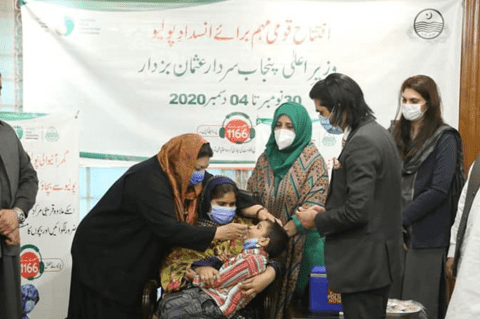
Since 1994, the Pakistan Polio Eradication Initiative (PEI) has been working to eradicate poliovirus from the country, which is one two (with Afghanistan) where wild poliovirus (WPV) continues to circulate. Through its cadre of 285,000 frontline health workers, the programme implements vaccination campaigns, including door to door, that aim to reach all children under the age of five nationwide, with a specific focus on underprivileged communities and priority communities. The programme undertakes disease surveillance, cross-border coordination with Afghanistan, and integrated service delivery. The present summary focuses on the community, social media, and advocacy elements of the programme.
The National Emergency Action Plan (NEAP) is the annual document that outlines the Polio eradication strategy of the programme, its strategic priorities and main areas of work. (See Related Summaries, below.) Communication highlights include work by local and national level teams to carry out advocacy, communication, and social mobilisation activities that encourage health-seeking behaviours amongst communities. The programme also works to build trust and demand for the vaccine through alliances with civil society actors and religious and community leaders.
Proactive engagement with local and social media influencers, celebrities, and media personnel is designed to promote vaccination based on scientific facts and to counter anti-vaccine propaganda. In particular, rumours that spread through social media such as "the vaccine is haram" (prohibited by Islam) or "polio teams are part of an international conspiracy" have undermined trust among the general public. Analysis of the April 2019 Peshawar incident demonstrates how social media was used to create and spread a video lie that captured enough attention to have it move through a number of social media channels and influencers gathering views and likes as it went.
The Pakistan PEI's comprehensive social media plan to increase acceptance of polio vaccination is based on repositioning polio eradication as a national public cause for the protection of children. To achieve this goal, the focus has been:
- Since 2020, social listening has helped direct content generation. Social media tracking and the involvement of influencers has helped to generate audience specific content. Social media has an impact beyond social media platforms themselves. Viral messages, both negative and positive, have been repeated through mainstream media or by word of mouth to communities with limited access to the internet or even mobile phones. The strategy tracks social media spillover onto other media and to "hear" what is being talked about in local high-risk settings to understand the questions and concerns and develop content accordingly. It also responds quickly to emerging issues and questions in ways that use local visuals, the local language, and local voices. Content creation is decentralised but carefully managed for consistent messaging.
- The initiative works to create accurate, engaging, and relevant branded content based on findings from social listening networks, produced at the provincial level in local languages and addressing actual questions raised by high-risk communities. This localised content is available in Pashtun as well as English and Urdu and is disseminated through the channels and digital spaces of polio champion influencers whom the initiative engages.
- The PEI strategy continues to build on the brand book that was developed in 2019 to ensure all media materials have the same "look and feel", which in turn helps build public trust through consistent use of materials that the public can easily identify.
- A core commitment of the programme is to advance the role and contribution of frontline workers to effective community engagement, which includes training polio staff to be knowledgeable pro-polio-vaccination users of social media.
- Other, more technical, aspects of the social media strategy include utilising paid advertising to get relevant content to high-risk communities by geo-targeting, building ties with social media platforms such as Facebook, developing a comprehensive tracking system using software and manual tracking, conducting a monthly sentiment analysis, and using CrowdTangle for social media performance monitoring.
- Social media posts can guide people to information and resources provided on the Pakistan Polio Eradication Initiative website.
- The 'Sehat Tahaffuz' telephone helpline and a dedicated WhatsApp helpline service allow the programme to directly communicate with parents and caregivers. See Related Summaries, below, for more information.
The Pakistan PEI advocacy element, distinct from awareness-raising, focuses on mobilising public figures and expanding long-term public and private partnerships to embed widespread effort in support of the eradication goal and in line with 2019 recommendations to focus on sustainability. Advocacy and partnership efforts are mostly at the national and provincial levels (e.g., policymakers, private sector leaders, educational and media institutions) but, based on integration with communication for development (C4D) frameworks like the socio-ecological model (SEM), are linked with the community (e.g., local religious leaders) and family levels as well for consistency and comprehensiveness. At all levels, partners and alliances are expected to promote and boost trust in the value and acceptability of the PEI, to answer common questions, and to address concerns and misconceptions.
Once initial engagement with partners is achieved, the PEI undertakes:
- Organisation of key partners into coalition - with support for planning, information-sharing, and vaccination promotion;
- Periodical roundtable meeting(s) with partners - with online platform for updates of developments/results;
- Capacity building - through formal and informal orientation/workshops;
- Monitoring and evaluation - with regular information sharing and updates; and
- External communication recognition of partners - visibility and public events.
Polio, Immunisation and Vaccines
The Pakistan PEI has come very close to achieving polio eradication, notably in 2018, but unexpected setbacks, including the COVID-19 pandemic, have interfered. While overall polio vaccination coverage is 95% and refusals are less than 1%, some areas show low uptake and increasing refusals. Some of the remaining challenges include low trust in vaccines leading to vaccine hesitancy, fueled by rumours, misconceptions, and anti-vaccine propaganda on social media. Significant population movements in Pakistan and across the border with Afghanistan have the effect of sustaining polio transmission amongst under-immunised populations.
Reportedly, COVID-19 and the measures to control it have had an impact on PEI's advocacy and engagement, as they have on all areas of work. Individuals and groups have been increasingly engaged with their own activities, sometimes rating the relative risk of COVID-19 as higher than polio, and have found it difficult to re-engage with the PEI.
Pakistan Polio Eradication Initiative: Working towards a polio free Pakistan, for every child [PDF, English] (Urdu [PDF]), Advocacy strategy: Pakistan polio eradication initiative 2021-2022 [PDF], and Building positive polio narratives through social media engagement [PDF] - all from the Government of Pakistan, dated March 11 2022 and accessed March 17 2022, and Pakistan PEI website, March 17 2022. Image credit: Pakistan PEI
- Log in to post comments