










































Perceived Enablers and Barriers of Community Engagement for Vaccination in India: Using Socioecological Analysis
Fort Lewis College (Dutta); Indiana University School of Public Health-Bloomington (Agley, Barnes, Sherwood-Laughlin); Southwest Institute for Research on Women, or SIROW (Meyerson); Indiana University (Nicholson-Crotty)
"...multiple international voices have continued to encourage CE to improve vaccination uptake and completion..., which, in turn, support efforts toward herd immunity and enable countries to achieve sustainable development goals..."
India envisions community engagement (CE) as a strategy for improving vaccination uptake and increasing both communities' understanding of vaccines and their demand for immunisation as their right and collective responsibility. Beyond these immediate intended outcomes of CE for vaccination, several studies emphasise CE's potential for community-led monitoring and advocacy, community equity, and, ultimately, community control for specific health services. This study employed a multi-method, sequential, qualitative approach to identify the key enablers and barriers to CE for vaccination uptake in India as perceived by vaccine decisionmakers and/or reflected in the vaccine policy documents of the country.
For the study, 25 semi-structured interviews with vaccine decisionmakers were triangulated with 24 national-level vaccine policy documents and researcher field notes (December 2017 to February 2018). Adapting the Social Ecological Model (SEM) as a framework, this study identified: policy-level factors as policies and regulations to advance CE for vaccination; community-level factors as the decentralised dissemination of social and behaviour change communication (SBCC) materials among different communities; organisational-level factors as institutional organisation and partnerships with the government to advance CE activities; interpersonal-level factors as interactions of vaccine decisionmakers with priority populations and communities; and individual-level factors as vaccine decisionmakers' individual actions, if any, to promote CE for vaccinations.
Although decisionmakers and policy documents generally supported CE, there were more CE barriers than facilitators in the context of vaccination, which were identified at all social-ecological levels. Interviews with vaccine decisionmakers in India revealed complex systemic and structural factors that affect CE for vaccination and are present across each of the SEM levels. For example:
- Policy-level enablers included decisionmakers' political will for CE and social mobilisation (e.g., the regular home visits that took place during the National Polio Surveillance Program to answer caregivers' questions about immunisation), whereas barriers were lack of a broad understanding of CE by decisionmakers and lack of a CE strategy document: Documents such as the CORE Communication Strategy were cited as the nearest to any CE strategy, but there was no evidence of any community involvement in formulation of these documents or in translating them to regional languages, local dialects, or mother-tongues.
- At the community level, dissemination of SBCC materials from the national level to the states was considered a CE facilitator. Participants described a variety of reminders/prompts and interpersonal messaging through mobiles, WhatsApp, door-to-door canvassing, and strategic use of itinerant megaphones. These were carried out by people such as local vaccine champions (community members who share their personal stories for getting themselves or their children vaccinated, and in the process help increase vaccination-related trust and confidence among their friends, families, neighbours, and community). Class- and caste-based power relations in the community, lack of family-centric CE strategies, and the paternalistic attitude of decisionmakers toward communities (the latter reported by some non-governmental organisation (NGO) heads) were considered CE barriers. Furthermore, the language, especially in the Adverse Event Following Immunisation (AEFI) documents, appears to have conceptualised communities merely as vaccine beneficiaries rather than articulating any empowered role in vaccine policymaking or programme implementation. These documents neither attempt to demystify AEFI concepts for communities nor combat communities' misplaced concerns over vaccines.
- At the organisational level, bilateral partnerships and partnerships with local organisations (e.g., youth organisations undertaking social mobilisation activities such as infotainment programmes and involvement in the district task force meetings to facilitate achieving vaccination targets) were considered CE enablers, while lack of institutionalised support to formalise and incentivise these partnerships were barriers highlighted by several decisionmakers.
- At the interpersonal level, SBCC training for healthcare workers, sensitive messaging to communities with low vaccine confidence, and social media messaging to provide information neutrally, positively, and without blame were considered CE facilitators. Especially in the context of the predominantly patriarchal society in India, interpersonal efforts by healthcare workers to sensitise mothers-in-law and husbands to "allow" mothers to vaccinate their children was also considered a CE enabler. Another participant explained the role of visuals, such as pictures or drawings, in markedly increasing communities' attention to and recall of health education. Citing the example of the Mission Indradhanush logo with "the rainbow, an umbrella of seven colors", he explained that it indicated vaccination for seven vaccine preventable diseases available at the community outlet or provided by the community-level frontline healthcare workers seven days a week. The lack of strategies to manage vaccine-related rumours or replicate successful CE interventions during the introduction and roll out of new vaccines were perceived as CE barriers by several decisionmakers. Finally, in contrast to the enthusiasm of the study respondents about using social media for vaccine messaging, none of the policy documents highlighted any social media proliferation in rural and semi-urban India or scaling up the social media strategy among clusters of communities where vaccination-related conservative values are widely shared.
A final convening to review study results was conducted with study respondents in December 2018 and January 2019. The researchers suggest that use of the SEM and the participatory discursive process of the study led to the broader framing of CE in vaccination as: (i) a cardinal policy imperative and social determinant of health for vaccination equity, and (ii) a civic engagement process leading to social capital and trust-building between communities, vaccine science, and vaccine decisionmakers for vaccination uptake.
The study reveals that, despite the overarching support for CE by vaccine decisionmakers and policy documents in India, its conceptualisation, facilitation, and implementation in different scenarios (e.g., for sub-populations, or during outbreak versus non-outbreak times) remain elusive. CE barriers identified in this study, such as the lack of any CE-specific indicators or strategy documents, the absence of dedicated CE staff, and a culture of silence for CE strategies for contested vaccines (wherein several states of India demanded stalling the human papillomavirus (HPV) vaccine, for example), led the researchers to suggest revisitation of traditional social mobilisation approaches.
Notably, some existing strategies perceived to be CE may inadvertently reinforce existing power differentials, exacerbated by the community's poverty and livelihood crises, negative beliefs about vaccinations, and poor treatment by healthcare workers and authorities. "[I]ntersectionalities and predicaments among the socio-economically disadvantaged are important to consider, as these communities try to negotiate between social pressure and preventive health, especially because subsistence typically takes priority over health in general, and immunization in particular, among these populations..."
A suggested consideration going forward: "Based on the information discussed regarding vaccine gatekeepers, it seems that strategic CE with those gatekeepers might yield positive results, because this would not only enable access to communities via these gatekeepers but could also unfurl socio-cultural sensitivities in SBCC materials when transacted in local dialects, while also empowering communities to have meaningful discussions between vaccine supporters and gatekeepers..."
With regard to future studies, the researchers suggest efforts to associate the enablers and barriers identified herein with actual CE outcomes, such as participation or community support in vaccine policy-making, CE implementation for specific vaccines and situations (such as disease outbreaks), or frequency of sub-population-based incidents of community resistance and community facilitation to vaccination uptake. "Future CE barrier studies should identify key outcome indicators of CE based on a critical awareness of the history and nature of evolving relations between communities, vaccines, and vaccine-providing authorities in diverse cultural, economic, disease outbreak, and political contexts."
In addition, development of a population-based operational definition of CE, with a step-by-step manual on "how to do CE", could be fruitful. The data from this study also indicate the importance of including CE indicators in national datasets and developing a compendium documenting CE best practices. Doing so could allow more rigorous analysis of the evidence base for CE for vaccination in India and other countries with similar immunisation programmes.
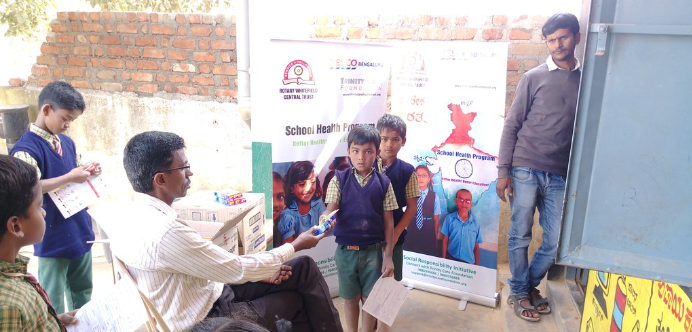
PLoS ONE 16(6): e0253318. https://doi.org/10.1371/journal.pone.0253318. Image credit: Trinity Care Foundation via Flickr (CC BY-NC-ND 2.0)
- Log in to post comments