










































Polio Communications Quarterly Update - May 2012
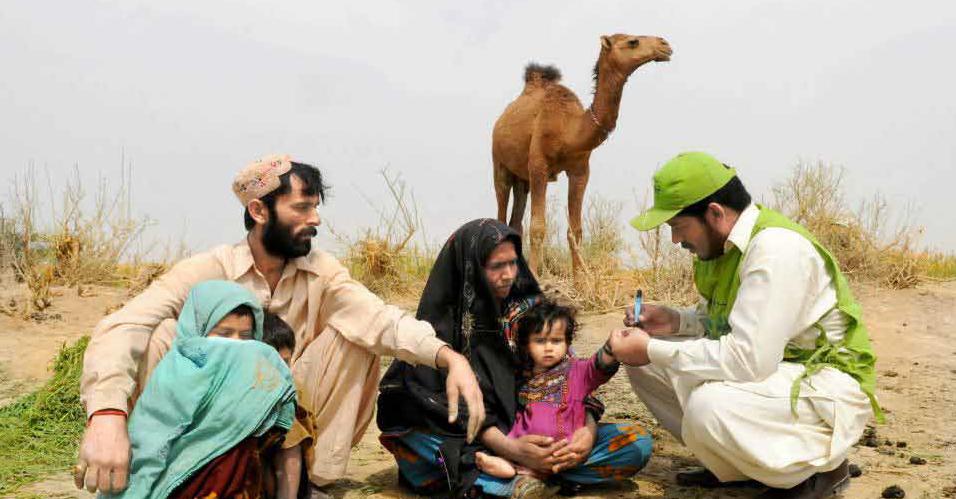
With the polio eradication programme on an emergency footing since January 2012, how is the work of the Global Polio Eradication Initiative (GPEI) translating into the results required on the ground? With the global polio communications indicators in place as of the end of 2010, this quarterly report asks this question from a communications and social mobilisation perspective. It is a publication of the United Nations Children's Fund (UNICEF), prepared for the Independent Monitoring Board (IMB) of the GPEI.
Selected highlights from the report:
- The report cites signs of progress - with specific data to back this up. In general, with intensive social mobilisation and more targeted service delivery, the GPEI is reaching more children in some of the last poliovirus sanctuaries of Borno (Nigeria), Karachi (Pakistan), and Katanga (Democratic Republic of the Congo, or DR Congo). Social mobilisation networks being established in the highest-risk areas of Nigeria and Pakistan are starting to show results.
- However, progress on refusals is mixed. Borno, Kano (Nigeria), Karachi, and Katanga are showing progress, but it has fluctuated in the past and must be monitored closely. The remaining sanctuaries in Pakistan and Nigeria are a major concern. According to the report, once operational challenges are addressed, it becomes even more important to overcome the social barriers that lead to children being chronically missed. Detailed analysis and use of data on exactly who, where, and why children are being missed is the only way they will be reached.
- Lack of progress in raising campaign awareness is a major concern across the global programme, with only DR Congo and Nigeria meeting the indicator target. Amidst armed conflict and insecurity, there has been little progress informing mothers in Pakistan and Afghanistan about polio campaigns for more than a year. However, mass media campaigns are being harnessed creatively in some countries to improve the motivation and performance of frontline workers and to ignite a broader social movement for polio eradication. "In spite of the cost, mass media must still be at the centre of the communications campaign strategy for both countries [Afghanistan and Pakistan], particularly in high-risk areas where cultural norms make it difficult to reach women through personal contact."
Several concrete examples and communication strategies are presented throughout the report. For instance, with regard to the level of frontline workers' motivation, a 2011 UNICEF-supported study in Pakistan found that Lady Health Workers (LHWs) and volunteers were primarily motivated by acute financial need, yet pay for polio work is still extremely low - less than half the going rate for unskilled manual labour. Many workers also cited a lack of positive feedback and lack of avenues for advancement as drivers of frustration. At the same time, most LHWs "reported personal satisfaction in their work, inspired by the fact that the job gave them an opportunity to help others....Finding creative ways to maximize the altruistic benefits of frontline jobs must be a key element of the communication and management strategy going forward. Equipping vaccinators with the skills they need to provide information and answer questions is another critical part of the programme that has yet to be systematized. In most countries, vaccinators are not given a standardized toolkit to communicate with parents. Trainings are often rolled out without professional facilitators or effective learning methodologies. This is an area that needs urgent investment..."
Priorities in going forward:
- "Increasing social commitment, which must go hand in hand with political commitment to polio eradication. Priority countries should have in place mass campaigns to build social commitment for polio eradication, with measurable objectives and milestones that demonstrate progress towards social accountability.
- Further raising campaign awareness. It is a relatively easy win and should reach 90% in all sanctuaries by December 2012.
- Assessing and quantifying social mobilization network coverage. New and emerging networks in Afghanistan, Nigeria and Pakistan should be critically evaluated for high-risk areas area coverage, and clear targets for such coverage must be established.
- Profiling frontline workers. Each country or sanctuary programme should examine its frontline team makeup, assessing social mobilizers and vaccinators against criteria such as age, gender, linguistic fluency and any other factors that may be pertinent to a specific local context. This should result in developing a set of human resource profiles to guide recruitment.
- Improving and coordinating microplanning activities. The partners working on the ground should jointly and systematically review microplans to ensure systematic use of data and optimal coordination of operations and communications resources.
- Expanding use of performance management tools. Pakistan's PRIME should be adapted and replicated in Afghanistan and Nigeria to evaluate social mobilization network performance. PRIME's potential as a programme-wide performance management tool should also be explored."
The report concludes with polio communications data profiles for: Afghanistan, Angola, Chad, DR Congo, India, Nigeria, Pakistan, and South Sudan.
Editor's note, January 30 2018: Apologies, but this resource is no longer available online.
PolioInfo newsletter, June 2012.
- Log in to post comments