










































Psychological Mechanisms and Interventions Directed at Vaccination Attitudes
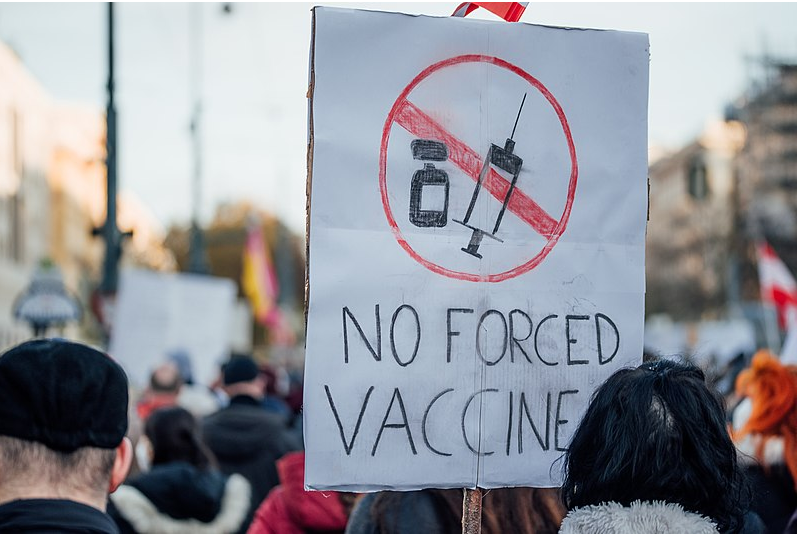
"Attitudes about vaccination impact not only the individual but also society. Therefore, understanding the underlying psychological processes of those who disagree with vaccination is critical for creating compassion through understanding and change through promoting autonomy."
There are those who are hesitant about vaccines but still partake in the immunisations; however, there are also those who actively object to the use of vaccines and subsequently do not partake in immunisations. The latter are categorised as refusers and are the focus of this systematic review, which asks: What underlying mechanisms drive vaccination-refusing movements and individual thoughts and behaviours? What are the current interventions targeting these mechanisms, and how effective are they?
Between May and September 2021, the researchers identified relevant English language and peer-reviewed published articles from the following databases: Cochrane, PubMed, PsychInfo (Ovid), and ProQuest. A total of 1,897 records were retrieved via the search strategy outlined in the paper. Subsequent title and abstract screening resulted in 1,617 records being excluded. From the remaining 280 records, 241 were excluded after a full-text screening, with exclusion criteria concerning study quality, relevance to anti-vaccination, underlying mechanisms, or interventions. Therefore, 39 studies, all of which were conducted between 2004 and 2021, were included in the review. Table 1 in the paper displays the characteristics of the studies included, including aims, study design, intervention/measures, outcomes, and strengths and limitations.
Overall, results indicated that people who declined vaccines had beliefs related to distrust in the scientific community and pharmaceutical companies and moral preferences for purity and liberty. Anti-vaccination attitudes were related to lower levels of intellectual humility, with the specific belief that the individual knows more than a medical professional. Those who held anti-vaccination attitudes were more likely to search the internet or other sources of information rather than seek information from government or health professionals. Also identified as being associated with anti-vaccination profiles were celebrity admiration, religiosity, reactance, belief in natural immunity and purity of the body, disgust/fear of needles, belief as social identity, and low participation in political or cultural life.
More specifically:
- Beliefs: The overarching beliefs discovered primarily included distrust and the presence of superstitious and conspiratorial beliefs. In terms of the health belief model, this mistrust of vaccines and science directly impacts risk-reward decision-making processes, as the information involved in the decision-making process may not reflect validated science or health information.
- Morals: Liberty underpins attitudes surrounding rights and autonomy associated with mandated vaccinations and an individual's right to personal choices. This moral preference aligns with their beliefs surrounding mistrust and the findings that typical behaviors included sourcing other avenues of information, such as celebrities, and socially aligning with others who think the same. Morals related to harm are associated with heightened attention to the detriment that may be caused through vaccines; morals related to purity suggest that these individuals have a deep belief in natural immunity, indicating that when conducting a risk analysis in their decision-making, the benefits associated with not vaccinating appear higher than the risks of vaccination.
- Individual differences: Two main cognitive biases were identified underpinning anti-vaccination attitudes in the research presented in this review: the Dunning-Kruger effect, indicating that those who hold anti-vaccination attitudes have overconfidence in their knowledge; and the view that omission of action (not vaccinating) is less risky than engaging in action (vaccination). "Understanding an individual's cognitive style, including cognitive biases, aids in understanding their decision-making, and how to assist to improve health and wellbeing while preserving autonomy."
The studies examining specific interventions focused on motivational interviewing, tailored web-based interventions, and education.
- Two studies investigated the utility of motivational-interviewing-based strategies, with both studies reporting significant increases in vaccine uptake. Motivational interviewing increases autonomous motivation by facilitating collaboration and empathy and positioning the individual as the "expert" on their values. In line with the health belief model, motivational interviewing facilitates long-term behavioural change by acting on the morals and beliefs of the individual, i.e., respecting their right to autonomy.
- Two other studies explored the benefit of interactive-/web-based tailored messaging, with both studies reporting no significant impact.
- The final two studies examined the efficacy of education-based interventions, both resulting in no significant impacts. Congruent with previous findings suggesting a significant level of distrust of the scientific community and a propensity to seek out other sources of information, it is not surprising that education-based interventions do not impact individuals with anti-vaccination attitudes.
It is important to highlight that intervention focused on individual attitudes is only one of the many ways in which vaccination uptake can be improved. Other factors, such as access to and affordability of vaccines, go beyond the scope of the current review.
Furthermore, the western perspective of the research included in the review affects generalisability of the findings. This bias may be due to the limitation of the current literature review, in which only studies written in English were included. Future research should investigate other populations to gain a more holistic perspective on anti-vaccination beliefs, as it is a global issue.
Frontiers in Sociology, Volume 8 - 2023 | https://doi.org/10.3389/fsoc.2023.1076015. Image credit: Ivan Radic via Wikimedia (CC BY 2.0)
- Log in to post comments