










































Report of the First Meeting of the Technical Advisory Group Meeting on Polio Eradication for the Lake Chad Basin
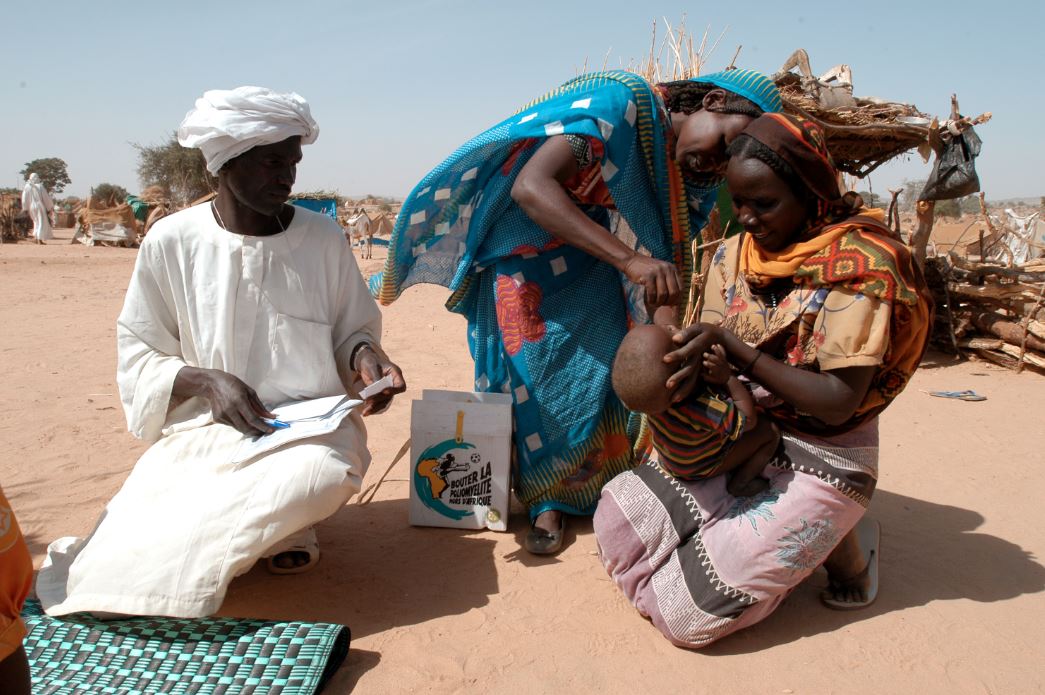
To guide the implementation of polio eradication strategies, including communication strategies, in the sub-region of Lake Chad (LC) and to provide technical advice to the 5 LC countries, the LC Basin Polio Eradication Technical Advisory Group (LC-TAG) was formed. This is the report of their first meeting, which was held in N'Djamena, Chad, November 22-23 2017.
The context: After nearly 2 years without detecting poliovirus in Nigeria, wild poliovirus type 1 (WPV1) was again found in Borno State in 2016; circulating vaccine-derived poliovirus type 2 (cVDPV2) was also reported in March and November 2016, respectively, from Borno and Sokoto states. Intense outbreak response activities were organised in Nigeria and in 3 other countries bordering Lake Chad, or LC (Niger, Chad, Cameroon) and Central African Republic (CAR).
The TAG reports feeling encouraged by efforts made by the Lake Chad Coordination Task Team (LCC-TT) since mid-2017 to improve the quality and coordination of polio activities in the LC sub-region, particularly by new interventions to reach high-risk populations. Examples include the geographic information system (GIS) mapping initiative to improve pre-Supplementary Immunisation Activity (SIA) micro-planning activities, the use of innovative strategies to improve community-based reporting/community-based surveillance (e.g., AVADAR), and efforts to encourage progress in using new communication strategies and tools to reach special and high-risk populations. Despite the progress made, the TAG notes that there are some major concerns, such as the overall lack of a sense of urgency vis-à-vis polio activities among health and political leaders in all LC countries, including the absence of visible commitment to and government oversight of polio eradication efforts.
One of the objectives of the meeting was to review and provide recommendations on the communication and vaccine management strategies used by the LC countries. The TAG is concerned by the persistent lack of evidence-based and data-driven communication plans and strategies, especially to guide communication work for special and hard-to-reach populations. The TAG acknowledges, however, the strategic adjustments that have been made in the communication and social mobilisation components of the LC outbreak response and supports the efforts of the LCC-TT to provide operational guidance to improve the quality and effectiveness of communication and social mobilisation activities.
Among the recommendations made are these specific to communication and social mobilisation. The LC-TAG:
- Supports country-specific recommendations on communication and social mobilisation made by the teams conducting the second Outbreak Response Assessments (OBRAs).
- Is concerned about the insufficient level of funding for the communication/social mobilisation components of the LC outbreak response and urges governments and partners to make additional funds available.
- Indicates that timely communication and social mobilisation inputs should be provided for country and LCC-TT SitReps and other reporting templates, with disaggregated communication data for normal and special populations, between SIAs and according to accessibility profiles: accessible, semi-accessible, and inaccessible areas.
- Encourages country teams to update district and ward communication plans and adjust communication and social mobilisation interventions by using the '3-question assessment tool for social mapping'. Plans should be used to tailor strategies for high-risk populations and to address main reasons for which children are missed. Particularly for these high-risk populations, plans and strategies should be evidence-based and data-driven to enable monitoring of impact and prompt adjustment of strategies.
According to the LC-TAG, the LCC-TT and United Nations Children's Fund (UNICEF)-UNICEF in West and Central Africa (WCARO) teams should:
- Review country and LCC-TT SitReps and other reports to ensure that communication and social mobilisation interventions are appropriately integrated into national outbreak response plans; and
- Ensure that small teams (Ministry of Health (MoH), Global Polio Eradication Initiative (GPEI) partners, non-governmental organisations, or NGOs) skilled in using the Integrated Communication Plan and assessment tools are available in all LC countries to inform the behaviour and social change components of sub-national/micro-plans.
After country-specific recommendations are made, the report concludes with LC-TAG indicating that its next meeting will be via teleconference on March 15 2018, followed by an in-person meeting June 20-22 2018.
Click here for the 28-page report in PDF format in English.
Click here for the 33-page report in PDF format in French.
GPEI website, May 8 2018. Image credit: GPEI
- Log in to post comments