










































Report on the Meeting of the Technical Advisory Group for the Eradication of Poliomyelitis in Afghanistan [2019, January]
"Integration of operations and communications at different levels is still suboptimal."
In the context of the continuing transmission of the wild poliovirus (WPV) in Afghanistan, the Afghanistan Technical Advisory Group (TAG) meeting was held in Dubai, United Arab Emirates, from January 15-16 2019, with 2 key objectives: (i) Review the status of polio eradication efforts, key challenges, and the way forward in Northern, Central, and Southern corridors; and (ii) review the National Emergency Action Plan (NEAP) 2019 (see Related Summaries, below) and make recommendations for modifications, if needed. The NEAP, which incorporates the polio team's "Framework of Change" for fast-tracking interruption of WPV transmission, is solution-oriented and focused on interventions to address remaining challenges through approaches that are suitable to the local context.
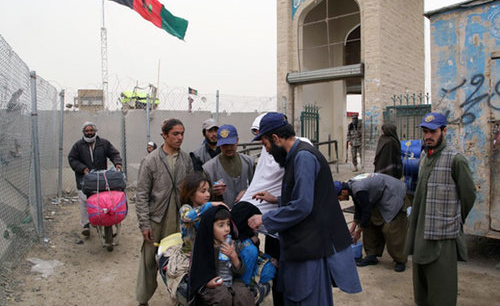
Afghanistan and Pakistan form one common reservoir for poliovirus transmission, and the collaboration between both programmes is getting stronger at all levels, according to the TAG. However, Afghanistan and Pakistan reported 21 and 12 polio cases in 2018 respectively; these numbers are 50% higher than in 2017. The Afghanistan programme is experiencing challenges, including:
- The continued ban on house-to-house oral polio vaccine (OPV) activity in the Southern region, which has not been resolved since May 2018, resulting in more than 800,000 children being missed each round between May and December.
- Small pockets of chronically inaccessible children in the Eastern region, along with ongoing challenges with high population mobility between Afghanistan and Pakistan.
- Sub-optimal campaign quality in some key areas under control of anti-government elements (AGE) due to management issues and difficulties in undertaking independent monitoring.
- Pockets of refusals, particularly in and around Kandahar as well as in the Eastern and South east regions.
- Campaign quality in some accessible areas, particularly in Kandahar City and surrounding areas.
- Low Expanded Programme on Immunization (EPI) coverage in high-risk polio areas.
The TAG stresses that "it is crucial to have a 'one team' approach, not only among the partners in country but also for the whole epidemiological block, to address the remaining challenges." Along these lines, the TAG said it appreciates the government ownership of the programme at national, regional, and provincial levels. The TAG noted the change in Emergency Operations Centre (EOC) leadership, commending the smooth transition and also the increased engagement of EPI. The TAG advises that the national EOC should be the main nodal point for coordinating all polio-related activities, reports, and information sharing.
The TAG acknowledges that the cultural environment does not facilitate the recruitment of female frontline workers in some areas, but notes that, along the corridor, impressive progress has been made on the Pakistan side.
Although the overall proportion of OPV refusal is very low in Afghanistan, it is noted that in certain clusters, the proportion of refusals as reason of missed children is relatively high. The programme has planned some new interventions in NEAP 2019, including formation of refusal oversight committees, integrated refusal resolution plans, strengthening of influencers' engagement, and enhanced engagement of religious leaders and the medical community. The TAG suggests that analysis should be done on the proportion of refusals resolved by different levels to assess the effectiveness of the triage system and reduce the number of knocks on the doors. The Immunization Communications Network (ICN)/social mobilisers should not be held responsible for resolution of chronic refusals.
The TAG notes the recent completion of a communication review and looks forward to the recommendations being integrated with the 2019 NEAP - in particular, those focusing on missed children. While acknowledging the work done towards rebranding the programme, the TAG feels the main emphasis should be on the structuring and coherence of messages. The TAG recognizes the ICN as a valuable resource for polio, which should stay focused on reduction of missed children during campaigns and in catch-up activities. Recommendations related to communication include:
- Fully integrate operations and communication, particularly at the frontline level (ICN and vaccinator teams) but also at strategic planning levels, using a common dataset to identify, analyse, and address gaps (missed children), and monitor change, Supplementary Immunization Activity (SIA) by SIA.
- Urgently develop supportive communication tools and strategies in light of critical needs such as site-to-site vaccination, which is the strategy for coping with the ban on house-to-house activity.
- Stay focused on, and be measured on, the reduction of missed children during campaigns and in catch-up activities, based on robust analysis of all reasons for missed children, including but not limited to refusal.
Per the TAG, looking ahead, the key messages are as follows:
- Polio is an emergency, and we are in a critical phase.
- Kandahar should be the focus for the next 6 months.
- Efforts should be continued to gain access to all areas for house-to-house campaigns.
- Missed children, due to any reason, should be the top priority.
- It is crucial to ensure appropriate and trained frontline workers.
- Adopt a one-team approach for the whole epidemiological block.
GPEI website, August 30 2019. Image credit: WHO Afghanistan/J.Jalali
- Log in to post comments