










































Report on the Meeting of the Technical Advisory Group for the Eradication of Poliomyelitis in Pakistan [June 2018]
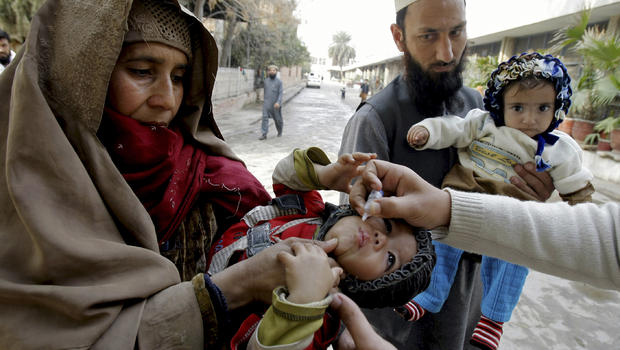
"A renewed focus on the strengths and opportunities of communication activities within Pakistan's polio eradication programme is commended and encouraged."
This report summarises the discussions of the Technical Advisory Group (TAG) on Poliomyelitis Eradication in Pakistan, June 4-5 2018 in Islamabad. The objectives of the meeting were to discuss progress and challenges facing the programme, review the epidemiological situation, and provide expert guidance and recommendations to the national and provincial programmes.
As reported here, Pakistan continues to progress towards interruption of poliovirus transmission, with only 3 wild poliovirus (WPV) type 1 cases reported to date in 2018, all from a single district in Balochistan: Dukki. The continued commitment and leadership by the government, led by the Prime Minister, has enabled the implementation of high-quality synchronised monthly Supplementary Immunization Activities (SIAs). The TAG also commends the Pakistan programme, including every frontline worker, the programme leaders, and the global partners, for their commitment to the final goal of polio eradication. The programme continues to progress despite difficult conditions and new challenges. For example, the increase in negative propaganda spread via social media (following incidents during injectable mass campaigns that were wrongly linked to the oral polio vaccine, or OPV), has resulted in an increase in community resistance and refusals across the country. The TAG endorses strengthening the programme's social media strategy and encourages the programme to be proactive rather than reactive.
Looking ahead, the TAG recommends that the programme immediately undertake a review of performance, especially in the core reservoirs of Karachi and Peshawar, using all existing operations and social data to identify opportunities to reduce missed children. Consistently reaching all high-risk mobile populations (HRMP) for vaccination and increasing understating of the HRMP movement patterns continues to be a focus for the programme. Approximately 200,000 children less than 5 years of age were surveyed in 60 districts in 2 phases between July and October, and December to January. The results indicate that vaccination coverage was between 90% and 100% in almost all districts.
Communication and social mobilisation strategies to engage the population and improve coverage continue to be a challenge and focus for Balochistan. The province succeeded in increasing female involvement in team members in Killah Abdullah from 19% in December 2017 to 60% in May 2018. Following the killing of 2 frontline workers in Quetta in January 2018, motivational sessions were conducted and gifts distributed, ensuring 95% of staff were retained. Compared to November 2017, refusal clusters in Quetta block have reduced by 24%; however, challenges still persist in Gulistan, Chaman, and Quetta.
The TAG notes that the programme must maintain momentum and quality in campaigns, while integrating Communication for Eradication (C4E) - focusing on proactive communication, development of a better understanding of reasons for missed children, and contextualised approaches to community engagement, based on local realities - in all activities to reach missed children. A few examples of C4E approaches include:
- In Sindh-Karachi, communication initiatives have included: morning shows with notables; videos on risk perception and vaccine safety; more than 500 students sensitised via seminars; government logos on media products; and information, education, and communication (IEC) materials from private hospitals.
- Personnel in Federally Administered Tribal Areas (FATA) continue to focus on media, advocacy, and communication to improve vaccine acceptance and campaign coverage. In 2017 and continuing into 2018, FATA trained Emergency Operations Centre (EOC) officials as media spokespersons, held 4 trainings for more than 120 health journalists, and is working to improve cross-border communication coordination.
- Sindh has faced great challenges in resistance from the community following incidents from other injectable campaigns and an increase in negative propaganda. The province is focusing on conducting granular analyses to highlight areas where communication interventions are required and to develop sustainable interventions to maintain behaviour change. The Sindh team has implemented several proactive initiatives to rebuild community trust and reduce the number of refusals. These include: engaging private paediatricians, hospitals, and religious clerics; developing positive videos on risk perception and vaccine safety; and planning a special Ramadan media plan to increase visibility of the polio programme. Proactive social media engagement and rapid crisis communication following an incident will be a challenge and focus for the Sindh programme going forwards.
The TAG endorses C4E as a strategic direction, but emphasises that C4E activities constitute a support to, not substitute for, high-quality campaign operations, improving community engagement to overcome resistance and reduce the number of refusals. In order to focus efforts and interventions to maximise impact, the programme is encouraged to strengthen Union Council (UC)-level analysis on current social, communication, and operational data to revise existing tools and evaluate the impact of current activities.
Reaching all missed children continues to be the primary objective of the programme. Since the last TAG and with the emerging communication challenges, there has been a key shift from just tracking and vaccinating still-missed children to understanding who the still missed children are and what values motivate their communities to vaccinate or refuse. For example, in Khyber Pakhtunkhwa (KP), underlying reasons for misconception as reported by front line workers vary within contexts, throughout populations, and across time. The most common misconceptions include:
- Vaccine composition - poison in the vaccine
- Vaccine efficacy - rumours of death of children due to expired vaccine
- Family planning - vaccine causing infertility, particularly due to repeated campaigns
- Low risk perception of disease
- Negative propaganda incorrectly linking children's deaths to polio
To cite another example, an analysis of reasons for refusals from October to May 2018 in Punjab revealed "negative media" and "misconception" as the largest contributing factors. In response, journalists, media houses, and community medical camps have been engaged throughout the high season. Rebuttal communication has been rapidly implemented to counter negative media and positive content shared with frontline workers to address community concerns. In line with the C4E strategy's shift from a promotional approach to a more interactive and proactive community approach, continuing to explore this direction will include: continuing to hold focus group discussions (FGDs) on reasons for refusals, strengthening the programme's social media strategy, improving UC-level planning for community engagement, and conducting rapid social investigations following the notification of any event, outbreak, or other incident that may impact on the programme. The TAG suggests that the impact of the C4E strategy should be rigorously assessed against rates of missed/still missed and persistently missed children, including but not limited to refusals, in key areas of intervention.
In the context of an ongoing political transition, the Pakistan programme is actively advocating for sustained political commitment and leadership within the EOC structure to ensure that the high quality of programme operations does not change. The TAG suggests that, during the period of the caretaker government and election (for details on this political development, click here), the programme must maintain focus and commitment. The caretaker Prime Minister and caretaker Chief Ministers should convene a National Task Force for endorsement of the National Emergency Action Plan (NEAP). The current "one team" approach is essential to the success of the programme. Coordination, collaboration, and communication must extend from each UC to global partners, per the TAG.
Along these lines, the transmission corridors across Pakistan and Afghanistan (with transmission extending into each country), underline the importance of effective programme coordination and collaboration between programme activities. The TAG advises that the Northern and Southern Corridor action plans must be fully implemented, and status jointly tracked by the Afghanistan and Pakistan national EOCs, through monthly video conferences and face-to-face meetings. Coordinated activities such as geographical mapping, social analysis of risk groups, intervention designs, communication and media, and impact evaluation are deemed essential to reach mobile populations. The TAG commends the continued synchronisation of the Pakistan and Afghanistan SIA calendars for 2018 and 2019.
To recap, recommendations related to communication include:
- The TAG supports the NEAP's 2018 focus on C4E as further integration of all operational and communication activities but urges the programme to also maintain pressure on campaign quality to continue reducing missed and still missed children.
- The TAG recommends that the programme urgently strengthen UC-level analysis using existing social/communications and operational data to revise micro plans every round, and evaluate the impact of activities on rates of missed/still missed and persistently missed children; results should be quickly fed back into operational SIA planning at appropriate levels.
- The TAG endorses the development of a cadre from within existing communications personnel at the district level to support this analysis and ensure strong ongoing programme delivery, with the capacity to shape vaccine delivery to identified household and community concerns.
- Recognising progress made through a lower-profile media strategy in recent years, the TAG encourages appropriate visibility according to local conditions across the programme. The TAG urges the programme to conduct thorough risk assessments before adopting any higher-visibility strategy - for example, on OPV safety and the rationale for multiple rounds.
- The TAG recognises the programme's concern about the impact of recent negative material circulating on social media. The TAG endorses strengthening the programme's social media strategy and encourages the programme to be proactive rather than reactive, for example with regard to adverse events following immunisation (AEFI).
- The TAG supports programme plans to conduct a regular programme review.
- The TAG recommends a review of underlying reasons for "misconceptions" and a strategy developed to reduce this, which represents the largest proportion of still refusals.
Global Polio Eradication Initiative (GPEI) website, August 28 2018. Image credit: Raja Taimur Hassan via Social & Development Log of Pakistan - SDLP
- Log in to post comments