










































Research Project: Understanding Attitudes to Immunisation in Nigeria
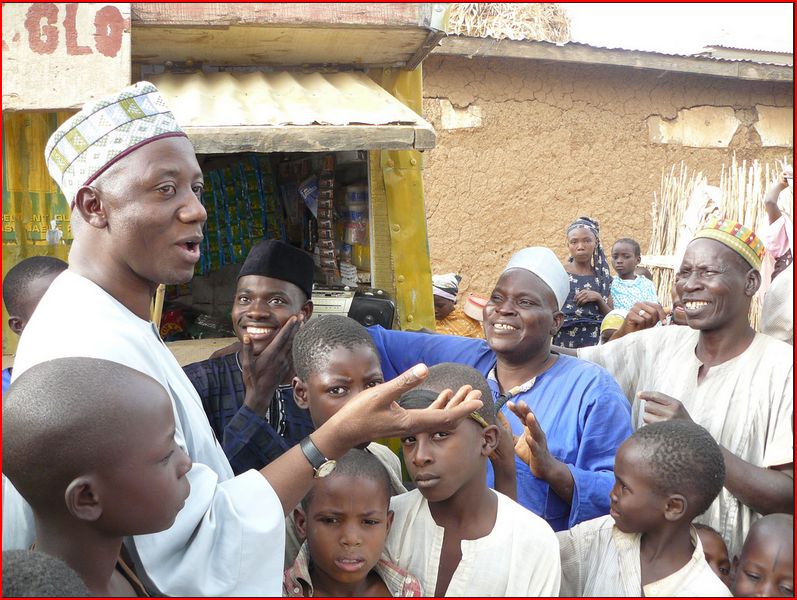
This page provides access to detailed documents created as part of a research study on household decision-making regarding health care and immunisation - including polio immunisation - in Nigeria, culminating in the report Perceptions of Influence: Understanding Attitudes to Polio Vaccination and Immunisation in Northern Nigeria.
The research was designed and conducted under the aegis of the Nigerian National Primary Health Care Development Agency (NPHCDA) in consultation with the Nigerian Polio Eradication Programme partners, including: the Federal Emergency Operating Centre (EOC) and relevant state EOCs, the World Health Organization (WHO), the United Nations Children's Fund (UNICEF), the Centers for Disease Control and Prevention (CDC), and CORE. It was led by Dr. Sebastian Taylor, the Principal Investigator (PI), with field research managed by Public Health Solution Services (PHSS) and its Director, Dr. Mizan Siddiqi.
The research was designed to understand a much fuller range of factors influencing household decision-making on polio. In order to do so, it was important to go beyond assumptions, to systematically collect data from households and to look for patterns in the association between household factors and household polio decision-making.
The study identified, quantified, and analysed the combined effects of social and material factors, at the micro level, that appeared to associate with incidence of missed children by household in a given community. The research aimed to strengthen understanding of how factors operate in a composite manner to determine the prevailing level at which households with eligible children drop out of, or are missed in the process of, supplementary immunisation activities (SIAs). The research was designed to generate more in-depth, localised analysis of factors leading to missed children and to produce that analysis in a way that is easily converted back into locally relevant programme knowledge and practice.
The content on this page guides you through the research process from inception to final report including documents on the methodology, the ethical review process, field research tools, and other research-centred knowledge summaries focused on polio immunisation in Nigeria available on The CI's Research: Local Health Decisions theme site.
FINDINGS AND ANNEXES:
- Click here for a summary of the findings and for access to the full report.
- Click here for a summary of, and access to, all of the annexes.
INFORMATION ON THE RESEARCH UNDERTAKEN:
- Understanding Attitudes to Immunisation in Northern Nigeria: Research to Support the Polio Endgame and Routine Immunisation Strengthening
- Understanding Attitudes to Immunisation in Northern Nigeria: A Research Outline
- Understanding Attitudes to Immunisation in Nigeria: Household Interview
- Understanding Attitudes to Immunisation in Nigeria: Key Informant Interview (KII)
RESEARCH DESIGN:
- Qualitative Comparative Analysis (QCA)
- Polio Eradication - Using Qualitative Comparative Analysis to Strengthen Understanding of Social Factors in Programme Effectiveness
- Understanding Household Attitudes to Polio Vaccination and Routine Immunisation in Northern Nigeria, a 35-slide PowerPoint presentation by Dr. Taylor on the topic of "Local and Household Decision Making on Health in Northern Nigeria, Polio/Routine Immunization Research Insights. An Innovative Use of QCA methodology for Health Communication", which was held in March 2015 in London, United Kingdom (UK).
KEY ACTORS: Click here to read brief bios of the key members of each research team and/or participating organisations.
ETHICAL APPROVAL AND CONSENT FORMS/LETTERS/DOCUMENTATION:
- Click here to read about the institutional review boards (IRBs)/ethics committees of the organisations that provided ethical guidance and approval for the study and to download the letters they provided.
- Nigeria Polio Household Survey - Participant Oral Consent - Research Project: Understanding Attitudes to Immunisation in Nigeria
- Nigeria Immunisation Survey - Administrative Tier Participant Oral Consent - Research Project: Understanding Attitudes to Immunisation in Nigeria
OTHER RELEVANT RESEARCH KNOWLEDGE:
- Perspectives on Polio Immunization Campaigns in Ibadan, Nigeria
- The Final Stages of the Global Eradication of Poliomyelitis
- Household Structure and Childhood Immunization in Niger and Nigeria
- Polio Vaccines - "No Thank You!": Barriers to Polio Eradication in Northern Nigeria
- Nigeria Immunization Plus Days: Observations from One Ward
- Key Issues in the Persistence of Poliomyelitis in Nigeria
- USAID/TSHIP Routine Immunization Review in Bauchi and Sokoto States
- Making "Reaching Every Ward" Operational
- IMMUNIZATIONbasics Nigeria
- IMMUNIZATIONbasics End of Project Report: Nigeria
- COMPASS End-of-Project Report
- What Led to the Nigerian Boycott of the Polio Vaccination Campaign?
- Polio in Nigeria: The Race to Eradication
- Public Health: Polio's Moving Target
- Interpersonal Communication and Risk Perception Determinants in the Polio Eradication Campaign in Zaria, Northern Nigeria
- From Intense Rejection to Advocacy: How Muslim Clerics Were Engaged in a Polio Eradication Initiative in Northern Nigeria
- The Impact of Polio Eradication Activities on Routine Immunization in Three Northern Nigerian States
- Log in to post comments