










































Social Mobilization Campaign against Polio
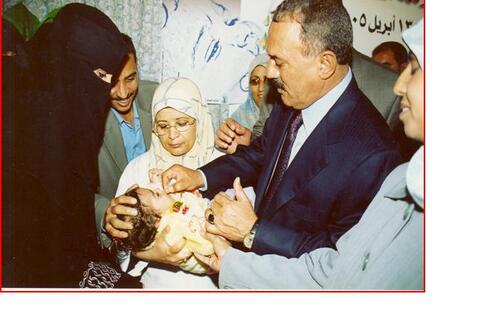
In 2006, the Government of Yemen carried out a social campaign using the strategy of social mobilisation in an effort to: increase awareness about the importance of vaccination against polio, ensure community involvement in enhancing routine vaccination, change negative norms through strategic communication, and enhance intersectoral collaboration.
This polio vaccination campaign used different communication methods and channels and involved different government sectors.
Preparations for the 2006 polio vaccination campaign included: a meeting with health education (HE) coordinators from governorates; distribution of information, education, and communication (IEC) materials developed by the National Center for Health Education and Information (NCHEI); coordination with and materials provision to the Ministry of Information (MOI) to engage television, local radios, and the press; meetings with various government and non-governmental organisation (NGO) officials/representatives at the governorate level for social mobilisation; distribution of extra copies of a training film for health workers; and a press conference with media representatives.
The campaign was launched at both the national and governorate levels, with all launching activities covered by different media channels. Communication strategies included:
- Raising awareness through mosques: AlJoma' Prayer, after daily prayers, and through pamphlets and posters.
- Raising awareness in schools - This involves coordination with the government in all governorates, invitation for vaccination (from students to parents), schools' radio, lectures by teachers, and "The Wall" magazine.
- Car megaphones and amplifiers, with daily visits to remote areas and markets for announcements about the campaign.
- Providing IEC materials, such as banners, brochures, posters, stickers, an invitation to participate in the vaccination rounds stressing the importance of vaccination and the safety of the vaccine, and car tapes provided to help HE coordinators in the districts that feature announcements, short drama, and Yemeni Nasheed (traditional songs).
- Mass media communication via television (e.g., live interviews with community leaders, round table discussions, TV spots, news reports on the campaign, etc.), radio (e.g., reproduction of spots and flashes using local accents), and press (e.g., articles and reports).
Immunisation and Vaccines.
June 2006 PowerPoint presentation: Social Mobilization Campaign Against Polio. Editor's note: Our apologies, but we are not able to determine to whom this presentation should be attributed or whom in Yemen to contact for further information.
- Log in to post comments