










































Technologies for Strengthening Immunization Coverage in India: A Systematic Review
Society for Applied Studies (Dudeja); Indian Institute of Technology Kharagpur (Khan); Believers Church Medical College (Varughese); Christian Medical College (Abraham, Ninan, Kang); Christian Hospital Bissamcuttack (Prasad); Indian Institute of Public Health Shillong (Sarkar) - Editor's note: Nonita Dudeja and Tila Khan shared first authorship.
"A multipronged strategy involving the most feasible, accessible, replicable and scalable technologies based on the local needs and perceived barriers, along-with planning and political will is needed to achieve the last mile immunization coverage in India."
Different techniques have been used as interventions to address inequitable access to vaccines, suboptimal vaccine uptake, and vaccine hesitancy. Immunisation coverage varies across India, depending on the setting(s), geographic area(s), and population(s). Considering the diversity of Indian geography and culture, there is a need to adopt locally acceptable and feasible interventions. This systematic review collates available evidence on techniques for strengthening immunisation across all age groups in India.
Studies published between January 1 2011 and July 31 2021 were searched in Medline (through PubMed), Cochrane Library, and Google Scholar. All observational and experimental studies, except qualitative studies, were included. Studies published in the English language and related to techniques for strengthening immunisation across all Indian settings were included. In all, 6,592 titles and abstracts were screened, and data were extracted from 23 India-specific studies - more than half of them quasi-experimental studies or randomised controlled trials (RCTs). The quality of 22/23 studies was average or above.
The techniques identified in the studies were broadly categorised under 8 different heads based on type: reminder systems (automated mobile phone reminders with incentives, mHealth applications, voice messages (mMitra), and the Kilkari messaging programme); immunisation campaigns (e.g., polio mass immunisation); sensors and wearable technologies (digital near field communication (NFC) pendants); intersectoral coordination; community mobilisation/engagement (e.g., involvement of women's groups); capacity building (e.g., education intervention for healthcare providers); regulation and monitoring (e.g., supportive supervision); and vaccine advocacy (e.g., enhanced political commitment).
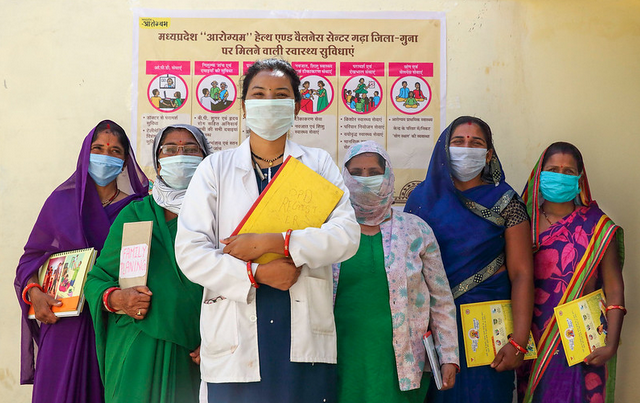
The majority of the techniques showed improvements in coverage or timeliness. For example, the "My Village My Home" (MVMH) campaign, which centred around a simple poster-sized community based tool to record and monitor the vaccination status of every child in the community by community health workers, was promising. Assessed in few districts of Jharkhand and Uttar Pradesh in India and Timor Leste, the MVMH tool improved immunisation coverage and timeliness. The review also showed that the community-level social mobilisation (CLSM) initiative involving mobilisation through community workers and supplementary immunisation activities including fixed-booth and house-to-house polio immunisation in Uttar Pradesh was unique in countering vaccine hesitancy during the post-polio endemic period. The Muskaan Ek Abhiyan (Smile Campaign) was an effective multisectoral strategy in Bihar of enhanced intersectoral coordination, awareness generation, increased budgetary support, monitoring and supervision, tracking of beneficiaries, and performance-based incentives to service providers. Educational interventions for school children and mothers of young children were also encouraging.
With regard to technology-based techniques, an RCT from Haryana showed enhanced impact of compliance-linked incentive-phone talk time given with automated mobile phone reminders on timeliness compared to the control or automated mobile phone reminder groups. To cite another example, a computerised immunisation-due list as part of the Rural Effective Affordable Comprehensive Health Care (REACH) technology studied in rural Rajasthan was successful in improving coverage. The m-Health education programmes of automated voice calls such as Kilkari and mMitra, have been scaled in many states across India, reaching millions of subscribers, suggest the scalability of mobile based technologies in settings like India. Further, they also contribute to empowerment of mothers. Some of the newer technologies did not improve coverage, such as the digital NFC pendant, even if they did lead to improvements in programme quality.
Very few novel machine-based technologies were evaluated in India, as compared to other countries. The possible reasons could be more emphasis on strengthening of existing capacity building and community engagement efforts for improving immunisation coverage, lack of funding to explore newer machine-based technologies, and notable differences in effectiveness of a technology due to diversity in the Indian population.
The researchers note they did not find much evidence on populations other than children and pregnant women. They emphasise the need for a life-course approach to immunisation, covering individuals as they progress through different stages of life, including adolescence, adulthood, and old age. The review also had limited representation from the northeastern and southern parts of the country. It is important to fill these gaps, as studies showed that the impact of techniques varied across states. For example, a high-intensity polio campaign resulted in a higher probability of vaccine uptake in Bihar while lower in Uttar Pradesh.
Based on the findings, the researchers conclude that multiple interventions may be necessary to improve the routine immunisation system in India, as evidenced from multipronged interventions in four studies. Improving vaccine access may be key to improving vaccination coverage, especially in marginalised and hard-to-reach populations, for which additional human resources dedicated to social mobilisation, advocacy, and community engagement will be crucial. For districts with the largest number of unimmunised children, the ones with the lowest coverage, better mapping and tracking tools for identifying beneficiaries and geospatial analysis may be useful.
The Lancet Regional Health - Southeast Asia 2023; 100251. https://doi.org/10.1016/j.lansea.2023.100251. Image credit: Soumi Das via USAID on Flickr (CC BY-NC 2.0)
- Log in to post comments