










































Trust in Health Workers and Patient-centeredness of Care Were Strongest Vaccination Correlates for Kenyan Children Born between 2017-2022
New York University (Moucheraud); Innovations for Poverty Action Kenya (Ochieng, Ogutu, Golub); University of California Los Angeles (Sudhinaraset, Szilagyi, Hoffman, Glenn); Kenya Medical Research Institute (Njomo)
"These findings highlight potential strategies to improve vaccine coverage: greater focus on quality of care, training healthcare workers on how to address concerns about vaccines, and building trust in the health care system and in health workers."
In many countries (whether high-, medium- or low-income), vaccine confidence was wavering even prior to the COVID-19 pandemic. Although vaccine coverage in Kenya is generally high, evidence indicates that hesitancy may be on the rise. This paper examines: (i) the magnitude of on-time versus under-vaccination among children born before and during the COVID-19 pandemic and (ii) what mother-level factors are associated with children's vaccination status. Findings could inform policies or programmes to raise vaccine coverage.
In May-June 2022, the researchers surveyed women who gave birth in Kenya between 2017 and 2022. They asked the mothers about their children's vaccination history and about hypothesised correlates of vaccination behaviour per the World Health Organization (WHO)'s Behavioural and Social Drivers of Vaccination (BeSD) model. The study's main independent variables used BeSD-focused measures to capture the domains of interest: To reflect beliefs and attitudes, the researchers created a vaccine attitudes score based on 13 Likert questions about perceived benefits, safety, and efficacy of routine child vaccines; to reflect social norms, they similarly used Likert questions to create a score of pro-vaccination social norms; to assess trust in one's healthcare provider, they assigned points to Likert questions and summing these into a final measure of trust in the health system; and to capture practical issues, they included a measure of access that included questions about accessibility of vaccination services, as well as an assessment of patient-centredness.
Of 873 children in this sample, 117 were under-vaccinated (i.e., delayed or missing vaccine dose(s)), and under-vaccination was more common among births during the COVID-19 pandemic (2020-2022) versus pre-pandemic (2017-2019). The key belief associated with under-vaccination was concern about vaccine safety (reported by just under one-third of parents). In multi-level multivariable models, children of respondents who expressed concerns about serious side effects from vaccines had significantly higher odds of missed vaccine dose(s) (adjusted odds ratio (aOR) 2.06, 95% confidence interval (CI) 1.14-3.72), and there was a strong association between having more safety concerns now versus before the COVID-19 pandemic (aOR missed dose(s) 4.44, 95% CI 1.71-11.51; aOR under-vaccination 3.03, 95% CI 1.28-7.19).
The key social norm was trust in healthcare workers. Trust in healthcare workers was generally high, and children born to mothers with overall higher trust in their healthcare provider had 15% lower adjusted odds of a missed vaccine than children born to mothers with lower trust in their healthcare provider. Further, people who reported higher patient-centred quality of vaccination care had much lower odds of having children with delayed or missed vaccine dose(s) (aOR missed dose(s) 0.14, 95 % CI 0.04-0.58; aOR under-vaccination 0.27, 95% CI 0.10-0.79). In adjusted models, many specific patient-centredness items were significantly inversely associated with missed vaccines or under-vaccination, including being treated with respect, having the vaccines explained during the visit, feeling like one could ask questions, and feeling like health workers paid attention when you needed help.
Based on the findings, the researchers deem it "critical to learn how to build trust in health workers and their vaccination recommendations. Trust is multi-dimensional and nuanced, so future research should seek to disentangle trust - for example, in the vaccine itself, in the messenger, in the message, and in the delivery system - and identify ways to build and leverage these different types of trust."
Also: "more attention is needed to creating person-centered models of care for vaccination services. Future efforts could use the person-centered vaccination measure in quality improvement efforts, such as training healthcare workers to explain all vaccines in a way that parents can understand, and encouraging parents to be involved in decision-making by supporting and answering their questions. These endeavors must be locally-contextualized, and developed to be responsive to the needs and resources of each local setting."
In conclusion, this study found increases in under-vaccination (delayed or missed dose(s)) during the COVID-19 pandemic compared to the pre-pandemic period. The researchers encourage more individual-level surveys to understand the magnitude of disruptions to routine vaccination, which groups have been most affected, and how policies and programmes can work to boost uptake in order to improve child survival.
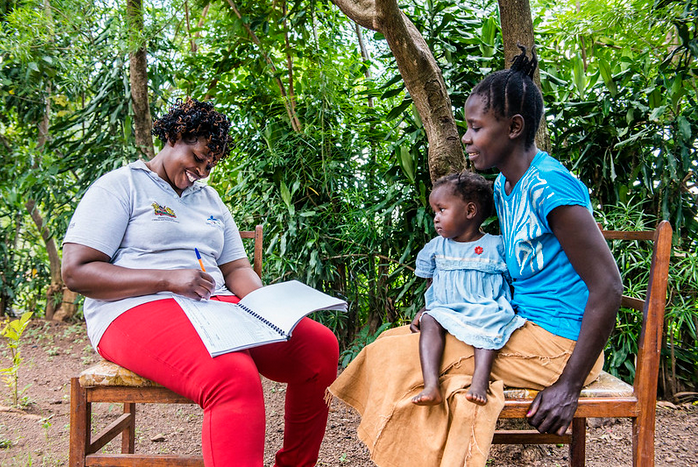
Vaccine: X. https://doi.org/10.1016/j.jvacx.2024.100523. Image credit: Anja Ligtenberg via Direct Relief on Flickr (CC BY-NC-ND 2.0)
- Log in to post comments