










































Uncovering the Drivers of Childhood Immunization Inequality with Caregivers, Community Members and Health System Stakeholders: Results from a Human-Centered Design Study in DRC, Mozambique and Nigeria
Affiliation
PATH USA (Shearer, Nawaz); independent consultant (Nava); JSI Research and Training Institute USA (Prosser, Mekonnen, Kanagat, Fields, Richart, Chee); PATH DRC (Mulongo); University of Kinshasa (Mambu, Mafuta); Eduardo Mondlane University (Munguambe); JSI Research and Training Institute Mozambique (Sigauque); JSI Research and Training Institute Nigeria (Cherima, Durosinmi-Etti); University of Benin (Okojie); Ahmadu Bello University (Hadejia); consultant public health physician (Oyewole); Manoff Group (Hooks)
Date
Summary
"Research exists on the drivers of immunization inequality..., yet most of the existing research focuses either on individual attributes or health system drivers, without analysis of the social and structural processes that produce inequalities..."
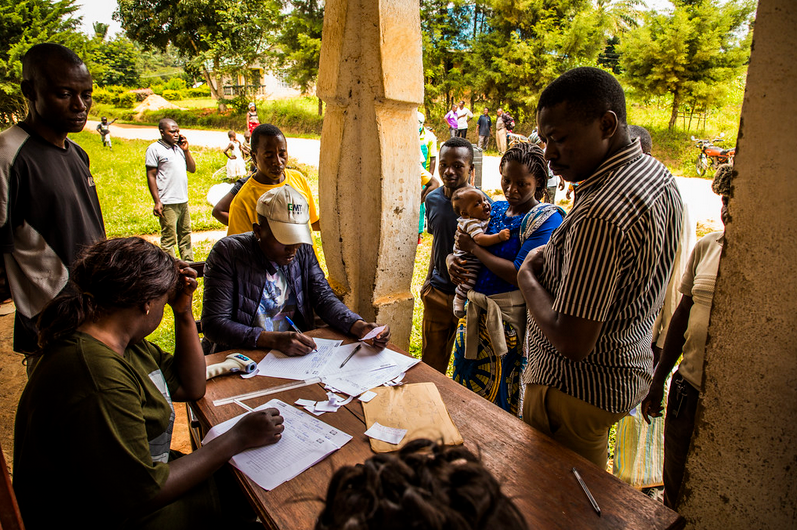
Human-centred design (HCD) has been used in global health programmes to better understand the challenges and potential solutions from the perspective of end-users, which this study sought to do. The study was conducted in the Demographic Republic of Congo (DRC), Mozambique, and Nigeria. Each country implemented a qualitative study to identify the barriers and facilitators of vaccination faced by caregivers of zero-dose and under-immunised children and to identify context-tailored solutions from the perspective of caregivers and other stakeholders. Implemented as part of the United States Agency for International Development (USAID)-funded MOMENTUM Routine Immunization Transformation and Equity project, the study's major objective was to inform the design of locally tailored solutions to include in the project's activity workplans.
Researchers drew from participatory action research, intersectionality, and HCD approaches to design a study that would ensure the engagement and collaboration of stakeholders at all levels. Community-based co-creation workshops sought to validate initial study findings, build empathy for caregivers among other stakeholders, and use HCD tools to identify potential interventions to overcome barriers. The research team drew on three analytical frameworks to inform research questions and data collection tools: the United Nations Children's Fund (UNICEF) Journey to Health and Immunization framework; the World Health Organization (WHO) Behavioural and Social Drivers (BeSD) framework; and the determinants of childhood vaccine coverage model. For instance, the UNICEF framework represents empathy for a caregiver and concepts of HCD and intersectionality by situating them in the centre of an ecosystem and explicitly recognising the influence of multiple levels, while also capturing issues faced by health personnel.
The study was implemented in the DRC (May-June 2021), Mozambique (July-August 2021), and Nigeria (October 2022). The research team and additionally trained data collectors collected data through semi-structured and open-ended in-depth interviews (IDIs), focus group discussions (FGDs; Nigeria only), and co-creation workshops. In brief, the process revealed that, across all the countries, most of the caregivers interviewed expressed the desire for their child to be vaccinated, and most were aware of the general benefits of vaccines. However, gender, social factors, and structural inequalities intersected and interacted to produce a variety of barriers for caregivers.
For example, gender inequality was sometimes apparent in a caregiver's lack of agency to make a decision about whether to vaccinate her child. When decision-making agency intersected with wealth, and women relied on their male partners for financial support to access vaccination, it often resulted in the child not getting vaccinated. When husbands assisted with practical aspects, such as childcare or transport, which was reported by some respondents, caregivers were more likely to seek vaccination. Gender dynamics were also presented in conversations related to adverse events following immunisation (AEFI). Many caregivers reported that they feared AEFI, such as fever or fussiness, as an uncomfortable infant disrupted the household dynamic, and this fear increased if their husband had complained.
Equity-limiting power dynamics also existed within the health system. The researchers observed that caregivers of low socioeconomic status experienced more disrespectful care from health workers (all countries) and were most likely to be blamed for not vaccinating their children (DRC). In the DRC and Mozambique, caregivers of zero-dose children felt a sense of shame or exclusion that prevented them from accessing services, and caregivers who experienced blame or disrespect at the vaccination facility were the least likely to return.
Findings indicated that the health systems faced multiple design and implementation constraints to fully delivering pro-equity or people-centred immunisation services. Notably, despite the many pro-equity strategies that exist and are budgeted and planned for, the research found that very few were actually implemented due to financial resource constraints at the operational level stemming from weak accountability and governance. The lack of person-centredness was most acute for caregivers and communities that were geographically inaccessible, socially excluded, or faced financial access barriers. Planned outreach vaccination sessions are meant to overcome these barriers, but a theme across all three countries was the low frequency of these services or lack of knowledge of when they would occur. Thus, immunisation programmes were not aligned with needs of the most vulnerable.
Local co-creation workshops reconceptualised the problem of no immunisation and under-immunisation among participants by presenting challenges from caregivers' or healthcare workers' perspectives. As reported here: "It was a new experience for all participants to be brought into a workshop where district, health facility, community leaders, and caregivers were invited as equals. In the DRC and Mozambique, district and provincial stakeholders expressed that the workshops were enlightening, and their perspectives changed about mothers related to the barriers they face and their agency in overcoming them." Solutions that emerged from the workshop included:
Based on this experience, the researchers conclude that it is feasible to build empathy and co-design solutions with caregivers, communities, and health system actors. They recommend the following steps to integrate HCD and intersectionality into planning, management, and implementation processes:
Human-centred design (HCD) has been used in global health programmes to better understand the challenges and potential solutions from the perspective of end-users, which this study sought to do. The study was conducted in the Demographic Republic of Congo (DRC), Mozambique, and Nigeria. Each country implemented a qualitative study to identify the barriers and facilitators of vaccination faced by caregivers of zero-dose and under-immunised children and to identify context-tailored solutions from the perspective of caregivers and other stakeholders. Implemented as part of the United States Agency for International Development (USAID)-funded MOMENTUM Routine Immunization Transformation and Equity project, the study's major objective was to inform the design of locally tailored solutions to include in the project's activity workplans.
Researchers drew from participatory action research, intersectionality, and HCD approaches to design a study that would ensure the engagement and collaboration of stakeholders at all levels. Community-based co-creation workshops sought to validate initial study findings, build empathy for caregivers among other stakeholders, and use HCD tools to identify potential interventions to overcome barriers. The research team drew on three analytical frameworks to inform research questions and data collection tools: the United Nations Children's Fund (UNICEF) Journey to Health and Immunization framework; the World Health Organization (WHO) Behavioural and Social Drivers (BeSD) framework; and the determinants of childhood vaccine coverage model. For instance, the UNICEF framework represents empathy for a caregiver and concepts of HCD and intersectionality by situating them in the centre of an ecosystem and explicitly recognising the influence of multiple levels, while also capturing issues faced by health personnel.
The study was implemented in the DRC (May-June 2021), Mozambique (July-August 2021), and Nigeria (October 2022). The research team and additionally trained data collectors collected data through semi-structured and open-ended in-depth interviews (IDIs), focus group discussions (FGDs; Nigeria only), and co-creation workshops. In brief, the process revealed that, across all the countries, most of the caregivers interviewed expressed the desire for their child to be vaccinated, and most were aware of the general benefits of vaccines. However, gender, social factors, and structural inequalities intersected and interacted to produce a variety of barriers for caregivers.
For example, gender inequality was sometimes apparent in a caregiver's lack of agency to make a decision about whether to vaccinate her child. When decision-making agency intersected with wealth, and women relied on their male partners for financial support to access vaccination, it often resulted in the child not getting vaccinated. When husbands assisted with practical aspects, such as childcare or transport, which was reported by some respondents, caregivers were more likely to seek vaccination. Gender dynamics were also presented in conversations related to adverse events following immunisation (AEFI). Many caregivers reported that they feared AEFI, such as fever or fussiness, as an uncomfortable infant disrupted the household dynamic, and this fear increased if their husband had complained.
Equity-limiting power dynamics also existed within the health system. The researchers observed that caregivers of low socioeconomic status experienced more disrespectful care from health workers (all countries) and were most likely to be blamed for not vaccinating their children (DRC). In the DRC and Mozambique, caregivers of zero-dose children felt a sense of shame or exclusion that prevented them from accessing services, and caregivers who experienced blame or disrespect at the vaccination facility were the least likely to return.
Findings indicated that the health systems faced multiple design and implementation constraints to fully delivering pro-equity or people-centred immunisation services. Notably, despite the many pro-equity strategies that exist and are budgeted and planned for, the research found that very few were actually implemented due to financial resource constraints at the operational level stemming from weak accountability and governance. The lack of person-centredness was most acute for caregivers and communities that were geographically inaccessible, socially excluded, or faced financial access barriers. Planned outreach vaccination sessions are meant to overcome these barriers, but a theme across all three countries was the low frequency of these services or lack of knowledge of when they would occur. Thus, immunisation programmes were not aligned with needs of the most vulnerable.
Local co-creation workshops reconceptualised the problem of no immunisation and under-immunisation among participants by presenting challenges from caregivers' or healthcare workers' perspectives. As reported here: "It was a new experience for all participants to be brought into a workshop where district, health facility, community leaders, and caregivers were invited as equals. In the DRC and Mozambique, district and provincial stakeholders expressed that the workshops were enlightening, and their perspectives changed about mothers related to the barriers they face and their agency in overcoming them." Solutions that emerged from the workshop included:
- Forming walking groups of caregivers to travel together to health facilities (Mozambique), husbands helping with transport (Mozambique) or childcare (Nigeria), and championship by community and religious leaders, who themselves are supported with training and information (DRC and Mozambique). These solutions suggest that participants were motivated by feelings of social cohesion.
- Better implementing existing solutions through joint planning for outreach services across health programmes to better reach remote communities, integrated delivery of all child health services at facilities, reduction of waiting times, and expanded service hours.
Based on this experience, the researchers conclude that it is feasible to build empathy and co-design solutions with caregivers, communities, and health system actors. They recommend the following steps to integrate HCD and intersectionality into planning, management, and implementation processes:
- As part of routine coverage and equity analyses, select qualitative methods that engage directly with caregivers and communities, and work with them to identify locally relevant solutions.
- Revise existing planning processes (e.g., annual planning processes) and tools (e.g., supervision checklists) to provide guidance or requirements related to integrating gender, engaging communities, and addressing root causes of sub-optimal implementation.
- Invest in strengthening skills and culture related to gender, intersectionality, and HCD among immunisation stakeholders.
- Encourage donors to target investments towards interventions that are gender-responsive or transformative, towards activities that are designed to reach caregivers and communities furthest from health justice, and towards supporting larger health systems and governance reforms that improve the availability, quality, and convenience of people-centred approaches.
- Encourage and fund research and evaluation of the effectiveness and equity consequences of interventions to reach zero-dose children and missed communities and on how to overcome obstacles related to their implementation.
Source
Vaccines 2023, 11, 689. https://doi.org/10.3390/vaccines11030689. Image credit: World Bank / Vincent Tremeau via Flickr (CC BY-NC-ND 2.0)
- Log in to post comments