










































Using Behavioural Insights for Measurable Change
"More can be done to use modern methods of analysis, such as behavioural insight research, to better understand motivation and behaviour to help polio eradication." - quotation shared in the webinar, from The Art of Survival (17th Report of the Independent Monitoring Board of the Global Polio Eradication Initiative):
Hosted by the Center for Advanced Hindsight at Duke University for the polio communication for development (C4D) team at the United Nations Children's Fund (UNICEF), this webinar explored behavioural insights (BI) as a C4D tool. The virtual event drew over 250 members of the UNICEF community from over 45 countries around the world, with attendees engaging in both English and French. Accordingly, the webinar video is available (below) in both languages, as is a bilingual PowerPoint presentation.
The webinar began with an introduction to the Center for Advanced Hindsight, whose data analysts, developers, post-docs, social scientists, project managers, applied researchers, and designers use behavioural economics (BE), human-centred design (HCD), and rigourous evaluation in an effort to make "people happier, healthier and wealthier with behavioral science at home and abroad".
Next, the session explored BI, which uses lessons derived from the behavioural and social sciences, including decision making, psychology, cognitive science, neuroscience, and organisational and group behaviour to better understand why people act as they do and to create more effective public policies. Jose Cuesta, who took up his position as Chief of Social and Economic Policy at the UNICEF Office of Research - Innocenti in 2016, said at that time: "Embracing the idea that human beings cannot be understood solely as homo economicus has now inspired a whole new field: behavioural economics, where psychology and economics intersect." Some of the concepts BI as a field encapsulates are: present bias; complexity; hassle factors; temptation; inattention; procrastination; status quo; bias; and inertia.
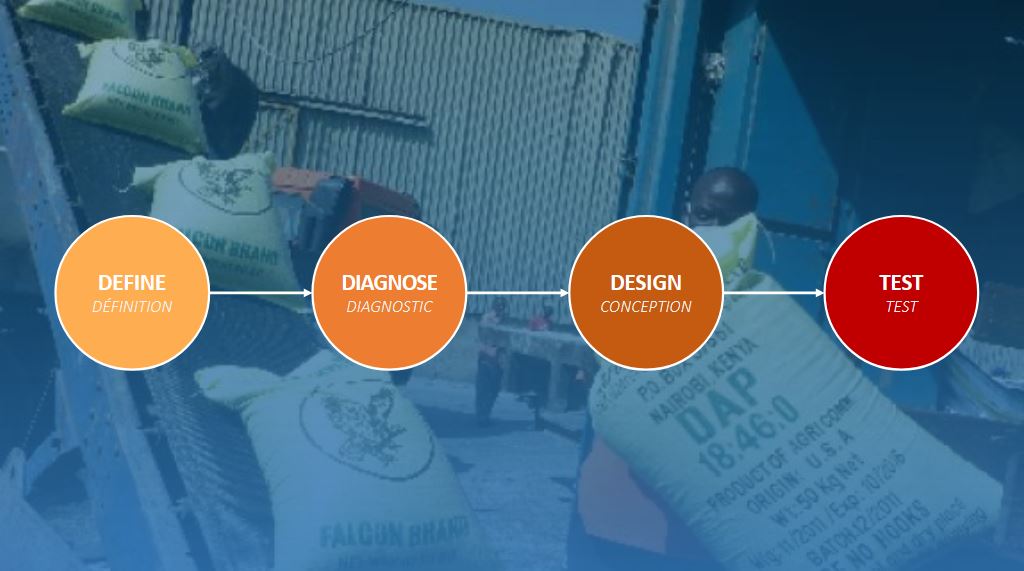
The webinar took a deeper look at the BI approach, whose main steps include: Define; Diagnose; Design; and Test. Some of the tools used at stages in this process are: scientific literature; participatory approaches, such as HCD; rapid pre-testing in the lab; field testing; and combinations of nudges. Among the examples provided is the field study of Flu Fighters, which examined dyad-linked incentives vs. traditional incentives.
Turning to linkages between UNICEF, BI, C4D, and polio, the webinar examined various studies, including:
- A pilot study of vaccinations conducted by UNICEF Lebanon among N=6,160 households, with results suggesting that an additional 6,800 households will vaccinate at least one child if the BI intervention is scaled up to reach 100,000 households.
- N.T. Brewer et al. (2018), which found that behavioural strategies more effective than persuasion in promoting vaccination. (See Related Summaries, below.)
- A. Banerjee et al. (2010), which found that small incentives were found to have large positive impacts on the uptake of immunisation services. (See Related Summaries, below.)
- N. Ashraf et al. (2014) ["Household Bargaining and Excess Fertility: An Experimental Study in Zambia"], which found that a group of community health workers in Zambia who were recruited using BI conducted 29% more household visits and organised twice as many community meetings.
- The World Bank's "Motivating Public Sector Workers in Nigeria", which found that incentivising administrative work through social recognition programmes and ceremonies increased recordkeeping accuracy by 18% in a BI programme in Ekiti, Nigeria.
Next steps in terms of the intersection of BI and polio include exploring BI for vaccine uptake (with a focus on intention-action gaps) and BI for other parts of the system (e.g., frontline workers and mobile teams; data collection and recordkeeping).
English, French
Emails from Erin Bogue to The Communication Initiative on July 28 2020 and March 18 2021.
- Log in to post comments