










































Vaccine Hesitancy as Self-Determination: An Israeli Perspective
"Vaccine hesitancy in Israel appears to be a process where individuals exercise self-determination and self-empowerment and make their own decisions based on assessment, reflection, choosing between various options and dealing with considerable complexities."
This commentary focuses on hesitancy in a very local, culture-dependent setting (the Israeli population), defining hesitancy by relating to it as a personal deliberation process of whether to get vaccinated or not. This type of hesitancy can be identified in the attitude of the Israeli public towards, for example, newly introduced vaccines such as human papillomavirus (HPV) vaccine. The core argument Baruch Velan makes here is that addressing the form of hesitancy he discusses would require change of attitudes on the part of policymakers, starting from a perspective that hesitant individuals should be respected.
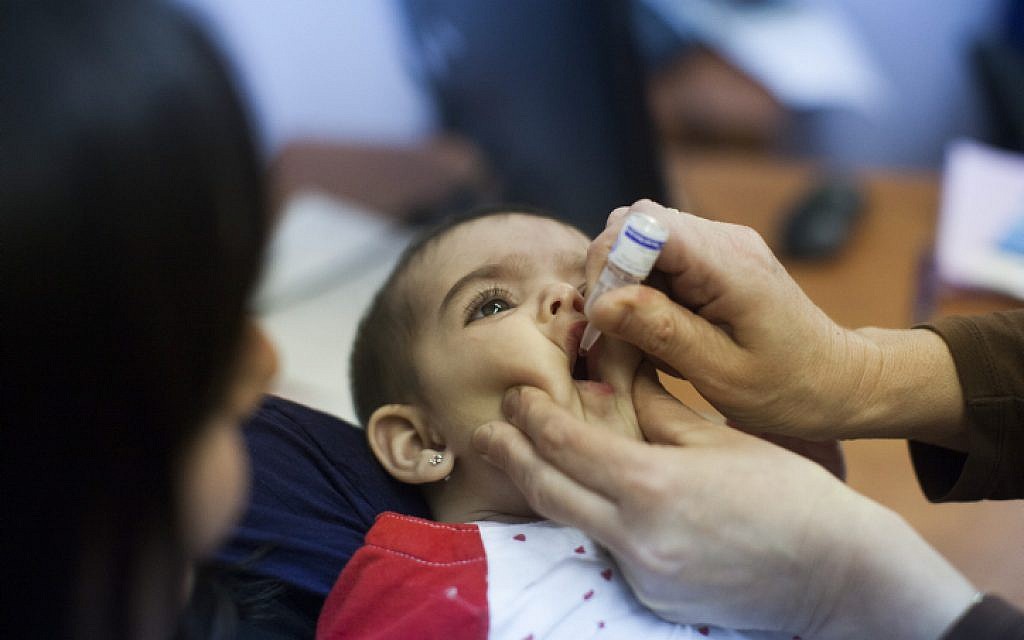
A review of several recent Israeli studies informs Velan's mapping of vaccine hesitancy in Israel into these categories: hesitancy related to routine childhood vaccination programmes; hesitancy related to seasonal flu vaccination programmes; hesitancy related to HPV vaccination; hesitancy related to an emergency H1N1 influenza vaccination; hesitancy related to vaccination of health care workers; and vaccination hesitancy related to an emergency polio vaccination campaign. On the latter example, Velan explains that, in 2013, an outbreak of wild poliovirus (WPV) was detected in a sewage sample in Israel where inactivated polio vaccine (IPV) had been used exclusively since 2005. In order to curtail the outbreak, a nationwide vaccination campaign using oral polio vaccine (OPV) was conducted, leading to an animated public debate that was conducted in the formal media, as well as on online platforms. During the month of August 2013, a Web search identified 32,500 polio-related discussions. Content analysis of these discussions revealed motives related to vaccine acceptance and vaccine rejection, but also clear manifestations of hesitancy. Parents faced with the request to vaccinate their children with OPV exercised 2 modes of decision-making. Forty-four percent of the parents declared that they were able to decide immediately on whether to vaccinate their children or not, whereas 41% of the parents claimed that they needed some time for reflection before deciding what to do. The compliance rates with polio vaccination were 82% among "immediate deciders" and 70% among "late deciders". These findings suggest that the outcome of vaccine hesitancy is not necessarily non-compliance.
Analysis of the various manifestations of vaccine hesitancy in Israel reveals several characteristic features. Vaccine hesitancy in that country...:
- ...is associated with higher education and maturity.
- ...is culture dependent (Arabs appear to be more conformist than Jews when addressing health requirement and express lower levels of reflexivity and skepticism related to vaccination).
- ...is about dealing with complexities - e.g., dealing with the moral implications of vaccinating boys against HPV.
- ...is about making choices - e.g., between anti-vaccination and pro-vaccination agendas, broadcasted daily by various media sources.
- ...is about being differential - e.g., as seen in the low acceptance of the emergency H1N1 vaccination versus the high acceptance of the emergency polio vaccination programme.
- ...is about self-navigation. Hesitancy is an introversive process, where individuals are concerned with their personal feelings and ideas and try to use this inward examination to navigate their actions. A survey (n=2,018) of the Israeli population revealed that many respondents felt that vaccination should be left to the personal choice of each individual. Non-willingness to defer to others is a constituent of vaccine hesitancy.
- ...is about judicious trust in authorities - i.e., there is a complex interrelationship between trust and compliance.
- ...is about learning and acquiring knowledge.
- ...is about assessment and argumentation.
This analysis leads Velan to describe vaccine hesitancy as "not necessarily a manifestation of passiveness or feebleness. On the contrary, hesitancy can be a very proactive process. Lay individuals choose not to rely on authoritative agencies, such as the medical establishment, nor on alternative agencies such as the anti-vaccination movements. Instead, individuals make their own decisions in a process which involves assessing, choosing and dealing with complexity. This appears to be an act of self-determination, where individuals exercise reflexivity and self-empowerment when deciding about vaccination."
He explains that, in Israel, the manifestations of reflective vaccine hesitancy appear to rely on 2 traditions: the long-lasting Jewish scholarly tradition, characterised by mechanisms of debating, arguing, and questioning, and the more recent socio-political tradition of Modern Israel, marked by quarrels, social schisms, divergence of opinions, and distrust of authority. This could serve as a fertile ground for an atmosphere of skepticism where vaccination hesitancy is enhanced. Velan points also to worldwide changes that contribute to this trend, such as a shift in responsibility from state agencies to individuals, and realisation that coping with risk requires a continuous process of evaluation, re-assessment, and reorientation.
Velan asserts: "Dealing with individuals who are genuinely asking for guidance is relatively easy, while dealing with very defiant individuals can be futile. In contrast, dealing with mid-scale hesitant individuals that are struggling with vaccination could be challenging, but ultimately fruitful. This requires designing appropriate intervention strategies but also a change of attitudes." He lays out the following steps:
- Policymakers should realise that hesitancy is an act of self-empowerment; deliberative hesitancy is here to stay.
- Health professionals need to cultivate an attitude of respect towards hesitant individuals. In this way, they "can start paving the way to interacting, explaining and convincing the hesitant public about the advantages of vaccination."
Israel Journal of Health Policy Research (2016) 5:13. DOI 10.1186/s13584-016-0071-x. Image credit: Yonatan Sindel/Flash90
- Log in to post comments