










































What Are the Barriers and Facilitators to Polio Vaccination and Eradication Programs? A Systematic Review
University of Western Ontario (Ezezika, Barrett); University of Toronto Scarborough (Ezezika, Mengistu, Opoku, Farheen, Chauhan); African Centre for Innovation and Leadership Development (Ezezika); London School of Hygiene & Tropical Medicine (Mengistu); University of Toronto (Opoku); University of Toronto Scarborough Library (Barrett)
"This study provides policymakers, practitioners, and researchers with a tool for planning and designing polio immunization programs."
Numerous researchers have documented implementation factors with regard to polio vaccination and eradication. This systematic review examines the lessons learned from existing studies across nations, which may be relevant for the formulation and implementation of other vaccination programmes.
On September 18 2020, the researchers searched OVID Medline, OVID Embase, EBSCO CINAHL Plus, and Web of Science. To be included in the review, the studies needed to be English-language, primary research articles published in academic journals at any time. The research needed to employ qualitative methods or mixed methods with a qualitative component. The implementation of a polio eradication or polio vaccination intervention, programme, or campaign could take place globally in any setting and involve participants of any age. Eligible studies underwent quality assessment.
Twenty articles met inclusion criteria. The bulk of the articles were published between 2010 and 2020 (n = 14). Twelve countries were represented in this review, with India, Nigeria, Pakistan, Ethiopia, and Afghanistan having the most representation of available studies. The studies discussed 36 barriers and 16 facilitators.
Seven themes emerged, with examples from the literature provided in the paper:
- Fear: Fear was associated with rumours, suspicions, and past experiences with other diseases, rendering parents reluctant to take part in polio programmes. At the same time, fear could facilitate programme implementation, as fear of illness due to polio increased vaccination uptake.
- Community trust: Distrust stemming from political and social exclusion hindered programmes' credibility in certain communities. On the other hand, trust served as a facilitator in programme uptake in certain settings where trust in government services was high.
- Infrastructure: General infrastructural issues impeded effective implementation and limited efforts to reach vulnerable populations. Conversely, in the presence of good infrastructure and resource mobilisation, the implementation of polio programmes was deemed successful.
- Beliefs about the intervention: Negative beliefs about the polio vaccine emerged from cultural beliefs, religious conceptions, and inadequate awareness of the vaccine's purpose and effectiveness. However, increased knowledge and positive beliefs about the vaccine's efficacy against disease facilitated programme implementation in other settings.
- Influential opinions: Some religious leaders and health professionals were not in support of the polio programmes. Because the opinions of these groups were heavily influential in parents' decision-making, they served as a hindrance to programme implementation. On the other hand, religious leaders and health professionals who served as champions of the vaccine were helpful in facilitating programme implementation.
- Intervention design: Strategies to reach priority populations were a challenge, as the resources needed for such mobilisation were not available or convenient in some settings. However, in other settings, strategies including policies that enforce polio vaccination served as facilitators to programme implementation.
- Geo-politics: Barriers in this category were external to the intervention itself but negatively influenced the implementation of programmes across several settings, as many children who were eligible for vaccinations were inaccessible. For example, one author noted that "the global war on terror and the geopolitical situation in Afghanistan impacted polio eradication and other immunization efforts in the country".
The most frequently cited constructs for the facilitators and barriers were knowledge and beliefs about the intervention, followed by available resources. A key lesson from this study is that implementation practitioners should recognise the relevance of religious beliefs and leaders and the need to include them in public awareness campaigns on the need to vaccinate. This implication is related to the themes of community trust, beliefs about interventions, and fear. Cultural and religious misconceptions were critical, especially relating to Islamic beliefs and some Muslims who believed that the vaccine is not halal (permitted by Islam). These religious beliefs are often misconceptions and not scientifically supported, emphasising the need to engage Imams and other religious leaders in addressing polio vaccine misconceptions. Encouraging influential individuals within a particular context to share their opinions, thoughts, and attitudes toward a particular health intervention during the planning stages may increase knowledge sharing and possible collaboration to enhance community sensitisation.
More broadly, the literature identifies community engagement, public awareness campaigns, education, and trust-building among the populace as strategies with potential to open avenues to highlight the efficacy and relevance of the vaccine to communities and provide answers to questions that bother them.
All that said, the diversity of factors among different groups of people or countries highlights the need for implementers to be conversant with the contexts within which polio eradication programmes are operating in order to maximise their efforts to boost intervention coverage and capacity.
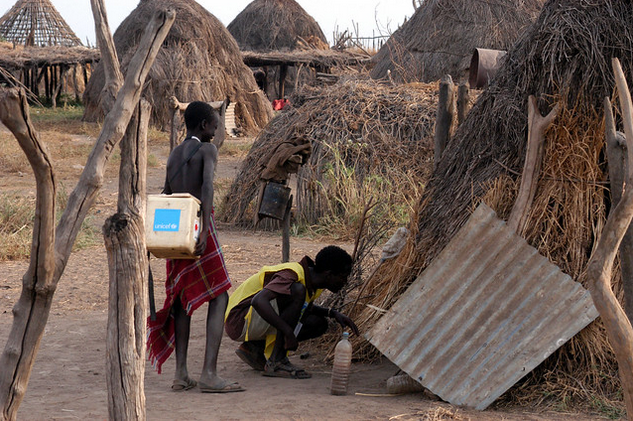
PLOS Global Public Health 2(11): e0001283. https://doi.org/10.1371/journal.pgph.0001283. Image caption/credit: Volunteer Haile Dooch stoops before a Karo hut in Karo Duss village, Hamer District, Ethiopia, to inquire if there are any children under the age of five years inside during a Polio National Immunisation Days (NIDs) campaign. ©UNICEF Ethiopia/2005/Getachew via Flickr (CC BY-NC-ND 2.0)
- Log in to post comments