










































Women's Empowerment and Children's Complete Vaccination in the Democratic Republic of the Congo: A Cross-Sectional Analysis
Tsinghua University (Lu, He, Tang); Peking University (Lu, Wang); China Agricultural University (Fu); The University of Queensland (Hee); United Nations Children's Fund, or UNICEF (Takesue)
"Generally, the enhancement of women's empowerment is indispensable to improve the vaccination level of their child or children."
As gender-based approaches are increasingly adopted to scrutinise health inequities, it has been revealed that the empowerment of mothers tends to result in better maternal and child health outcomes. This study examined the association between women's empowerment and complete vaccination of children in the Democratic Republic of the Congo (DRC). That country's resurgence of measles in 2010, an outbreak of yellow fever with vaccine shortage in 2016, and multiple independent events of the emergence of circulating vaccine-derived poliovirus strains from 2004 to 2018 underscore the necessity for the enhancement of vaccine uptake and the improvement of vaccine delivery strategies in the DRC.
In this cross-sectional study, a principal component analysis (PCA) was conducted on data from the 2017 and 2018 United Nations Children's Fund (UNICEF) Multiple-Indicator Cluster Survey 6 (MICS-6) to determine the dimensions of women's empowerment. Women's empowerment was measured using 13 questions that focused on:
- Intrinsic agency, defined according to 5 questions regarding the attitudes of women towards their husband's violence;
- Enabling resources, defined according to women's highest education level, health insurance coverage, possession of a mobile phone, having used the internet, and having used a computer; and
- Social independence, defined according to the age difference between a woman and her husband, a woman's age at first marriage, and a woman's age at first birthing.
Logistic regression analysis was used to assess the association between women's empowerment and complete vaccination of children, as defined by the National Expanded Program on Immunization (EPI), stratified by household wealth.
In total, 3,524 women between 15 and 49 years of age with children aged 12-23 months were included in the study. According to the EPI in the DRC, 36.6% of children in this sample had been completely vaccinated. Table 3 shows the association between women's empowerment and children's complete vaccination. Children of women with high levels of empowerment had higher odds of complete vaccination, with values of 1.63 (p = 0.002) and 1.59 (p = 0.012) for intrinsic agency and enabling resources of the empowerment, respectively, compared to the children of women with low levels of empowerment; however, social independence failed to be associated with the vaccination status of children. After stratification by household wealth, the odds ratio (OR) of complete vaccination was higher in women from middle-income households with high levels of intrinsic agency (OR: 2.35, p = 0.021) compared to women from economically poor households with high levels of intrinsic agency (OR: 1.92, p = 0.004).
In short, this study found that children of women who strongly opposed domestic violence or possessed more social resources were more likely to be completely vaccinated. Apart from this, the results showed that complete vaccination of children was associated with higher household income, rural residency, and fewer children aged under 5 in the family. A high level of intrinsic agency was found to be associated with complete vaccination in the women from an economically poor household, whereas enabling resources showed a similar effect in the women from a wealthy household.
Reflecting on the findings, the researchers point out that women who possess more autonomous decision-making power were more likely to vaccinate their children. They suggest that the acceptance of violence portrays submissiveness of the wife and the dominion of the husband, including in determining access to health services for their children. The study also demonstrated strong positive effects of maternal material and social resources on their children. For example, the educational attainment and information from media may enhance the access and absorption of knowledge and literacy, as well as communication with health workers, leading to a better comprehension of EPI and complete vaccination.
Thus, the researchers conclude that: "National immunization campaigns should focus on women under unequal power relations, especially those in poor families. It is crucial to 'ensure equal access to and equal treatment of women in health care', to guarantee that women can make healthcare choices on behalf of themselves and their children..."
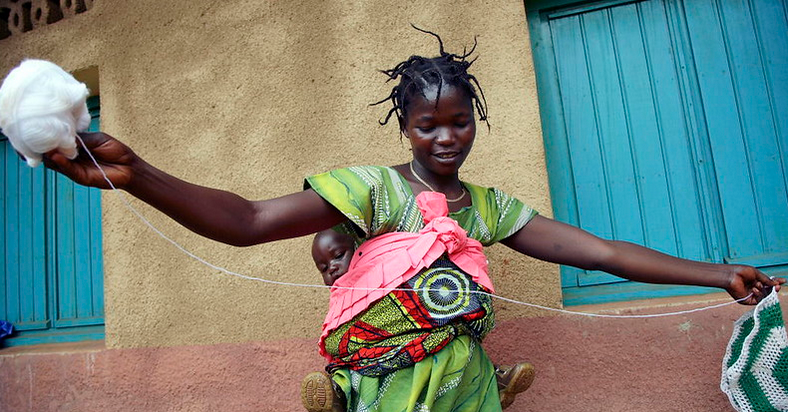
Vaccines 2021, 9, 1117. https://doi.org/10.3390/vaccines9101117. Image credit: UN Photo/Martine Perret via Flickr (CC BY-NC-ND 2.0)
- Log in to post comments