










































Seeking Health Information: A Qualitative Study of the Experiences of Women of Refugee Background from Myanmar in Perth, Western Australia
Curtin University (Griffin, Nau, Ali, Dantas); Murdoch Children's Research Institute (Riggs); University of Melbourne (Riggs)
"...insight into the experiences of women of refugee background from Myanmar seeking and accessing health information. These experiences can offer crucial insight into the women's application of health literacy skills and how they may be supported to obtain health information and develop these skills."
Decades of political instability, violence, and persecution in Myanmar have resulted in over one million people being displaced or seeking asylum in nearby countries. Inadequate health literacy and health knowledge have been identified as factors in poor health service access for people of refugee background, including that of women from Myanmar. Difficulties in communicating and understanding information about health, making appointments, and locating health services can impede health-seeking behaviours. The aim of this study is to understand the experiences of women of refugee background from Myanmar accessing health information.
Semi-structured interviews were conducted from June to August 2021 with 14 women of refugee background from Myanmar resettled in Western Australia. Community engagement was an essential component of the study design. One of the study's co-authors is an active member of the Myanmar community in Western Australia. To connect with women who might be eligible for the study, she and the first author visited community and church-based groups and events at the invitation of community leaders. Interpretative phenomenological analysis underpinned the study and was conducted on the interview data.
Three superordinate themes and nine subordinate themes emerged from the analysis; they are illustrated by quotations from the participating women. In short:
- Seeking health information (motivation and sources) - Women were motivated to seek health information by need. Health professionals were women's primary source of health information and often their preferred source. Sharing experiences with friends could motivate women to seek further health information.
- Facilitators and barriers (communication, navigating the system, and community) - Communication emerged as a significant barrier to obtain and understand health information for every woman. This reflected women's preference to obtain health information by conversing with people, primarily health professionals. The communication barriers identified were numerous and complex, including language challenges, women not asking questions, and perceived negativity from health professionals. Demonstrations, pictures, videos, short simple sentences, verbal explanations of any written information provided, and storytelling to explain a piece of information were all identified as factors that facilitated their understanding of health information. Difficulty navigating the system and a lack of knowledge about available health services left women vulnerable when their health needs were not met.
- For example, as a humanitarian entrant, Phyu was eligible for financial support from the government; however, a condition of this support was that her child have her immunisations as required by the National Immunisation Program Schedule. Phyu was unaware of this schedule and consequently did not receive a financial support payment. To prevent this from happening again, she sought information from her general practitioner, who introduced her to the government website, myGov. This website enabled her to access her own and her child's health records and stay up to date with the immunisation schedule. She spoke with pride about her use of this e-resource to access health information.
- Seeking health information in the context of past experiences (health information as a by-product of healthcare, health professionals' provision of health information, accessibility of health care, and expectations on resettlement) - Women shared experiences of seeking healthcare without accompanying health information. Seeking healthcare was typically reserved for emergencies in which women were grateful to have survived. Women who lived in refugee camps emphasised that free access to health services in refugee camps was a facilitating factor in the use of these services. Women's experiences of healthcare, health information, or the absence of these experiences influenced women's expectations on resettlement.
Community networks could also assist the women to overcome barriers to accessing and understanding health information.
The discussion section of the paper explores how the women's experiences relate to their health literacy and potential opportunities co-designed and co-facilitated by peers to improve women's access to and understanding of health information, or their health literacy, in ways that are informed by the women's cultural and trauma-informed needs, and prior health experiences. Examples of interventions include trauma-informed culturally responsive training, group pregnancy care, internet- and mobile phone-based applications (apps), and community education programmes.
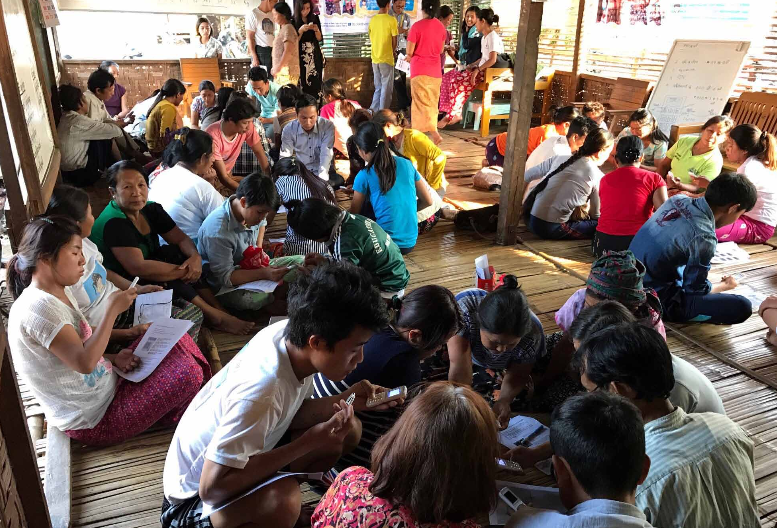
Nobably, community was revealed as an important resource in this study. Peers, family members, and community leaders supported women to access and understand health information by identifying and introducing women to health services, sharing health information, translating health information, and assisting with practical aspects, such as transportation. "As women gained health knowledge and developed health literacy skills, they were eager to share these and support other members of their community....This strong community network and collective approach to managing health needs is a resource that may be enhanced to improve the health knowledge and health literacy of the community as a whole."
In conclusion: "Community engagement, participation and evaluation are critical for determining the effective interventions to address the inequalities experienced by this population."
International Journal of Environmental Research and Public Health 2022, 19(6), 3289; https://doi.org/10.3390/ijerph19063289.
- Log in to post comments