










































Access to Vaccination among Disadvantaged, Isolated and Difficult-to-Reach Communities in the WHO European Region: A Systematic Review
Vienna Vaccine Safety Initiative e.V. (Ekezie, Awwad, Krauchenberg, Rath); University of Nottingham (Ekezie, Rath); University of Leicester (Ekezie); Stanford University (Awwad); European Parents Association (Krauchenberg); Young European Academy of Paediatrics (Karara); Evangelical Hospital Queen Elisabeth Herzberge (Karara); European Academy of Paediatrics (Dembiński, Grossman, del Torso, Dornbusch, Neves, Copley, Mazur, Hadjipanayis, Grechukha, Papaevangelou, Lapii); Medical University of Warsaw (Dembiński); Ariel University (Grossman); Finnish Institute for Health and Welfare (Nohynek); University of Belgrade Damnjanović); University of Novi Sad (Lazić); Jerusalem District Health Office (Stein-Zamir)
"Understanding how the different determinants and dimensions influence vaccine coverage among disadvantaged groups is fundamental to identifying ways to improve vaccine uptake."
In recent years, Europe has been dealing with increasing rates of vaccine-preventable diseases (VPD) and complex determinants of vaccination, which have contributed to the stagnation of childhood and adult vaccine uptake. Of particular concern are vaccination coverage rates (VCRs) among disenfranchised and disadvantaged populations. This review provides an overview of vaccination coverage, accessibility, underlying factors, and critical issues related to disadvantaged, isolated, and difficult-to-reach communities in the World Health Organization (WHO) Europe Region. The study findings highlight factors that need to be considered when developing vaccination programmes for these communities.
A review of published literature was performed in November 2020 (and updated on March 5 2022) to identify related research studies published between 2015 and March 2022. Searches yielded 18,109 publications from four databases, and 104 studies from 19 out of 53 countries reporting on 22 VPDs were included. Nine groups representing the populations of interest were identified, and most of the studies focused on asylum seekers, refugees, migrants, and deprived communities.
Recall of previous vaccinations received was poor, and serology was conducted in some cases to confirm protection for those who received prior vaccinations. (Lack of knowledge of one's own immunisation status may contribute to false reporting, which in turn increases the risk of VPD or, reversely, unnecessary duplicate vaccination.) As data shared in the various studies indicate, vaccination coverage was lower among study populations compared to the general population or national average.
Various factors influenced the availability of vaccines and uptake considerations among disadvantaged groups. These included issues related to access, affordability, awareness, acceptance, and activation. Of these five dimensions and determinants, affordability was not a frequently reported concern when vaccines were provided free of charge. However, the "activation" dimension - i.e., encouraging individuals to get vaccinated - was weak when barriers were identified, primarily cultural and communication-related factors, and when there was a lack of consistent and clear vaccine recommendations by healthcare providers.
The drivers, barriers, and facilitators for vaccination coverage and uptake from the included studies are summarised under four levels: national, health services, community, and individual levels (see Table 2). For example:
- Access to immunisation services - Newly arrived migrants identified in this review preferred receiving vaccination through public healthcare systems and non-governmental organisations (NGOs). Monitoring of vaccine coverage in some settings (for instance, in camps) can be a challenge. Findings show that regular reminders and the help of local medical facilities in the destination area could enhance awareness and compliance with infectious disease prevention measures. Other approaches that led to a VCR increase included the coordination of various partners, the provision of vaccines and other materials by the health department, and cooperation with district medical authorities.
- Vaccination awareness and health literacy - The population groups studied in this review were often unable to find, understand, or use vaccine information and services. Language was a significant barrier to accessing credible vaccine information. Some studies indicated that vaccination advice had been provided through publications issued by individual and government health agencies. However, vaccine literacy was unclear, and a key associated factor was interaction and familiarity with healthcare professionals. Unless vaccine information was provided in translated and simple, easy-to-understand formats, individuals sought information from family and friends. In these instances, lay-level information influenced decision making beyond the education level of the individuals. One strategy used to increase vaccination awareness in the community was described in a study where door-to-door household survey data collection staff also informed refugees of planned vaccinations and their importance and benefits to children.
Overall, most barriers were found at the healthcare service, community, and individual levels. Significant barriers identified included insufficient cultural sensitivity, vaccine shortage, lack of trust in health services and vaccine safety, language barriers, discrimination, religious and cultural concerns, difficulty accessing vaccination follow-up, financial payments (where out-of-pocket expenditure is required), low-risk perception, and dose incompletion. These issues mainly were linked to poor health literacy, lack of awareness of individual risks, and lack of vaccine knowledge.
In terms of facilitators, some learnings from the literature reviewed include:
- At the healthcare level, leveraging the current public health workforce and increasing collaborative health education activities with local NGOs was found to improve vaccination uptake among refugees. Training for healthcare workers and getting recommendations from professional staff, including community-based nurses and doctors, motivated vaccination uptake and, thus, fostered confidence. In addition, flexible appointments, easy planning, and reminders were considered means of reducing the volume of incomplete vaccinations.
- At the community level, community involvement, religious support, and spiritual endorsements were considered essential. One study highlighted that face-to-face communication was an effective approach to reaching communities and gaining their trust, using community vaccine promotion outreach strategies.
- At the individual level, awareness of personal risk factors, access to health insurance, or cost-free services and community vaccination centres were vital to encouraging vaccine uptake. Generally, the decision to vaccinate was primarily made by mothers, and the most influential source of parental decisions to vaccinate their children was the healthcare staff, such as nurses and doctors, and, to a lesser extent, information from family and friends, the Ministry of Health and the internet. Previous vaccination experience significantly influenced subsequent vaccination decision making.
To increase vaccination uptake among these populations, the researchers recommend:
- Identifying strategies for effectively reaching isolated populations with information about vaccinations;
- Providing early screenings, testing, and immediate vaccination for migrant and traveller communities;
- Improving health monitoring by establishing secure databases and implementing vaccination policies that take into consideration the unique factors influencing specific population groups;
- Increasing knowledge and understanding of vaccines by providing more information about personal benefits and risks;
- Using new communication techniques (e.g., social media) in the active reaching of isolated groups with vaccine information, and establishing secure immunisation databases that can be frequently updated;
- Supporting vaccine literacy by providing more information to both health providers and isolated, disadvantaged, and difficult-to-reach population groups;
- Enhancing community intervention strategies and involvement; and
- Strengthening advocacy with community leaders and representatives.
Thus, the results of this review indicate that, to improve vaccine uptake, interventions should not be limited to healthcare services, and different societal groups need to be engaged actively while reducing specific barriers to access that these groups may be facing. Cultural sensitivities, stigma, and the importance of peer influence in vaccine decision-making are factors that will need to be taken into consideration when developing vaccine campaigns among disadvantaged groups, specifically migrants and refugees. However, more qualitative and quantitative research is required in different isolated, disadvantaged, and difficult-to-reach population groups to understand how the deployment of different vaccine strategies or campaigns may be tailored to specific groups.
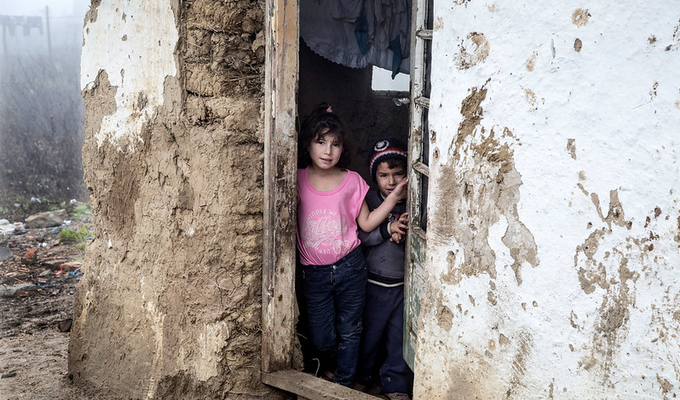
Vaccines 2022, 10(7), 1038; https://doi.org/10.3390/vaccines10071038. Image caption/credit: Roma children - Jutta Benzenberg/World Bank via Flickr (CC BY-NC-ND 2.0)
- Log in to post comments