










































The State of the World's Children 2023: For Every Child, Vaccination
Image
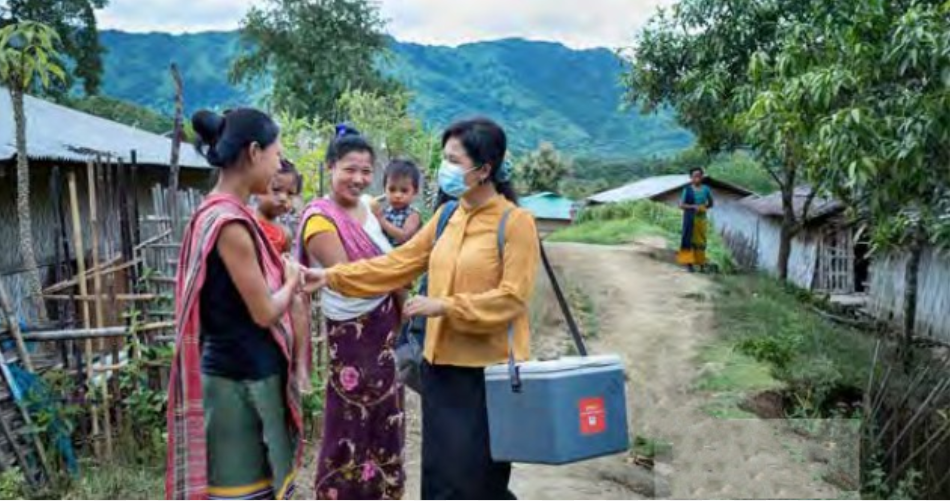
SummaryText
"Significant evidence indicates that vaccination interventions designed, delivered and evaluated by members of the communities they serve can increase equity and efficacy."
According to the United Nations Children's Fund (UNICEF), 67 million children missed out entirely or partially on routine immunisation during the COVID-19 pandemic, leading to outbreaks of illnesses like cholera, measles, and polio. One in 5 children worldwide are zero-dose or under-vaccinated, levels not seen since 2008; children from marginalised communities are among the least likely to be vaccinated. Published by UNICEF Innocenti, this report (one of an annual SOWC series) lays out the situation, the causes, the solution, and reasons for hope that the political will can be galvanised to provide all children with the vaccines they need to thrive.
Main contents include:
The launch of the report also marks the beginning of a global UNICEF-led advocacy campaign on immunisation, which will involve a series of sustained and coordinated global, regional, and national initiatives calling on governments to prioritise catch-up campaigns and allocate financial resources to support them. Click here for further details.
According to the United Nations Children's Fund (UNICEF), 67 million children missed out entirely or partially on routine immunisation during the COVID-19 pandemic, leading to outbreaks of illnesses like cholera, measles, and polio. One in 5 children worldwide are zero-dose or under-vaccinated, levels not seen since 2008; children from marginalised communities are among the least likely to be vaccinated. Published by UNICEF Innocenti, this report (one of an annual SOWC series) lays out the situation, the causes, the solution, and reasons for hope that the political will can be galvanised to provide all children with the vaccines they need to thrive.
Main contents include:
- Foreword
- Key messages
- Introduction: One in five children [case study: Somalia] - Editor's note: click here to access recent global data.
- Chapter 1. How the COVID-19 pandemic set back vaccination [case studies: Indonesia and Cambodia]
- Chapter 2. Zero-dose children matter [case studies: Nigeria and Nicaragua]
- Chapter 3. Immunization and primary health care [case studies: Yemen, Pakistan, and India]
- Chapter 4. How can we build vaccine confidence? [case studies: Kyrgyzstan and Ecuador]
- Chapter 5. Funding and innovation for the future [case studies: Uzbekistan and Haiti]
- Chapter 6. For every child, vaccination: An equity agenda
- Endnotes
- Statistical tables
- Gather social data: Understanding people's attitudes to vaccines in real time with effective social listening is critical to help identify and develop tailored interventions and strategies that can help promote vaccine demand.
- Talk to communities: Strengthen engagement with communities to better understand: their attitudes towards the safety of vaccines and the value of vaccination; their experiences with health systems and government officials; and the support they need if they are to take the time to vaccinate their children. One approach is to engage with community and religious leaders, which can provide inside information on the location- specific barriers to immunisation and make sure that services are culturally appropriate. This engagement can also help stem the influence of rumour and misinformation and can bolster widespread support for immunisation.
- Undertake pro-vaccine education and public messaging: Educational interventions have proven effective in contexts where inadequate information, rumours, parental concerns about safety, and lack of awareness have hindered uptake.
- Apply a gender lens, and empower women and girls: The differing positions that women tend to occupy in societies and families have a bearing on child immunisation - so immunisation efforts must understand their needs and design programmes around them. Religious or cultural norms also affect women's mobility and ability to seek vaccination. Action ideas include: Use innovative approaches to inform and educate caregivers, especially mothers; involve and engage fathers and men; and tailor services to meet the needs of time-pressed caregivers.
- Equip health workers to address concerns: Health workers tend to enjoy high levels of trust. They should be supported to be powerful allies to persuade parents to vaccinate children, counter misinformation in the community, and inform the design of responses that meet families’ needs.
- Rethink accountability in health systems to boost trust: Governments should consider setting up well-designed governance bodies, such as healthcare facility committees, to give community leaders a formal mechanism for voicing concerns and tackling issues related to immunisation and primary health care services in their area.
The launch of the report also marks the beginning of a global UNICEF-led advocacy campaign on immunisation, which will involve a series of sustained and coordinated global, regional, and national initiatives calling on governments to prioritise catch-up campaigns and allocate financial resources to support them. Click here for further details.
Publication Date
Languages
English, Arabic, French, Spanish
Number of Pages
226 (full report in English)
Source
Email from UNICEF to The Communication Initiative on April 20 2023; and UNICEF website, April 21 2023. Image credit: © UNICEF/U.S. CDC/UN0723022/Fabeha Monir
- Log in to post comments