










































Polio in Nigeria: The Race to Eradication
Center for Strategic and International Studies (CSIS)
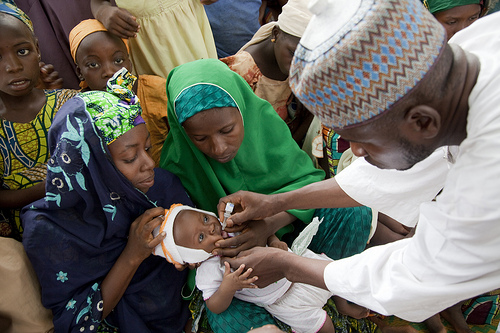
This report from the United States (US)-based Center for Strategic and International Studies (CSIS) examines polio eradication efforts undertaken by the Global Polio Eradication Initiative (GPEI) - an international partnership of government and private institutions - and the Nigerian government to reduce the number of reported polio cases in Nigeria, which the report describes as "one of the most entrenched reservoirs of poliovirus in the world". The report suggests that "the Nigerian experience has underscored the complexity of the eradication endeavor and vividly demonstrates the fragility and reversibility of gains made to date." In light of the fact that GPEI's independent monitoring board has stated that "Nigeria is at risk of losing everything it had gained," the report explores strategies being carried out to meet the new target date for global eradication - set for the end of 2012.
Following an introduction, the report provides background on the global campaign and then GPEI in the Nigerian context. The next section explores the breakdown of eradication efforts in northern Nigeria. Some obstacles stem from communication: "The north's relative isolation has to some extent fostered distrust and suspicion of external - particularly Western - interventions. As the polio campaign intensified, a host of rumors sprang up, some fueled by local imams, the immunization effort was a Western ploy to control or eliminate Muslim populations in the north by causing sterility or spreading the HIV virus. The fact that the vaccine was provided free of charge and distributed by government health workers to even the most remote communities heightened suspicions..." The result was a boycott of polio vaccination encouraged by local and religious and political leaders and Nigeria's Supreme Council for Shari'a. According to the report, despite high-level outreach and other advocacy efforts directed toward senior Nigerian political and religious leaders on the part of GPEI, the United Nations, and the United States (US) government, "the boycott's consequences continued to be felt in Nigeria for years."
There are, however, signs of promise going forward, including:
- Greater national leadership - For example, a number of communication campaigns have been launched at the national level to raise popular awareness and public support for polio eradication. (Please see the Related Summaries section below to learn more about the Polio Free Torch Campaign.)
- Increased state-level commitment - For example, in October 2011, Bill Gates of the Bill and Melinda Gates Foundation travelled to Abuja to announce the creation of the Governors' Immunization Leadership Challenge.
- Engaging communities - Selected examples of interventions at the community level: outreach to children in Qur'anic schools; a series of community dialogues undertaken in partnership with the Federation of Muslim Women Association of Nigeria (FOMWAN), local health workers, and traditional leaders; the use of majigi films (locally produced dramas that include facts about polio); and the inclusion of school-aged children in identifying peers in their area to be vaccinated as part of Immunization Plus Days.
A key challenge lying ahead in meeting the end-of-2012 goal is reaching the chronically neglected. This will be difficult due to: (i) politics and security in the north ("there is the real possibility of continued community resistance."); (ii) managerial capacity and accountability of local government authorities (LGAs); (iii) the focus of senior leadership, which may not have the "will, commitment, and action to follow through on promises made in recent years."
In conclusion, the report offers hope, suggesting that in 2012, the following strategies might "ultimately lead to success": "using GPS [global positioning system] technologies and skillful communication to hone in on chronically missed families; bringing in 'surge' logistic, managerial, and reporting capacity to strengthen local government authorities; and finding bold and innovative ways to keep polio eradication on the Nigerian and global agenda..."
Editor's note: CSIS Africa's Twitter handle is @csisafrica and their Facebook page is called the CSIS Africa Program.
Posting to the CORE Group Community Health Network listserv, March 5 2012; and email from Farha Tahir to The Communication Initiative on March 7 2012. Image credit: Flickr
- Log in to post comments