










































Effects of Maternal Decisional Authority and Media Use on Vaccination for Children in Asian Countries
Graduate School of Korea University (Sohn); London School of Hygiene & Tropical Medicine (Lin); Harvard Medical School (Lin); Dongduk Women's University (Jung); Dana-Farber/Harvard Cancer Center (Jung)
"Ultimately, enhancing health-related decisional authority and social status of women can act as a fundamental measure to improve maternal and child health status including vaccination..."
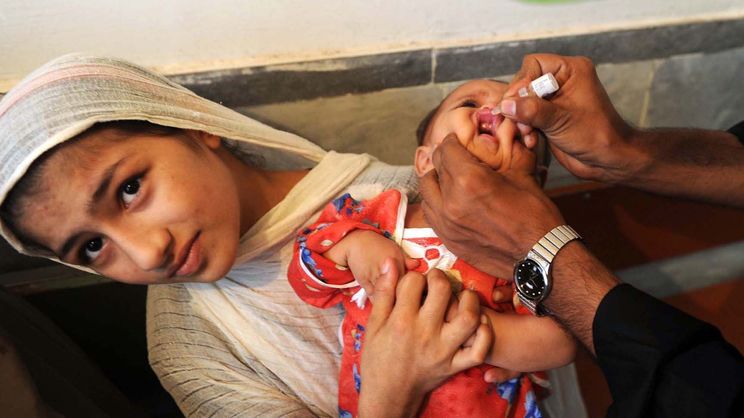
Health-related empowerment of women includes their ability to make their own decisions, including related to vaccinations for their children. Widespread availability of information through the penetration of mass media has been reported to contribute to the empowerment of women by easing access and reducing barriers. The purpose of this study was to determine the effect of women's decisional authority and media use on decisions related to vaccinations in South and Southeast Asian countries (Bangladesh, Cambodia, Indonesia, Nepal, Pakistan, and the Philippines).
Data used for this study were pooled from Demographic and Health Surveys (DHS) with different survey years due to country-specific situations: Bangladesh: 2011; Cambodia: 2014; Indonesia: 2012; Nepal: 2011; Pakistan: 2012; the Philippines: 2013. A total of 45,168 women were included in the final analysis. Four binary variables were generated for the following 4 vaccinations: Bacillus Calmette-Guerin (BCG), diphtheria + pertussis + tetanus (DPT), poliomyelitis (polio), and measles. Women's decisional authority was considered as women having 2 dimensions of decision-making in daily life and attitudes toward intimate partner violence in DHS data. Hierarchical multivariable regression analyses were performed to examine associations.
Regarding women's decision-making in daily life, Pakistan had the highest proportion of women who reported that their health care, household purchases, and visits to family or relatives were decided by the partner (47.31%, 48.28%, and 44.39%, respectively). Regarding women's freedom from domination, the highest proportion of participants among the 6 countries who answered that their husband was justified in hitting or beating them if they went out without telling him was found in Pakistan (36.50%). Pakistan also had the highest proportion of women for all women's self-assertion items that their husband was justified in hitting or beating them if they argued with husband (40.41%), refused to have sex (36.64%), and burned food (21.73%).
Among the 6 countries, the country with the highest percentage of participants who did not use newspaper, radio, or television was Bangladesh (84.04%, 91.40%, and 41.75%, respectively), followed by Pakistan (76.96%, 84.29%, and 36.84%, respectively). The country with the highest percentage of participants who used mass media at least once a week was the Philippines (newspaper: 18.60%, radio: 46.89%, and television: 70.04%). Pakistan had the lowest proportion of participants who reported that their children were vaccinated against BCG (77.56%), DPT (54.28%), and measles (54.63%), while Indonesia had the lowest proportion of participants who reported that their children were vaccinated against polio (69.31%).
Table 2 in the paper shows results of Pearson correlation coefficient analysis for examining the relationship among socio-economic position (SEP), women empowerment (decision-making in daily life, freedom from domination, and self-assertion), and media use. Table 3 presents odds ratios (OR) and 95% confidence intervals (CI) of the dimensions of women's decisional authority and media use associated with 4 types of vaccination.
In short, women with higher decisional authority levels had significantly higher odds of getting their children vaccinated compared to women with lower decisional authority after controlling socio-demographic factors. For example, the likelihood of having their children vaccinated against BCG was higher among women who made decisions alone about her health care (OR = 1.31, 95% CI = 1.18-1.46), making major household purchases (OR = 1.16, 95% CI = 1.03-1.31), and visits to her family or relatives (OR = 1.14, 95% CI = 1.01-1.28) than those who did not have decision-making authority. Participants who did not believe that a husband was justified in hitting his wife if she went out without telling him were more likely to get their children vaccinated against BCG (OR = 1.15, 95% CI = 1.04-1.27), polio (OR = 1.09, 95% CI = 1.01-1.17), and measles (OR = 1.08, 95% CI = 1.00-1.16) than were those who believed it was justified. Those who disagreed that a husband was justified in hitting or beating his wife if she argued with him were more likely to get their children vaccinated against BCG (OR = 1.19, 95% CI = 1.07-1.32) and measles (OR = 1.09, 95% CI = 1.01-1.17) than those who agreed that it was justified.
In addition, the likelihood to have their children vaccinated was higher among women who frequently used media than those who did not use media. For instance, the likelihood of getting their children vaccinated against polio was higher among those who read newspaper at least once a week (OR = 1.13, 95% CI = 1.03-1.25) and listened to a radio daily (OR = 1.17, 95% CI = 1.08-1.34) than those who did not use either media at all. Similarly, participants who frequently used media such as newspaper (OR = 1.21, 95% CI = 1.10-1.33), radio (OR = 1.25, 95% CI = 1.17-1.35), and television (OR = 1.86, 95% CI = 1.61-2.16) were more likely to have their children vaccinated against DPT than those who did not use media at all
In reflecting on the results, the researchers suggest that vaccination for children can be encouraged by communication within families. However, in Bangladesh and Pakistan, the important role played by mothers-in-laws in accordance with patriarchal systems has been found to be a barrier preventing their daughters-in-laws from utilising preventive services, including vaccination. (After marriage, a woman become her husband's family member and serves his parents.) Although husbands can act as a support system for women to deal with their mothers-in-laws, the role of Asian men in childbirth is very limited. Consequently, informing mothers-in-laws of the benefits of preventive healthcare services by providing them with health education is important to increase vaccine coverage rates of women in South and Southeast Asia.
In addition, the results suggest that:
- It is necessary to engage women in activities that extend rights of women and institutionalise gender equality throughout society.
- Reducing communication inequalities could contribute to improvement in vaccine coverage for children in developing countries.
The researchers conclude that, to increase vaccination rates in developing countries in South and Southeast Asia, programmes and policies that promote maternal decisional authority and the use of media for health need to be implemented.
Medicina 2018, 54(6), 105; https://doi.org/10.3390/medicina54060105. Image credit: A. Majeed, AFP, via Bhekisisa
- Log in to post comments