










































Advocating for Vaccination in a Climate of Science Denial
University of Erfurt
Vaccine hesitancy has multiple causes, but lacking confidence in vaccine safety is one of the most visible factors. Vaccine refusers and deniers can be very vocal in defending their attitudes and spreading misinformation. In this article, Cornelia Betsch suggests that lessons from behavioural studies (see overview in Table 1) offer healthcare professionals and scientists avenues for supporting successful routine and public communication on vaccine efficacy and safety.
Betsch points out that vaccination decisions involve risk-benefit balancing. Risk perception, however, is not necessarily a rational process, and perceived risks do not necessarily correspond to objectively given risks - especially as today, thanks to vaccination, most vaccine-preventable diseases are rare and sometimes even forgotten. Fear appeals that use emotional materials to stress the danger of diseases may backfire and even lead to a reduction in willingness to vaccinate. A study cited in the article showed that speaking about the pathogen as the actor makes the disease feel more severe; likewise, agency to the vaccine makes it feel more effective. In addition to emphasising disease risks, the risk-benefit ratio can be improved by focusing on the benefits vaccines confer - not only to the individual but socially (herd immunity).
When faced with misinformation - either in the media or in a face-to-face dialogue - debunking the false information is a challenge, Betsch acknowledges. One of the most promising strategies seems to be to emphasise scientific consensus - for example, stating that "90% of medical scientists agree that vaccines are safe". This strategy also has the advantage that it does not repeat the misinformation/myth, since something that is heard or read very often is easily accessible in memory, and such information may be interpreted as true. However, there is no research to date showing that challenging misinformation works with vaccine refusers.
Motivational interviewing (MI) takes a different approach, as it is responsive and empathetic and avoids confrontation. This technique relies on asking open questions, affirming, reflecting, summarising, and providing information and advice with permission. It avoids persuading or overwhelming the other person with facts. Instead, it aims to facilitate an individual's reasoning as to why they need vaccination (for examples, see Table 1). MI has shown promising results in different settings and is recommended in provider-patient settings with hesitant parents.
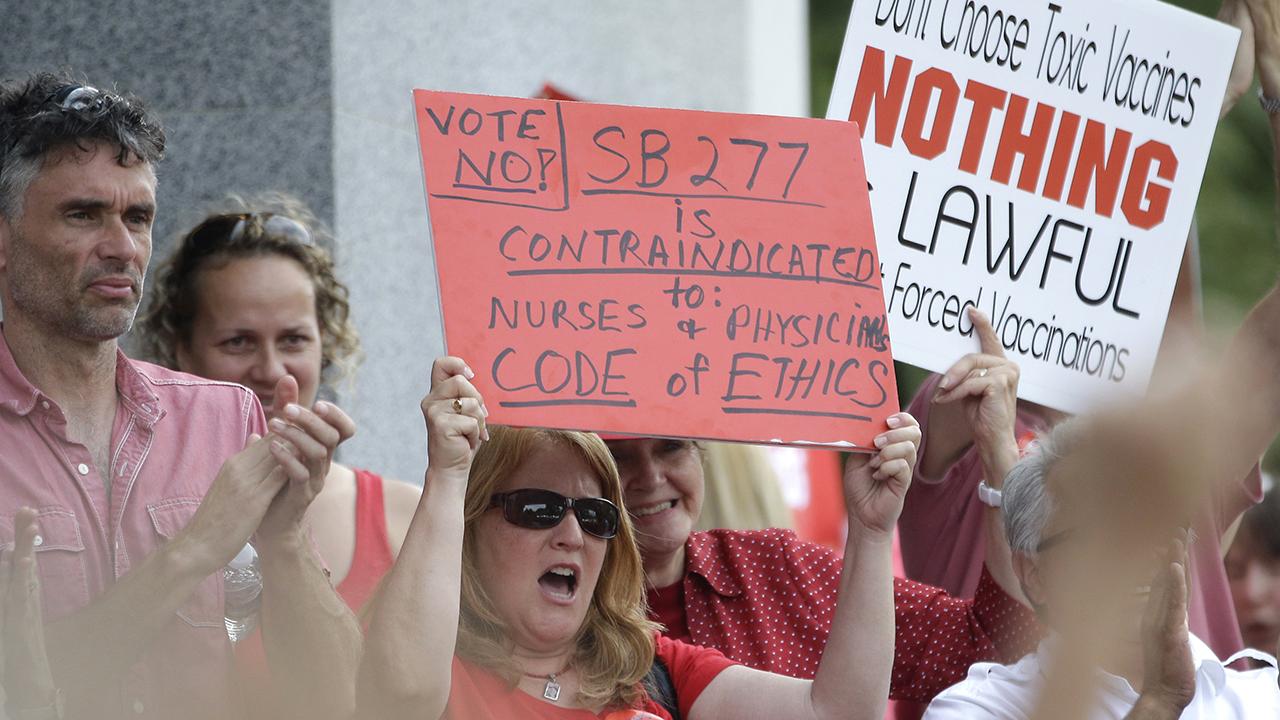
When acting publicly, vaccine deniers use techniques that are common in the area of science denial: for example, assuming conspiracies, calling on fake experts, selectively and exclusively citing scientific papers that challenge consensus, or having impossible expectations, such as demanding 100% certain results or 0% side-effects. Best practice guidance by the World Health Organization (WHO) suggests a 2-step approach in which both the misinformation is corrected and the misleading tactics of the activist groups unmasked (see Table 1 and Related Summaries, below).
Betsch asserts that understanding how to advocate for vaccination in a climate of science denial is a challenging task - in part because the studies often lack replication and explicit testing of effectiveness in vaccine-hesitant or refusing individuals. "Nevertheless, the evidence provided here suggests that some strategies deserve further practical and scientific attention:
- Talk about vaccination as active protection for the individual and society.
- Respect potential doubts and offer insights to refute them.
- Ask for explanations of the mechanism behind the proposed misinformation.
- Emphasize scientific consensus where appropriate.
- Unmask techniques of the deniers."
She concludes: "Ultimately, none of the proposed strategies grant success. However, in the face of vaccine hesitancy and continued outbreaks of preventable diseases, the scientific community has an obligation and opportunity to use the best available evidence to improve communication and advocacy for vaccine uptake in the public arena."
Nature Microbiology, 2, 17106 | DOI: 10.1038/nmicrobiol.2017.106. Image credit: AP/Rich Pedroncelli
- Log in to post comments