










































The Influence of Gender Dynamics on Polio Eradication Efforts at the Community, Workplace, and Organizational Level
Johns Hopkins Bloomberg School of Public Health (Kalbarczyk, Rao, Decker, Morgan); University of Ibadan College of Medicine (Adebayo); Bill and Melinda Gates Foundation (Gerber)
"For global programs to meet their goals and improve health, gender must be addressed at every level, from the household and community to management and organizational leadership."
Gender equality is recognised as a key determinant of health and wellbeing. Gendered norms and power relations within global health organisations and programmes can lead to inequitable access to resources, shape decision-making and impede women's autonomy, and impact leadership structures and participation within vaccination activities, for example. One global health programme that has encountered gender-related challenges is the Global Polio Eradication Initiative (GPEI). This paper describes the role of gender power relations in the polio programme across global, national, subnational, and frontline levels to offer lessons learned for other global programmes.
Between January and March 2019, the Synthesis and Translation of Research and Innovations from Polio Eradication (STRIPE) project (see Related Summaries, below) conducted 196 qualitative key informant interviews with individuals (74.5% of whom were male and 25.5% of whom were female) from the global polio programme and from seven country partners: Afghanistan, Bangladesh, the Democratic Republic of the Congo (DRC), Ethiopia, India, Indonesia, and Nigeria. The researchers employed a deductive coding approach drawing on the Consolidated Framework for Implementation Research (CFIR) and the Socio-Ecological Model (SEM) to explore data at the household, community, workplace, and organisational levels.
Key findings include:
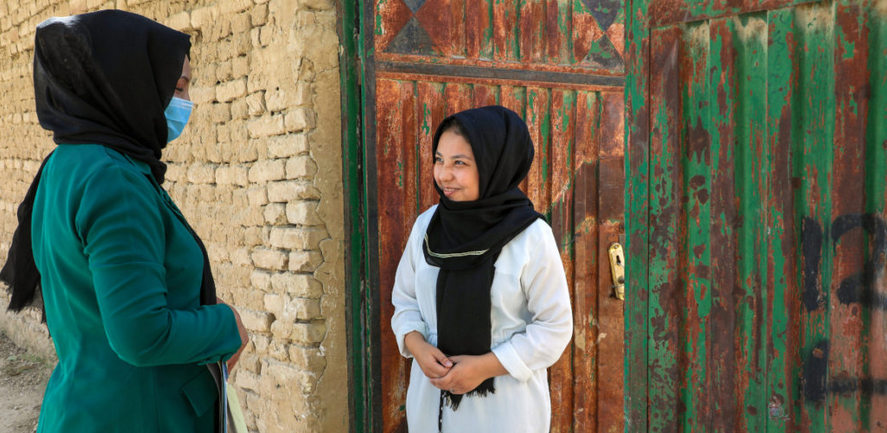
- Gender at home and in the community: Reflecting on the work of the GPEI globally and in contry contexts, respondents opined that gender dynamics played an important role in household decision-making for determining who, if anyone, was to receive the polio vaccine. Across contexts, male heads of house held decision-making power, so the polio programme needed to ensure that husbands were reached in addition to mothers. Young boys were sometimes hidden from polio workers due to a belief that the vaccine might sterilise them. In other contexts, including within Ethiopia and other regions of India and Afghanistan, boys were sometimes prioritised over girls for the vaccine. Male polio workers were not allowed to enter many households in conservative communities, which created demand for female vaccinators and empowered many women to enter the workplace for the first time. Once communities trusted them, female health workers were able to help other women access additional resources, including literacy courses, and helped raise awareness of other health issues, including intimate partner violence. However, some female vaccinators faced challenges with safety and balancing obligations at home. Also, while female workers often had more access to conservative households, there remained specific hard-to-reach or unsafe areas where women were not allowed to travel. This combination left some communities (e.g., in Afghanistan) un-reached and unvaccinated.
- Implications/suggestions: Male engagement within global health programmes that are designed to reach women and children is important. Equally important is how men are engaged if programmes are to avoid perpetuating unequal gender norms, roles, and relations. Appropriately engaging men in polio vaccination programmes can help to dispel the belief that vaccination is a women's issue and ensure that boys and girls are both vaccinated.
- Gender in the workplace: Women were less likely to receive promotions to managerial or supervisory roles. Some female workers also faced harassment from men in the community who would comment on their appearance or refuse to listen to their messages.
- Implications/suggestions: Increasing the representation of female workers within polio vaccination programmes not only helps to increase coverage of vaccination but also supports the empowerment of women in communities in which employment is limited and has been shown to have the potential to improve health outcomes. Engaging male partners when women are being recruited and trained can ease tensions that may result as a result of women's involvement in the workforce.
- Gender in the organisation: One participant at the global level indicated that there were more men in GPEI leadership positions because men have had more opportunities growing up. Some described how the lack of diverse management and leadership negatively affected the quality of programme planning and delivery, and limited accountability. For example, one respondent expressed concern that, if male workers could not enter houses, there was no way for male-led teams to follow-up and check on whether children had been vaccinated.
- Implications/suggestions: Increasing diversity within leadership structures - not only of women but also of other marginalised and vulnerable groups - helps ensure that diverse perspectives and needs are incorporated and can increase overall accountability. It is therefore important that implementers consider how gender intersects with other social stratifiers, such as race, ethnicity, income, education, or disability - both among those involved in implementation and delivery and among programme beneficiaries.
In this context, the GPEI's Gender Strategy 2019-2023 (see Related Summaries, below) aims to: promote integration of gendered perspectives into all programmatic aspects; support countries in addressing gender-related barriers to polio vaccination; increase women's meaningful participation in leadership across levels of the programme; and create gender-equitable institutional environments. STRIPE researchers argue that implementation of the strategy has potential to sustainably impact efficacy of the GPEI, across SEM levels, by improving the data available to understand gender differences through the use of sex-disaggregated data and gender-sensitive indicators. In addition, at the organisational level, the GPEI's gender parity goals can help to increase training and skills needed to integrate gender into all aspects of GPEI work while preventing sexual exploitation, abuse, and harassment.
STRIPE suggests that the study's country-specific findings can be used to begin national dialogues on the role of women leaders in public health. They conclude that global disease programmes should incorporate a gender lens in planning and implementation by engaging men and boys, supporting women in the workplace, and increasing diversity and representation among leadership.
Global Health Research and Policy (2021) 6:19. Image credit: © World Health Organization (WHO) Afghanistan/Roya Haidari
- Log in to post comments