










































Strengthening Immunization Service Experience: Global, Regional and Country Insight Gathering
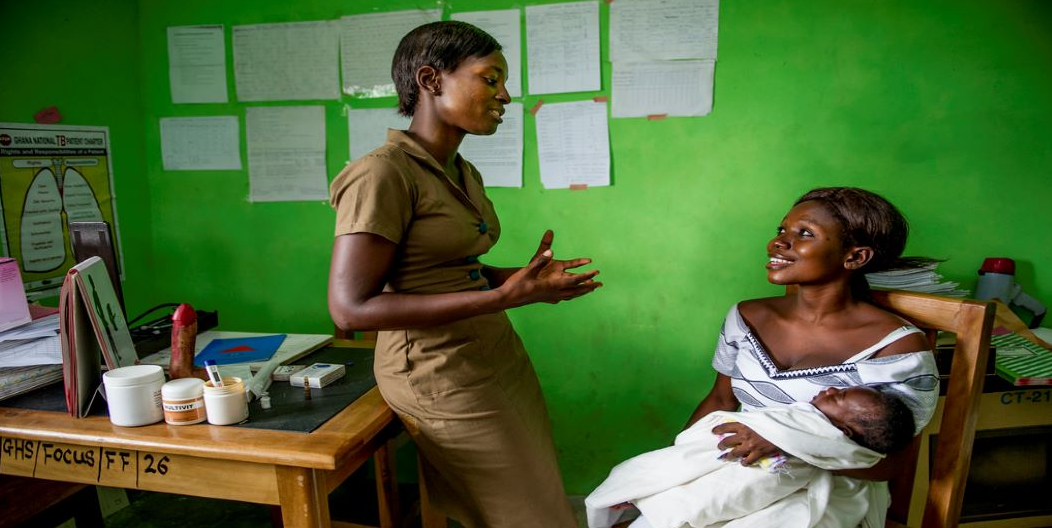
"...a people-centered model for vaccination where services must be brought closer to people by enhancing service quality and accountability, considering health worker and client perspectives and needs, and bringing people to services with community engagement and development of a social norm. The glue between these two components is the immunization service experience."
The first pillar of the Gavi, the Vaccine Alliance (Gavi) demand framework is Service Quality and Accountability. In order to move toward a more positive, people-centred immunisation service experience, John Snow Research & Training Institute, Inc. (JSI), in collaboration with Gavi, the Vaccine Alliance, and members of the Demand Hub Service Experience Workstream, consolidated existing knowledge and learning around immunisation service experience at the global and regional levels (from January to April 2020) and in four countries (from April-July 2020). Results were then shared at a Service Experience Co-Creation Workshop. This document summarises the key outputs of the gathering.
The process involved the following:
- Literature review of peer-reviewed and grey literature on service quality and delivery and its relationship with vaccination demand;
- 25 global and regional key informant interviews (KIIs) across nine organisations, which helped shape a draft graphic to visualise the service experience components; and
- Rapid insight gathering in Ghana, Kenya, Mozambique, and Nepal.
Based on this process, 13 key components of a positive, people-centred immunisation service experience emerged:
- Service experience across all levels of the health system: takes into account inputs and actions that can affect the immunisation service experience at all levels, noting that some interventions have ripple effects on the entire system and must be looked at holistically to ensure a movement toward more people-centred services. Example: National policy and strategy work needs to include clients and health workers, not just immunisation technical experts.
- Quality of the interaction and service provided: highlights the importance of defining immunisation quality standards and the need for further exploration into context-specific issues of how service quality and service experience hinge on expectations of care. Example: In all four countries (Ghana, Kenya, Mozambique, and Nepal), poor provider attitude and insufficient interpersonal communication (IPC) and counselling skills were noted as influences on the perception of the quality of care provided.
- Facility environment: looks at if and how the facility environment can affect how people perceive service quality and their continued demand for immunisation services, as well as health workers' ability to provide services. Example: Capacity building of health staff in IPC, health promotion, and client engagement are highlighted as key to improving the interpretation or perceptions of service experience.
- Integration of immunisation within a package of services: asks if and how the integration of immunisation into a package of services responds to the needs of health workers and communities and highlights the need to examine the quality of care in integrated services and requirements necessary to support people-centred immunisation service within a package of care. Example: The absence of expected integrated services, such as growth monitoring, nutrition, immunisation, and counseling up to 5 years - as well as a lack of breastfeeding rooms and play grounds for toddlers - negatively impacts the client's total experience of care.
- Public vis-à-vis private sector experience: examines why clients and caregivers may choose one type of facility over the other and interrogates how this decision links to the perception of the immunisation service experience. Example: Key informants in both Mozambique and Nepal noted that the limited provision of immunisation services at private facilities results in missed opportunities for vaccination.
- Interpretation and perception of service experience: highlights that health workers consider both individual provider and facility/systemic factors, while clients consider the quality of interaction with the individuals within the system. Example: Facilities could consider: feedback forms for clients to fill, periodic surveys, and discussions during dialogue days/community dialogues to define and agree on the expected service quality and delivery.
- Health worker empowerment: considers different ways to empower health workers, including the availability of guidelines, training, supplies, and equipment, as well as strong management skills on the part of health managers. Example: Approaches include pre-service and in-service training and continuous education, online coaching and distance learning, interactive videos, etc.
- Community voice, input, and demand: speaks to involving the community in the design, delivery, and monitoring of services; the need for two-way feedback to foster accountability; and the importance of matching demand for services with the availability of services. Example: Use of the Reaching Every District (RED) and human-centred design (HCD) approaches can ensure services are aligned with the needs and expectations of community members.
- Workplace community: explores what health workers may need in order to cultivate a stronger sense of community, noting that needs vary by location and that the health provider ecosystem can influence the experience of care. Example: Health workers based in different facilities have leveraged WhatsApp to exchange ideas, share information, engage in informal peer mentorship, and discuss work issues.
- Community actors and stakeholders: emphasises that different stakeholders - such as the private sector, academia, social influencers, and respected community leaders - can play a role in addressing key issues related to immunisation service experience, depending on local contexts. Example: Engaging respected chiefs and/or queen mothers can help influence anti-vaccination groups and social media campaigners to provide up-to-date and accurate information.
- Outreach services: stresses the importance of people-centeredness in outreach services, noting that the design and organisation thereof according to community needs can fortify or decrease trust in the health system overall. Example: In Nepal, the government is providing funding for construction of houses for outreach clinics in community-approved locations, and the community is providing the land and labour to build the houses.
- Advocacy, governance, leadership, and financing mechanisms to support a positive, people-centered immunisation service experience and demand for immunisation services. Example: In Nepal, frequent turnover in leadership is common due government instability, so continued advocacy is necessary to ensure attention to immunisation.
- Logistics/resource availability: details how the availability of and access to a logistics and reliable supply of vaccines and commodities affects the experience for health workers, clients, and caregivers - resulting in either continued or decreased demand for immunisation services. Example: In Ghana, service providers sometimes travel several kilometres from their service delivery sites, in their own vehicles and at their own expense, to obtain vaccines from cold storage, therefore delaying the start of their own sessions (see Figure 5 for an illustration of the lengths an urban health worker must go to in order to vaccinate children).
Figure 4 shows a human-centred tool, The Journey to Health and Immunization, which can help programme planners identify and address social and behavioural barriers in service delivery and uptake of vaccines at the caregiver/individual level.
Given that immunisation service experience is a relatively new concept, the document outlines the need to identify and agree on potential indicators that would enable systematic measurement of service experience and quality or client satisfaction of services on a regular basis. Some suggestions include indicators for: respectful and compassionate care; waiting time for provision of services; availability, accessibility, and affordability of immunisation services; leadership and management of facilities; cleanliness and safety of facility; information provided to clients on vaccines; and the attitude of both health workers and clients. Table 9 on page 19 highlights existing mechanisms that can be further used and adapted to monitor immunisation service experience indicators. A key finding from country insights is the importance of sharing results of any data collection, analysis, and monitoring activities with community members. Such a feedback mechanism allows community members to understand if and how the data collected is being translated into adjustments to immunisation service delivery and affords the opportunity to co-create solutions.
The document also considers the effects of COVID-19 on access to and provision of immunisation services. For example, caregivers may be unsure if they should continue to come for vaccination services and be concerned about visiting health facilities during the pandemic. Frontline health workers are also under considerable stress, and, even where services are available, there may be critical service quality issues that strain the relationships between health workers and clients. To restore and maintain immunisation services, all four countries adapted or developed guidance and safety protocols. Guidance on where and when to access services was updated repeatedly, and tailored messaging was developed and shared via local media and online fora, as well as phone calls, SMS (text messages), and WhatsApp. Mozambique sought community input via a mini survey to understand reasons people were not going for vaccination to assist with tailored messaging. Table 13 on page 24 summarises recommendations for continuing restoration and maintenance of immunisation services, organised around three themes: research, guidelines, and planning; capacity-building; and organisation and delivery of services.
Additional suggestions emerged during the July 2020 Co-Creation Workshop, such as: civil society organisation (CSO) engagement, building capacity of health workers to engage in data collection and information gathering (i.e., social listening for rumours and misinformation amongst community members), communication with community members around COVID-19 vaccine introduction, and adaptive management for problem solving.
In conclusion, overall recommendations to move toward a more positive, people-centred immuniation service experience include:
- Packaging the findings shared here into practical guidance and a set of tools for country adaptation and implementation research;
- Conducting a systematic review of existing indicators that could be used to measure immunisation service experience and collaborating with the Demand Hub Behavioral and Social Drivers of Vaccination (BeSD) group for further investigation into possible indicators;
- Identifying existing best practices and evidence across different health sectors on people-centred care, including further investigation into existing mechanisms and structures to cultivate a stronger sense of community and examples of quality integrated service delivery that takes into account community need;
- Developing a menu of activities (short- and long-term) or checklist that countries can implement to strengthen immunisation service experience at the national, subnational, health facility, and community levels;
- Conducting operational research in prioritised countries and documenting lessons learned to gain further insight into the immunisation service experience and its link to demand and improved immunisation coverage and equity; and
- Examining system barriers - such as staffing, availability of supplies, and sustainable financing for immunisation service experience and demand - that must be considered in the long run.
"Key to moving these recommendations forward is commitment at the global, regional, and country levels and increased partner involvement and collaboration....[I]mproving the immunization service experience will strengthen trust in immunization programs, ultimately resulting in healthier and more productive lives for children and their families."
Emails from Lora Shimp to The Communication Initiative on January 13 2022 and February 7 2022. Image credit: © JSI
- Log in to post comments