










































Sustaining Immunization Gains for All Communities in Ethiopia: Final Report of the RED-QI Sustainability Inquiry
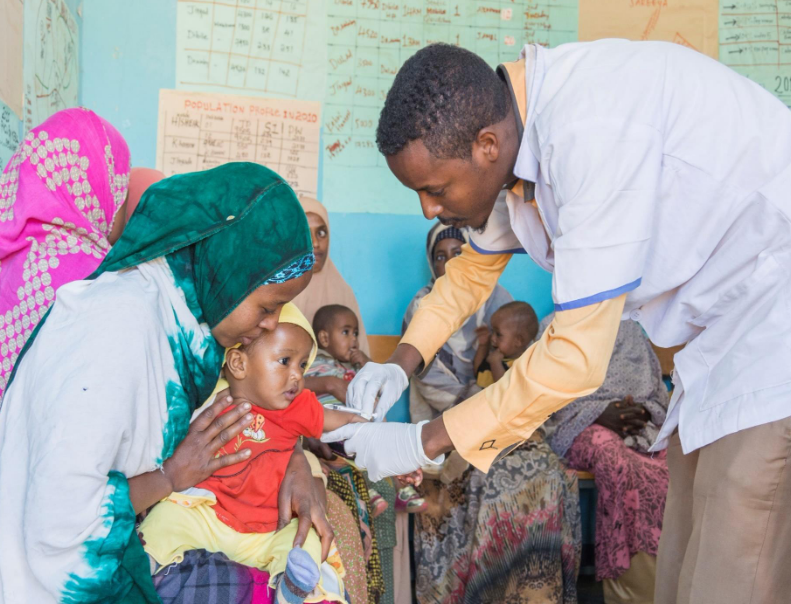
"Implementation of RED-QI helped to strengthen routine immunization service delivery, even in the weakest health systems in Ethiopia."
In 2011, the JSI Research & Training Institute, Inc. (JSI) undertook a project to design and test an approach to reach universal immunisation, with the ultimate goal of creating an effective, affordable, and sustainable model that could be implemented throughout Ethiopia. The name of the approach is "RED-QI", which applies quality improvement (QI) concepts and tools to the national immunisation strategy, Reaching Every District (RED). This report describes the results of a JSI inquiry, supported by the Bill & Melinda Gates Foundation and Ethiopia's Federal Ministry of Health, that asked: What features of RED-QI have frontline providers, community representatives, and managers identified that enable the EPI to keep up with real-world shifts in the context of implementation, and are these elements sustainable upon the conclusion of direct technical support?
As detailed here, the five components of Ethiopia's RED strategy are: planning and managing resources, reaching all eligible populations, engaging with communities, conducting supportive supervision, and monitoring and using data for action. Using QI principles, RED-QI aims to improve the ability of health workers (HWs) and managers to design their own solutions for reaching all intended populations, particularly those that are underserved by immunisation and other primary health care services. For example, over the course of 20-24 months of technical assistance, RED-QI built health workers' capacity to identify, analyse, prioritise, and take action to address problems, using their own data and largely using locally available resources to address challenges. After designing and testing RED-QI in three districts from 2011-2014, JSI scaled the approach between 2014 and 2018, strategically introducing RED-QI in over 2,700 health facilities in 103 woredas across six regions.
Six woredas from two regions were purposively selected for the inquiry: three woredas from Somali Region and three from the Southern Nations, Nationalities, and Peoples' Region (SNNPR). The inquiry relied primarily on qualitative research methods (key informant interviews, or KIIs), supplemented by record review taken from microplans, supervision reports, and meeting minutes of quality improvement teams (QITs). Data were collected over several weeks in October-November 2019.
HWs described very weak immunisation systems prior to JSI's technical support. The remoteness of communities requires outreach and mobile service delivery strategies, but interview respondents reported a lack of such sessions, contributing to low coverage and high dropout. HWs also pointed to a lack of community awareness and misinformation or fear of side effects of immunisation, combined with a general weakness in health system efforts to engage communities to address these challenges. HWs reported that when caregivers did seek services, they often faced logistical challenges such as long distance to services and lack of transport.
Many respondents acknowledged improvement within the system upon implementation of RED-QI, indicating that:
- Facilities planned more immunisation sessions, including outreach, as a result of the improved microplanning process. Better outreach planning resulted in improved reach of services.
- HWs' efforts to include the community in immunisation service provision (facilitated by RED-QI tools and processes such as QITs and community input to microplanning) helped build communities' understanding of vaccination and dispel fears, raise awareness and demand, identify remote communities, and improve defaulter tracing.
- The QITs enabled health workers and community members to work together to proactively identify persistent problems and work through possible solutions.
- Respondents noted overall better planning, monitoring, and use of data to make decisions.
In short, "RED-QI as an approach overall engendered solutions to persistent challenges in reaching underserved populations."
The report examines specific achievements in immunisation service delivery, such as improved management and delivery of routine immunisation (RI) services and increased effectiveness of RI services: "Across many interviews, respondents spoke of positive changes in the relationship and linkage between the health system and the community. This link was essential in enhancing community acceptance of immunization while increasing service uptake. Community members who were engaged in the QITs helped to align services to fit specific community needs. QIT members saw clear value in the QIT and in engaging in the health system, offering voluntary support in identifying and mapping communities, defaulter tracing, and mobilizing for outreach services to reach far-flung communities."
To assess the status of RED-QI activities roughly 13-17 months after the end of direct technical support, JSI examined: 1) what activities/processes that incorporated QI methods continued (including determining the extent of current use of QI tools); and 2) what solutions, initially introduced through a QI-driven process, continued post-programme support. Among the findings: Building HW capacity requires a comprehensive, continuous approach. However, RED-QI in Ethiopia confronts basic problems that can challenge efforts in that regard, including lack of essential health system inputs, the heavy responsibilities placed on frontline providers, and sporadic political/social unrest. Although these continuing general systemic problems, along with the cessation of support, led to reduced knowledge and use of QI tools over time, some facilities made adaptations that worked for them - e.g., continuing to meet with the community, even without QI tools, to determine how to solve problems.
The report concludes with recommendations, such as this one: HWs and the broader health system can and should pursue concrete, doable actions to actively encourage the community engagement that is crucial for achieving broader reach of RI services, particularly to underserved populations. For HWs, these actions entail engaging the community in routine activities such as microplanning and QITs, which reinforces communities' involvement in planning and using health services. For the health system, possible actions include facilitating community engagement as part of health extension workers (HEWs)' major professional responsibilities - for example, giving HEWs time to routinely go into the community or meet with QITs and supplying HEWs with airtime allowances to call community members to conduct meetings or to follow up on missed vaccinations.
In conclusion: "RED-QI was not a panacea and could not solve broad health system challenges and restraints. Even so, it did improve the management and delivery of immunization services for underserved populations; and these improvements continued despite the relatively short implementation period."
Email from Lora Shimp to The Communication Initiative on January 13 2022. Image credit: Natasha Kanagat/JSI
- Log in to post comments