










































2020 National Emergency Action Plan - Polio Eradication Initiative, Afghanistan
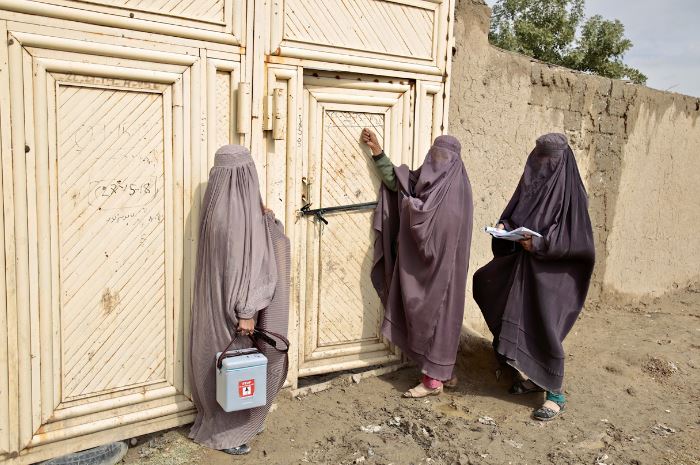
"Strategic communication remains the key backbone to polio eradication in Afghanistan."
From the National Emergency Operation Center (NEOC), Afghanistan, this document represents an update to the National Emergency Action Plan (NEAP) as developed and continually revised by the Afghanistan Polio Eradication Initiative (PEI). While the NEAP 2020 is being rolled out, the world is facing the challenge of the COVID-19 pandemic; the programme is continuously monitoring the COVID-19 situation in the country and will continue to adapt to the situation.
Section 1 of the NEAP 2020 provides an epidemiological and situational overview. In short, most of Afghanistan is polio free, but pockets still struggle to end transmission. In 2019, Afghanistan's PEI was challenged with consistent inaccessibility to all the children in the country due largely to the anti-government element (AGE) ban on house-to-house vaccination imposed since May 2018. This ban became more stringent in April 2019, leading to the suspension of campaigns from April to July 2019. (The ban also constrained communication activities, which limited visibility, media broadcasts, high-level campaign inauguration, and display of polio information, education, and communication (IEC) materials.) As Section 2 reports, some progress was made on the NEAP 2019 (see Related Summaries, below), but the number of cases and infected districts has been on the rise since 2017, and Afghanistan remains a polio-endemic country.
Section 3 looks at key challenges and risks (see also Section 7, on residual risks). Centrally, despite the lifting of the ban on polio eradication activities in September 2019, the restriction on house-to-house campaigns is continuing in some areas, leading to persistent missing of a significant proportion of "target children" for a substantial period. Among the other issues is a persisting high number of refusing families in the South and South East region. As per the results of focus group discussions (FGDs) and field monitoring reports, the key reasons for refusals include religious objection, campaign fatigue, concerns about contents of the vaccine, and lack of other health and development services, particularly in the marginalised and under-served communities in the South region. Some monitoring reports also indicate that use of non-local staff, involvement of young boys as frontline workers (FLWs), and lack of female vaccinators/social mobilisers add to the challenges around community acceptance of the polio vaccine.
In this challenging context, the NEAP 2020 was developed and operationalised, a process described in Section 4. The bottom-up approach involved regional EOCs conducting workshops to brainstorm with the provincial and district teams on identifying the current challenges, interventions implemented, and key lessons learned in 2019. Based on the reflections, the goals were defined, as articulated in Section 5. The main goal is to stop transmission of wild poliovirus (WPV) in the South and East regions of the country, as well as to stop any polio outbreaks in the non-reservoir areas and prevent the spread to currently polio-free areas. Section 6 outlines the NEAP 2020 objectives, which are focused on ending transmission - including by, for example, improving community acceptance and demand for vaccination and addressing vaccine refusals through effective and locally appropriate communication strategies.
Section 8, the bulk of the report, describes the salient strategic course the programme aims to take and the key interventions and steps planned during the period of April 2020 to March 2021. Sub-sections focus on topics including: supplementary immunisation activities (SIAs); focus on high-risk provinces and districts; and efforts to improve programme quality in accessible areas. Part of the latter will involve focusing the work of the Immunization and Communication Network (ICN) on the highest communication risk regions/areas of the country. The ICN will be optimised to ensure quality community engagement that goes beyond house-to-house visits while also appropriately complementing the work of vaccination teams/volunteers. Efforts will continue to increase female participation in the ICN through special gender strategies and incentives. In the high-risk areas, the ICN will continue to report and track missing and absent children and report on emerging rumours in clusters, silent refusals, and proposed actions for the programme to consider.
In terms of maximising reach in inaccessible areas, various plans are outlined in the NEAP, including, but not limited to:
- The programme will maintain neutrality for polio eradication and will keep all level of AGEs informed about PEI activities for confidence building.
- Access dialogue will continue at all levels - from local to international - with engagement and support of all partners, who can positively assist with gaining/maintaining access for house-to-house polio campaigns.
- Local coordination will be maintained with the AGEs, aiming at high-quality polio programme implementation and reaching all the children with polio vaccine during all the planned vaccination campaigns. In case of some specific local situation or objection by AGEs on some component of the programme, the regional EOC/regional teams will consult with the national EOC.
- In the event of a ban on house-to house-campaigns, the programme will take actions such as developing enhanced key messages and materials to explain why house-to-house vaccination is the gold standard for polio eradication.
The 2020 communication plan was informed by external communication reviews conducted in 2018 and 2019, recommendations from the Technical Advisory Group (TAG) and Independent Monitoring Board (IMB) of the Global Polio Eradication Initiative (GPEI), and local surveys on attitudes and practices and FGDs. These sources provided data such as: Female health workers and community influencers, as well as representatives of the local authorities, are highly trusted sources of information. Television (42%), radio (40%), public health staff (29%), and family/friends (19%) are main information sources in relation to vaccine. Based on such data, communication efforts will continue to promote vaccine acceptance and demand across the country, to build community trust, and to address cross-border communication issues with Pakistan. Specifically, communication and advocacy interventions will include:
- Mapping the media in key polio priority areas to ensure all trusted and reliable channels are included in disseminating key polio messages - hopefully keeping polio- and health-related stories at the top of the news agenda;
- Crafting and implementing a comprehensive strategic media engagement plan that ensures proper and timely placement of polio communication products for all media in both accessible and inaccessible areas;
- Building capacity of journalists to understand polio and vaccines and enhancing their reporting skills on polio- and health-related issues, while observing the fundamentals of journalism ethics and accurate reporting;
- Developing a comprehensive social media strategy with a view to expanding social media engagement across all platform that will support and amplify vaccine uptake and address rumours/propaganda coming from the social media sphere;
- Creating a package of multimedia content that addresses behaviour change among refusals and highlights reasons for missed children;
- Executing the existing crisis communications strategy by training national and regional EOC members on how to effectively respond to anti-vaccine related rumours or propaganda;
- Designing and producing polio-branded promotional materials such baby blankets, soaps, crayons, and books to increase polio awareness and build community trust;
- Generating regional communication plans and ensuring content development is aligned with data-driven communication issues at the local level, while observing cultural sensitivities and language dialects; and
- Improving and strengthening cross-border coordination and communication initiatives with Pakistan due to the high frequency of high-risk mobile population movement between the two countries.
In 2020, the community engagement activities will expand beyond ICN to use other interpersonal communication (IPC) networks, because a sudden funding cut in early 2020 resulted in the drastic reduction of 2,065 full-time ICN workers and the discontinuation of 2,495 campaign-based ICN and 250 community influencers persons (CIPs). In the areas where ICN was cut or reduced, key activities will include:
- Strict recruitment policies will be applied to ensure merit-based recruitment of qualified female ICN workers.
- Campaign-based influencers in AGE's areas will be identified and tasked to support site-to-site immunisation activities when conditions permit.
- 800 female vaccinators/mobilisers will be trained and deployed at health facilities in polio high-risk provinces to disseminate polio and cross-sectoral messages. In addition, women will be recruited for communication-related leadership positions to guide and conduct communication activities in priority areas.
- The programme will engage religious and social influencers through support to Madrasas (colleges for Islamic instruction) in high-risk provinces, influencer-led workshops on child health in Islam, sponsorship of advocacy and social gatherings among influencers and for Madrasas graduation ceremonies, and giveaways for senior religious influencers. There will be a focus on mapping out of Masjid (mosque) Imams and Madras schoolteachers, both in government and Taliban areas, for possible specific engagement to dispel rumours and address religious refusals.
- The programme will work with local-area representatives such as Wikili Guzar, Maliks, and village elders to endorse vaccines and strengthen local government involvement in mobilising communities for vaccine uptake.
- Tools featuring key messages on maternal, newborn, and child health (MNCH), polio, and hygiene will be packaged appropriately and disseminated to community engagement workers and vaccinators to facilitate dialogue with caregivers. Short videos with convergence messages including COVID-19 and polio will be added.
- Community outreach for message dissemination will take the form of: community-led campaign inaugurations to maintain programme neutrality and community ownership, the engagement of traditional healers in message dissemination, listening groups and discussions with elderly women who have influence over families, engagement of polio survivors in community events, polio messages drawing competitions at schools, etc.
- Health workers at refusal areas will take part in IPC trainings, including polio messaging. The programme will also partner with key medicine faculties and nursing and midwifery schools to organise seminars on vaccines for teachers and students.
- Multimedia messages with polio question and answer (Q&A) and roundtables addressing vaccine uptake and MNCH will be conducted in priority areas. Stories of families with polio, featuring lessons learned, will be disseminated and discussed in the community. Print materials and communication supplies such as radio sets will be disseminated for wider reach among nomad and women's groups. Key health facilities will be painted with polio and MNCH messages through graffiti and participatory artwork.
- Local media awards will be disseminated to produce educational stories addressing vaccine uptake issues.
- To build motivation of FLWs, the programme will champion distinguished workers and promote female participation. Support will include vouchers for learning activities for dedicated workers, giveaways at key occasions, and honours associated with World Polio Day.
- FGDs will be held to gather feedback on communication activities and emerging vaccine uptake issues.
- Training and meeting facilities in selected areas will be supported to provide a conducive environment for learning, with special consideration to female needs (e.g., women's toilets, lighting, etc.). Monthly communication planning meetings utilising vaccine uptake data and trends will be held at priority areas at the end of each month to inform communication actions.
To look more closely at one of the networks that will be engaged, special initiatives of the Islamic Advisory Group (IAG) will include:
- Training of IAG provincial focal points (religious scholars) on vaccine and child health from an Islamic perspective;
- Religious scholars' training on IPC skills for polio and routine immunisation promotion;
- Development and implementation of a training curriculum on child health, vaccines, and Islam for medicine and Sharia school students and for key Madrasa leaders; and
- Training of FLWs on the Fatwa book content for informed discussions during household visits and community meetings.
Concluding sections of the NEAP 2020 focus on topics such as: identification, mapping, and coverage of high-risk mobile populations; maintaining sensitive surveillance; enhancing Expanded Programme on Immunization (EPI)/PEI convergence in high-risk districts; and (quarterly) monitoring of strategic NEAP work plans. On the latter (monitoring issues): "Evidence based programming remains the backbone of designing responsive community engagement initiatives including drawing lessons on emerging barriers to vaccine acceptance amongst the population. In 2020 the program will engage with reputable communication institutions such as John Hopkins University in implementation of surveys to inform programme communication initiatives particularly in the Polio high risk districts to better understand Polio vaccine knowledge levels, prevailing attitudes and community practices. This will include undertaking qualitative research and feedback sessions with caregivers particularly those of chronic refusal category."