











































Best Practice Guidance: How to Respond to Vocal Vaccine Deniers in Public
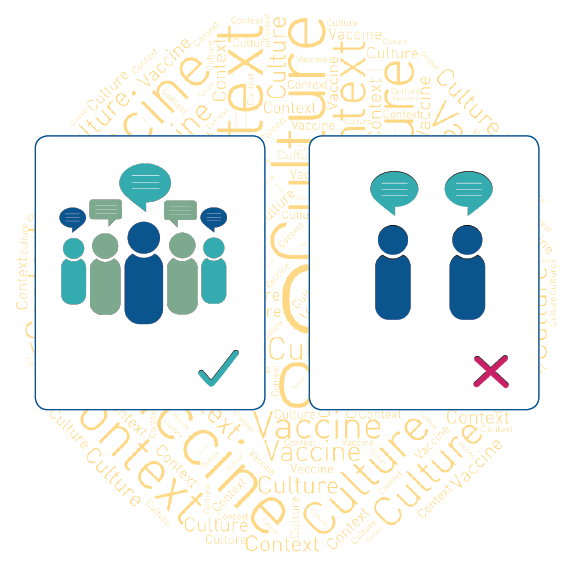
"Addressing vocal vaccine deniers in the media can be fraught with danger and angst."
This guidance document from the World Health Organization (WHO) Regional Office for Europe provides basic, broad principles for a spokesperson of any health authority on how to respond to vocal vaccine deniers. These people do not accept recommended vaccines and are not open to a change of mind no matter what the scientific evidence says. Public and private dialogue can be very different in terms of what to respond to, how to behave, and whom to address. Face-to-face private dialogue involves the specific relationship between the conversants, whereas in a public discussion you must focus primarily on engaging the audience effectively. The recommendations outlined here relate to the latter situation.
The suggestions are based on psychological research on persuasion, research in public health, communication studies, and WHO risk communication guidelines. Noting that not everyone who is asked to speak on behalf of a health authority is a trained spokesperson, this document offers strategies that address the 3 main elements of the process of successful communication: the audience, the speaker, and the argument. The strategies presented in the guidebook's chapters convey 2 main rules that serve as guiding principles to achieve the primary goal of a public discussion with a vocal vaccine denier, which is to make the public resilient against anti-vaccine rhetoric: "The general public is your target audience, not the vocal vaccine denier." and "Aim to correct the content AND unmask the techniques that the vocal vaccine denier is using."
"If you are invited for a public discussion you must first decide whether or not to accept the invitation. Before making this decision the decision aid outlined in Annex 1 should be considered." Annex 2 presents the HURIER model of listening instruction, which visualises 6 interrelated skills of listening: hearing, understanding, remembering, interpreting, evaluating, and responding. "The general public, i.e. your key audience, will judge your performance based on your ability to pay attention to, understand, interpret, evaluate and remember what the vocal vaccine denier said."
53
Email from Michael Favin to The Communication Initiative on September 15 2016; and WHO Regional Office for Europe website, October 3 2018 and March 25 2021. Image credit: WHO
- Log in to post comments