











































Change Leadership: The Making or Breaking of an Immunization Supply Chain
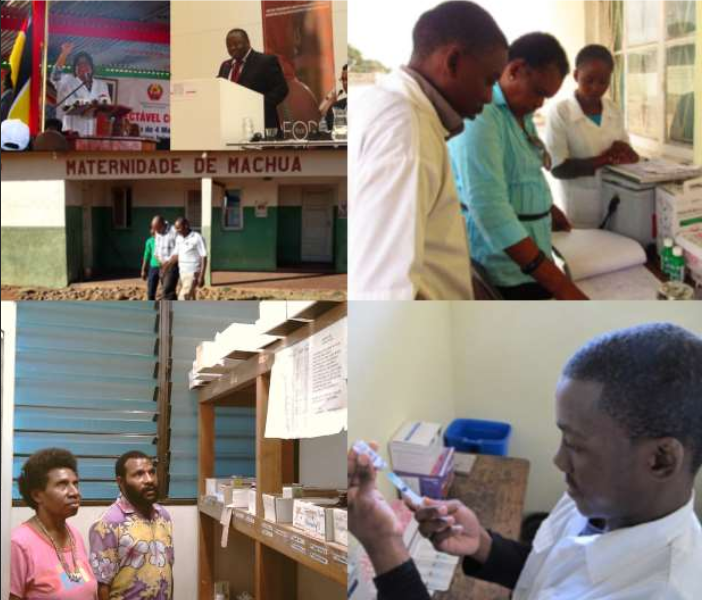
VillageReach (Prosser, Wilcox); People that Deliver (Brown)
"There is no magic bullet to have effective leaders and a culture of leadership available and ready to drive the change for immunization supply chains around the world. There are, however, things that can be in place that can develop those necessary leadership skills within a culture that fosters and develops leadership."
This paper, co-authored by VillageReach and People that Deliver (PtD), explores the necessary leadership qualities of people involved in the transition to next-generation immunisation supply chains (iSCs) and provides recommendations and resources to help ensure these qualities can be fostered and developed so that all children have access to vaccines. The paper is premised on the belief that discussion on how to improve supply chain performance (the initial iSC design was introduced with the Expanded Program on Immunization (EPI) in the 1970s) needs to include "change leadership" that defines a new vision and empowers people to get behind it.
This leader is described as being able to catalyse collective leadership for a common purpose, engaging others to develop a commitment to work together for change and creating conditions that enable an entire team to contribute to change. Specifically, the behavioural competencies that make an effective leader for supply chain management include: being a role model; inspiring others through professional excellence, innovation and communication; having the ability to see the bigger picture and end goal, and helping others to do the same. Contributors to this Health Supply Chain Competency Framework for Managers and Leaders also noted that leadership stems from social influence, not necessarily authority or power. A study out of Burkina Faso cited here documents the importance of effective leadership on district-level vaccine programmes and notes how crucial it is for that person to recognise that certain national approaches may no longer be appropriate for the local context. "Building from that, to move to the next-generation iSC, public health systems will need leaders who are not afraid to question the status quo and are willing to challenge people's comfort zones to seek improvement for the performance of the immunization supply chain....This leader will use evidence to support that advocacy and generate interest across multiple stakeholders to move it forward. Through convening a group of effective leaders and managers around the particular change that is needed, stakeholder creativity and innovation is focused and can flourish." Examples of effective leadership from VillageReach's work in Mozambique supporting the Ministry of Health (MoH) and the Provincial Directorates of Health (DPS) are provided.
Noting that some people in decision-making roles related to the iSC are not natural-born leaders, the Gavi Alliance has developed a leadership development programme called Strategic Training Executive Program (STEP) [PDF] to focus on both the technical competencies of supply chain management and the skills in people management, problem solving, communication, and professional development. In order to help create a culture of leadership such that people at each level of the hierarchy may voice opinions, explore new ideas, and feel supported to take risks and to make level-appropriate decisions, the United States Agency for International Development (USAID)|DELIVER Project launched a Supply Chain Management (SCM) leadership initiative in January 2014 with a workshop that convened global, regional, and national partners to further the conversation. In addition, Pamela Steele and Associates launched a SCM leadership short course and Management Sciences for Health has been leading a broader Leadership, Management and Governance project with the support of USAID.
The report concludes with a few key approaches when striving for a culture of leadership and developing the core capabilities of an effective leader, including creating a space to reflect on performance and generate conversations that reflect longer-term thinking on system design.
Global Immunization News (GIN), January 2016 [PDF].
- Log in to post comments